Compose a rainy anime station keyframe with a clear focal point
Make one railway-platform illustration easier to read. Use a specific subject position, leading lines and restrained lighting, with two original prompt examples and a finished frame.
The small brief
A courier is waiting at a rainy railway station. We need one establishing image that makes the person, their direction and the place immediately clear. The deliverable is a storyboard keyframe you can inspect before deciding to animate a scene.
Finished frame

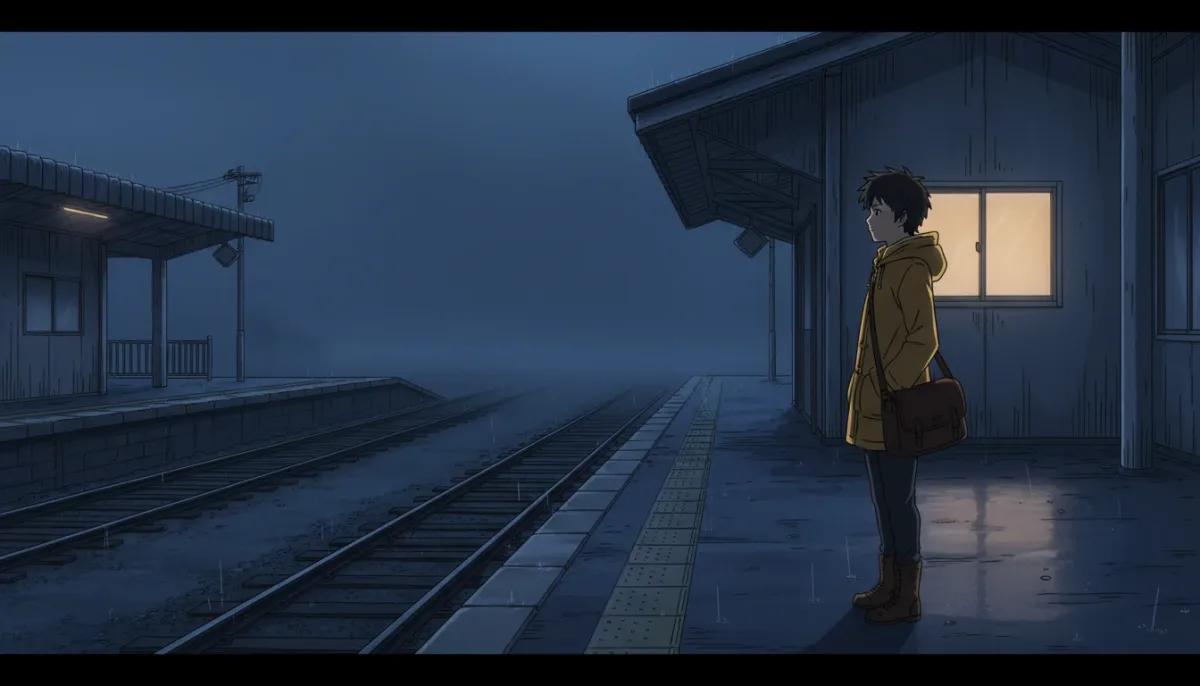
Finished keyframe: the courier is placed on the right, leaving the track side open.
1. Set up the scene in C2Anime
Open Create, choose Create a Story, and keep the scope small: one adult courier, one station and one moment. Choose Japanese Anime in the style picker. Include “landscape 16:9 establishing frame” in your brief and check the output framing when your scene plan appears.
Start with a story sentence: “A courier reaches a quiet station at blue hour and waits under the roof as rain falls.” Add the appearance once: short dark hair, mustard raincoat and brown satchel. Keep those details consistent in later feedback.
When the planning flow presents Create Scenes, review the proposed scene before moving on. This exercise focuses on the scene image; animation is a separate next step.
2. See what a mood-only description leaves open
Our first prompt specifies atmosphere and a character but leaves their size, position and background detail to the model.
Japanese anime illustration, a young adult courier with short dark hair, a mustard-yellow raincoat and a brown satchel waiting alone at a small railway station at blue hour in the rain. Warm light from a station window, wet platform reflections, cinematic atmosphere. Single still illustration, no text, no watermark.

First independent example: the short prompt establishes the rainy station mood.
Look at the image at thumbnail size. Where does your eye go first? Can you tell which direction the courier is facing? Do a bright window, roof or reflection compete with the person? An attractive image can still leave these decisions unresolved.
3. Add composition instructions
Use the more specific prompt below as scene direction. It defines a position, viewing direction, framing device, path for the eye and a limited lighting contrast. These are concrete requests you can judge visually.
Japanese anime storyboard keyframe, clean hand-drawn ink lines and flat cel shading, not a photograph. Wide eye-level establishing composition at a small railway station at rainy blue hour. One young adult courier with short dark hair, mustard-yellow raincoat and brown satchel stands on the RIGHT THIRD facing LEFT toward an empty track. The courier is fully visible including boots. Roof edge frames the top; wet platform diagonals lead from lower left toward the courier. A small warm amber station window sits behind the courier; cool indigo surroundings and restrained reflections. Keep the LEFT HALF visually quiet for clear screen direction. No crowd, no extra character, no train hiding the silhouette, no signs or text, no watermark. Single still frame.
In C2Anime, give the same direction in the creation chat for the relevant scene. If a review appears while you need changes, choose B · Needs changes. State what should stay as well as what should change:
Keep the rainy blue-hour station, anime style, mustard raincoat and brown satchel. Frame the whole courier on the right third facing left. Leave the left half quiet, and use the platform lines to lead toward the courier. Keep the station window smaller and less dominant than the character.
4. Check the final image
Inspect the full body and boots, the direction of the face, the space ahead of the courier, and the warm/cool lighting relationship. Check that the tracks read as tracks and the platform remains a safe, coherent surface. If any detail fails, ask for that correction before accepting the image.
Use the finished frame at the top as the composition target. When you later add another shot, preserve the courier’s wardrobe and deliberately decide whether screen direction should stay the same.
If the result misses the brief
The person is too small: ask for a larger full-body courier while preserving the same camera height. The background is too busy: remove signs, crowds and decorative lights from the prompt. The lighting is muddy: request one warm window against cool surroundings, with no additional bright light sources.
Change one main issue per revision. Keep the scene’s story, art style and character description stable so that you can assess the effect of your composition feedback.
What we observed in these results
In our first result, the courier faces right and a large bright window occupies the left edge. In the final result, the courier faces left from the right side and the tracks open into that direction. The model also added black cinematic bars; if you need a full-bleed asset, request no letterboxing in your next revision. The two examples have different station layouts, so judge the composition rather than treating them as continuity-matched shots.
How these examples were made
We generated these original examples for this guide with Nano Banana through C2Anime’s image-generation backend. The two examples are independent text-to-image generations using the exact prompts below. They demonstrate composition choices; they are not a controlled edit that holds every pixel or character feature fixed. The finished assets shown here are still illustrations. Your result can vary, so use the visual checks before accepting it.
A first like from an active subscriber gives a community author 1 credit. Likes are permanent; self-likes and repeat rewards are excluded.