Guide
How to Make an AI Short Drama
This guide to how to make an AI short drama runs in the order that actually works: pick a premise that pays off fast, break it into episode-sized hooks and cliffhangers, lock a consistent cast, and only then render. Do it this way and you get a bingeable vertical series. Do it backwards and you get a folder of clips that do not add up to a story.
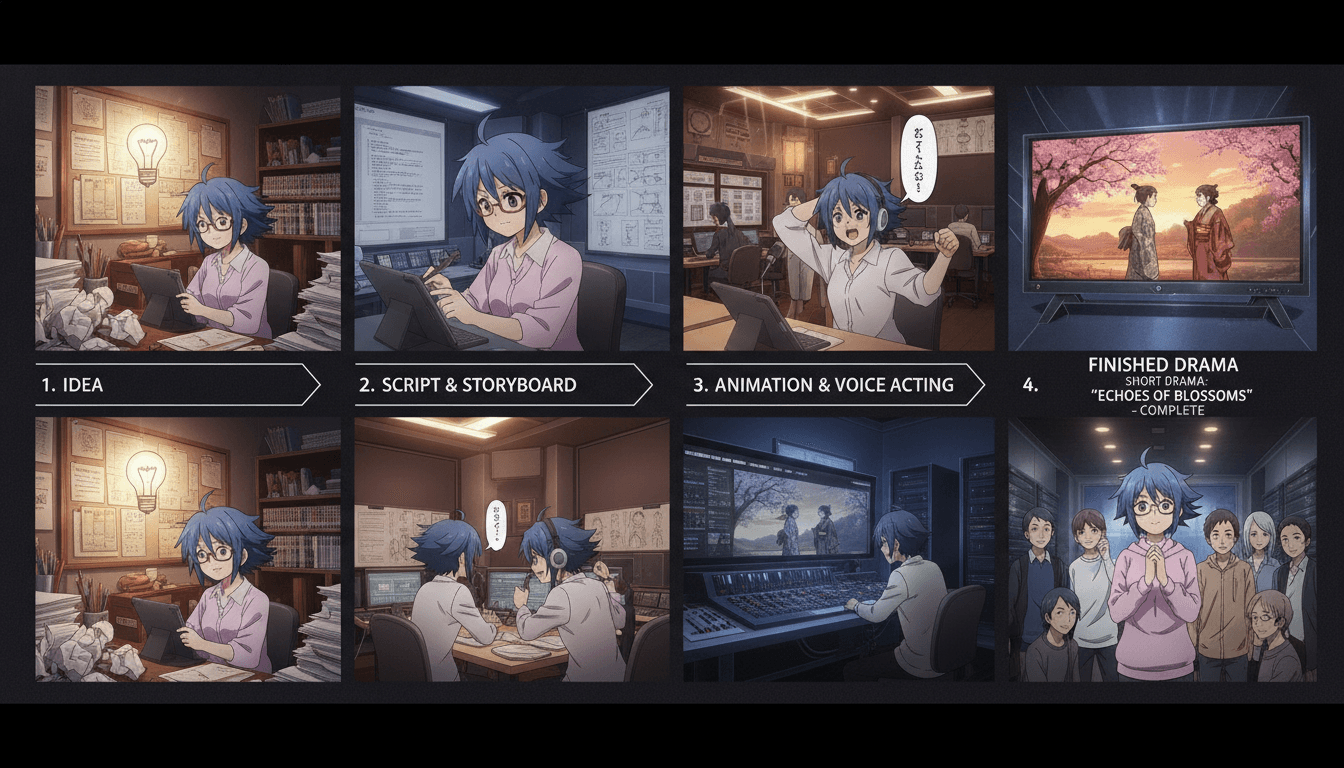
How to make an AI short drama, in three moves
The full method is five steps, below. If you only remember three things about making a short drama with AI, remember these.
Write the hook first
A short drama lives or dies in its first five seconds. Decide the hook and the cliffhanger for every episode before anything renders.
Cast it once
Design every recurring character up front and lock those designs, so the lead looks the same in episode one and episode twelve.
Render vertical, voiced scenes
Shoot each beat as a staged, voiced anime scene framed for a phone, then stack the episodes into a bingeable series.
The five steps, in order
None of these steps are optional, and the sequence is the whole trick. Each one narrows the decisions the next one has to make.
- 1
Pick a premise that pays off in sixty seconds
Short drama is a format with rules. Each episode is roughly one to two minutes, it opens on a hook, it twists once in the middle, and it ends on a cliffhanger that makes the viewer tap the next one. Before you think about how to make an AI short drama at all, pick a premise that can deliver that rhythm: a secret about to come out, a debt coming due, a reunion that should not be happening.
Write the logline in one sentence. If you cannot make the conflict clear in a single line, the episode will not land in sixty seconds either.
- 2
Break the story into episode-sized beats
Map the whole arc as a list of hooks and cliffhangers — one pair per episode. Eight to twenty beats is a normal range for a first season. Each beat is a single turn: a reveal, a betrayal, a decision that cannot be taken back.
This is the step that makes a micro drama binge instead of a pile of clips. Episode three has to answer the question episode two ended on, and raise a sharper one. Plan those handoffs now, on paper, where they are free to change.
- 3
Cast the show before you render anything
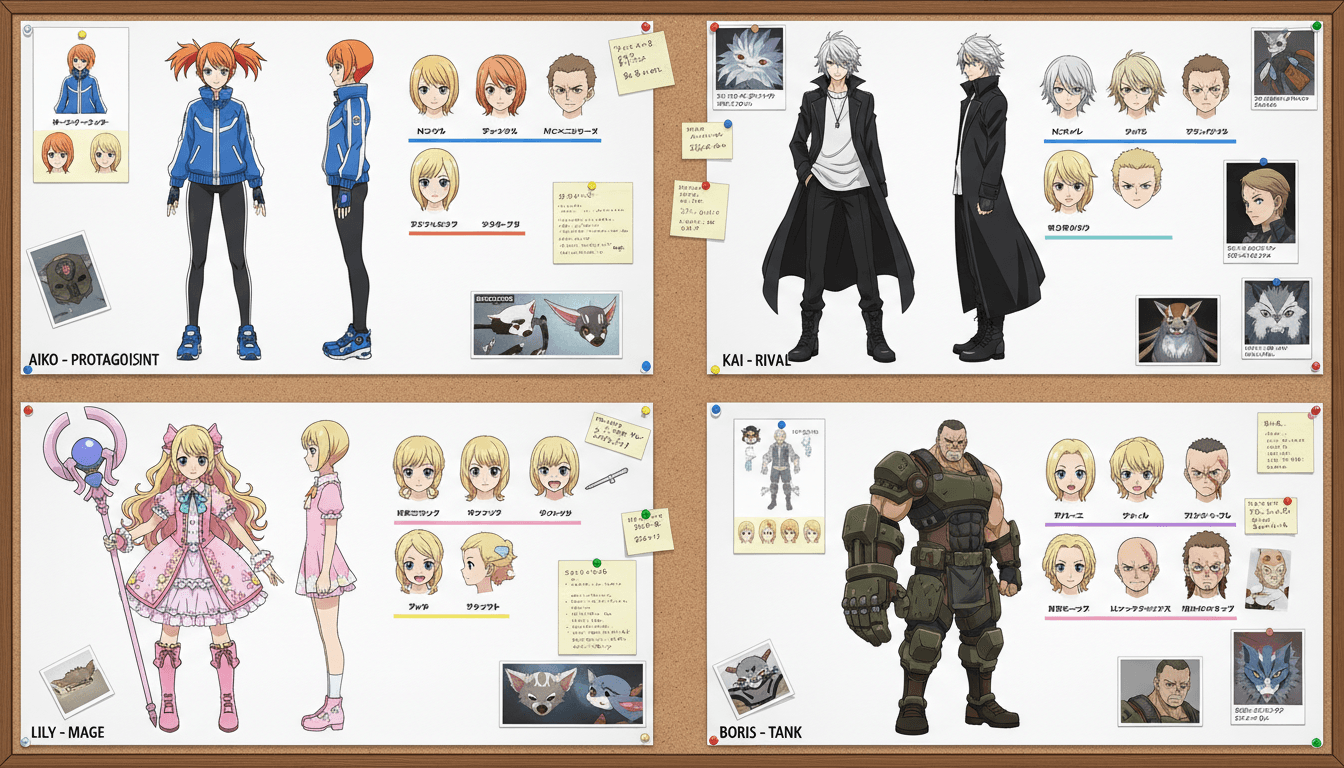
List every character who appears more than once and describe them precisely — age, build, hair, the outfit they wear in most episodes, one detail that is theirs alone. Then have those designs generated and keep them as fixed references.
This is the part most tools get wrong, and it is the part that matters most for a serialized short drama. If your lead looks like a different person each episode, viewers stop trusting the series. A locked cast is what lets the same characters carry an entire season.
- 4
Write a screenplay with real dialogue
A beat sheet says what happens. A screenplay says how it plays: who is in the room, what they say, and where the camera is when they say it. Short drama is almost entirely dialogue — accusations, confessions, interruptions — so write the lines, not a summary of them.
Keep scenes short and front-load the conflict. In this format there is no room for a slow build; the argument starts on line one.
- 5
Render vertical scenes and stack the episodes
Shoot the screenplay scene by scene, with the character references attached to every scene those characters appear in, framed vertically for a phone. Let the dialogue drive the staging and keep one art style and one palette across the whole run.
Then watch the season through in order. Check that every episode hooks in its first beat and cuts on a cliffhanger, and re-render only the episodes that miss rather than starting the series over.
How to make an AI short drama without your cast drifting
Ask anyone who has tried a serialized AI project what broke first and the answer is always the characters. The lead's hair changes length between episodes. A rival comes back in episode six looking like a stranger. In a short drama, where the whole pitch is "come back tomorrow for the next part," that inconsistency quietly kills the series — viewers stop believing it is the same story.
The cause is structural, not a matter of prompting harder. A tool that generates each shot from a fresh description has no memory of the previous one, so every render is a new guess at what your character looks like. Add more adjectives and you get a more detailed guess, not the same person.
The fix is to make the design a fixed input. C2Anime builds a character reference for every member of the cast before rendering begins and attaches it to each episode that character appears in. Episode twelve is not reinventing your lead — it is reusing them, which is the only way a short drama holds together across a season.
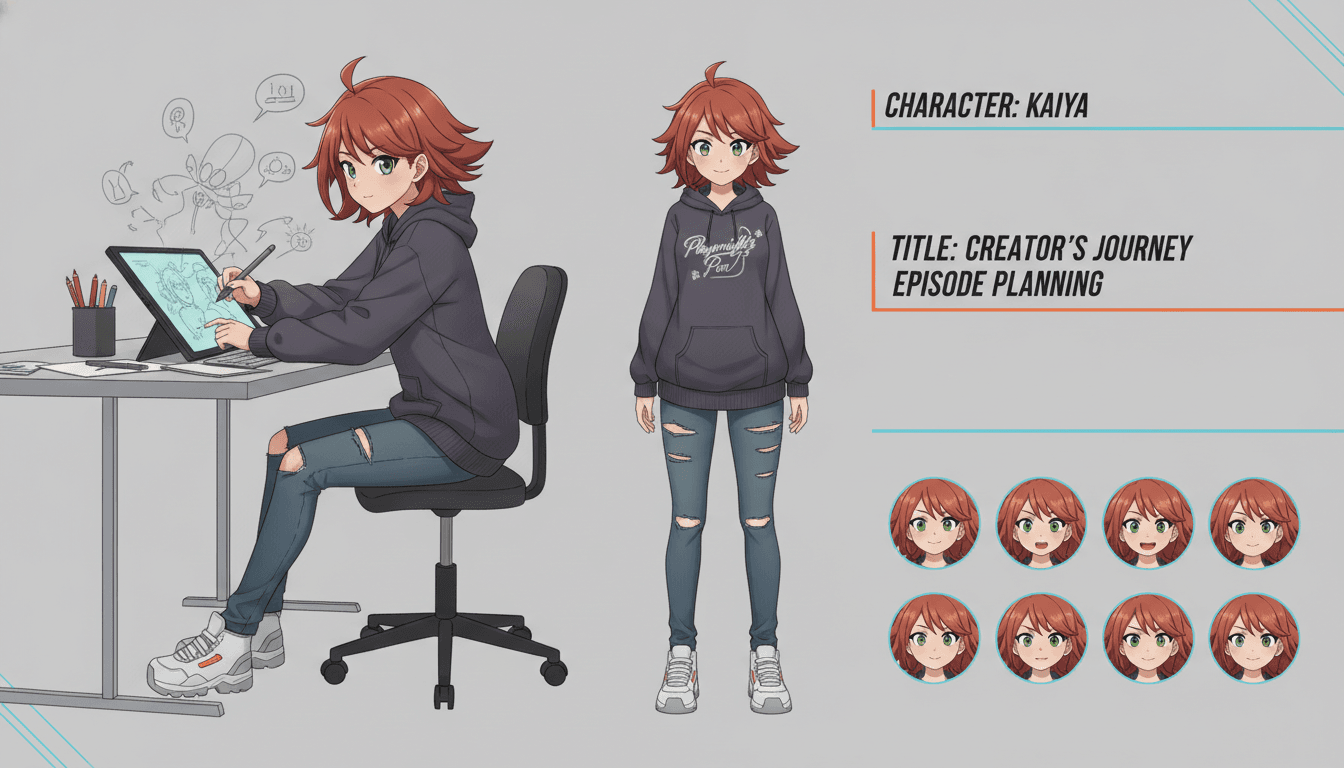
Four mistakes that sink a first short drama
Burying the hook. Short drama viewers decide in the first few seconds. If your episode opens on setup instead of conflict, they are gone before the twist arrives.
No cliffhanger. An episode that resolves cleanly gives the viewer permission to leave. End on a question, a reveal half-delivered, a door opening.
Narration instead of dialogue. Explaining the plot over footage flattens it. Let the characters accuse and confess to each other and the same information lands as drama.
Treating episodes as standalone. A short drama is a chain. Each episode has to pay off the last cliffhanger and set a new one, or the series stops being bingeable.
What C2Anime handles for you
The five steps are the method whatever you use. These are the parts C2Anime takes off your desk when you make a short drama.
One cast across the whole season
Characters are designed once and reused in every episode, so your lead holds together from the first hook to the final cliffhanger instead of drifting.
A screenplay you can edit
The AI Film Director writes scene headings, action and dialogue before rendering, so you can tune the hooks and cliffhangers while they are still just text.
Voiced dialogue, not narration
Each character speaks and keeps the same voice, which is exactly what a dialogue-driven short drama needs to feel like performance rather than a slideshow.
Episode-level re-renders
When one episode misses, you redo that episode. The rest of the season stays exactly as it was.
How to make an AI short drama: common questions
- How do you make an AI short drama from scratch?
- Pick a premise that resolves in about a minute, break the arc into episode-sized hooks and cliffhangers, design and lock your cast, write a screenplay with real dialogue, then render vertical voiced scenes and stack them into a series. The order is the method: structure first, cast second, rendering last.
- What makes a short drama different from a normal video?
- Format and rhythm. A short drama is serialized and vertical, each episode runs one to two minutes, it opens on a hook and ends on a cliffhanger, and the whole point is to pull the viewer into the next episode. You plan it as a season of linked beats, not as one standalone video.
- Do I need to know how to draw or animate?
- No. Learning how to make an AI short drama is mostly about story judgment — picking hooks, writing dialogue, deciding whether an episode earns its cliffhanger. The character art, staging and rendering are handled for you.
- How do I keep my characters consistent across every episode?
- Design them once and treat those designs as fixed references. C2Anime builds a character reference for each member of the cast before rendering and reuses it in every episode they appear in, so the same face and outfit carry across the whole season.
- Can I make the short drama vertical for TikTok or Reels?
- Yes. Short drama is a vertical, phone-first format, so scenes are framed for a portrait screen. Each episode is sized to hold attention in the feed and end on a beat that earns the next tap.
- How long should each episode be?
- Short — usually one to two minutes. The discipline of the format is that a complete turn in the story has to happen in that window: a hook, one twist, and a cliffhanger. Plan your beats so each one fits.
- What does it cost to start?
- C2Anime is in invite-gated Early Access with paid credit tiers. You can see what each tier includes on the pricing page before you commit to a full season.
You have the premise. Go make the series.
Hand C2Anime your hooks and it will plan the episodes, design the cast and render the scenes.
Start directingLearning how to make an AI short drama, start to finish
Everything above about how to make an AI short drama comes down to one idea: a short drama is a planned series, not a lucky clip, and the planning has to happen before rendering. The premise decides the episodes, the episodes decide the cast, and the cast decides what every frame has to look like. Reverse that order and you are asking a generator to guess at all three at once, which is why so many first attempts end up as attractive footage that never turns into a story anyone follows.
The format itself is the other half of the craft. Short drama is vertical, serialized and fast: each episode runs a minute or two, opens on a hook, twists once, and cuts on a cliffhanger. When you make a short drama with AI you are really writing a chain of those turns, and the quality of the chain — how well each episode hands off to the next — is what keeps viewers tapping. Plan those handoffs on paper first, where they cost nothing to change.
The step people underestimate is casting. Character consistency is the difference between a micro drama that reads as one ongoing story and one that reads as unrelated videos sharing a title, and it is the thing most tools handle worst. C2Anime designs your characters once, keeps those designs as fixed references, and reuses them in every episode — which is what makes a season possible, and then a second season with the same cast.
You can start from whatever you already have: a one-line premise, a list of episode hooks, or a finished script. C2Anime's AI Film Director plans the structure, writes a screenplay with real voiced dialogue, holds your cast on model, and renders scene after scene so the episodes connect. It is in invite-gated Early Access with paid credit tiers — see the pricing page for what each tier includes, then bring a premise and direct your first short drama.