Shojo style anime, made from your own story
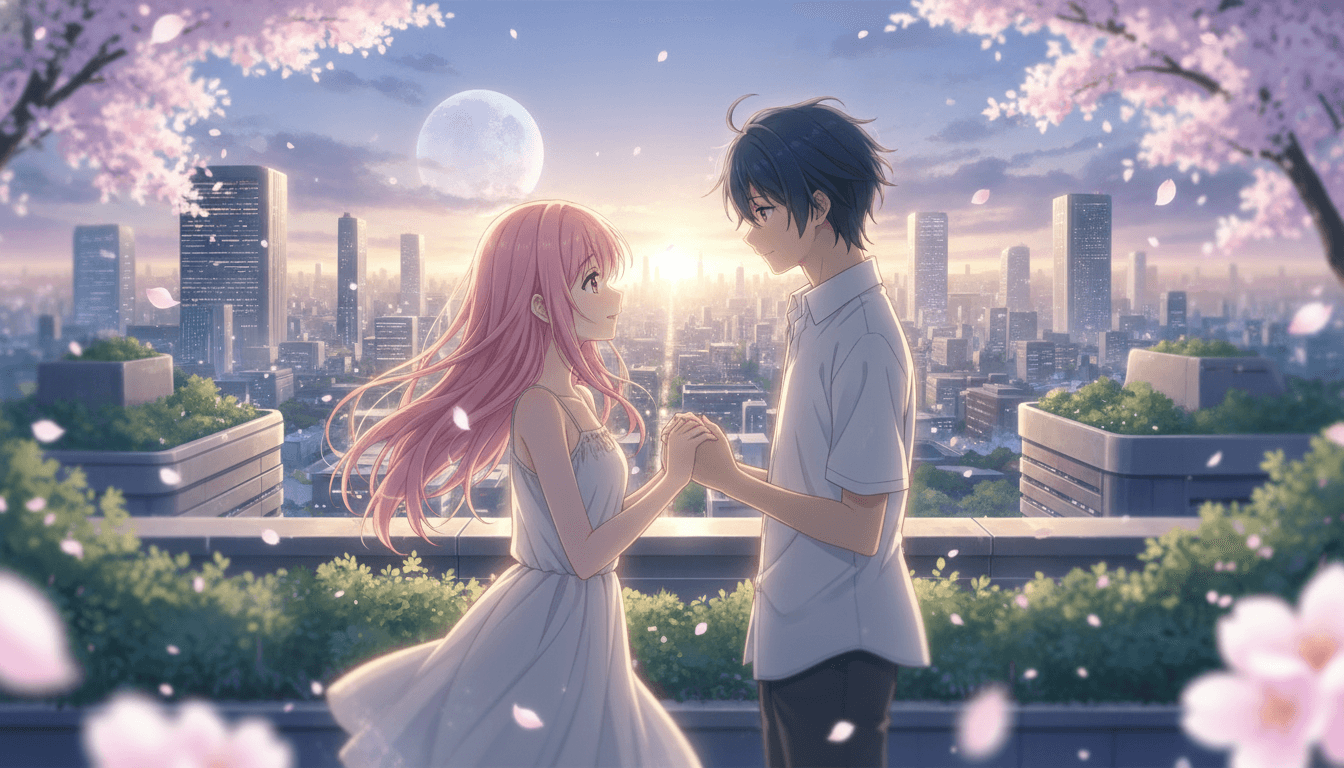
Screen tone, floating petals, and a close-up held long enough to hurt. C2Anime takes the romance or drama you already wrote and renders it as a shojo style anime — one cast designed up front, a real screenplay written before anything animates, and voiced scenes where your leads keep the same face from the first glance to the confession.
How to make a shojo style anime
Three stages, in this order. Planning before rendering is what keeps an emotional arc coherent instead of restarting every scene.
Give it the story
Paste a premise, a chapter or a whole arc. Shojo staging runs on feeling, so say who wants whom, what is unsaid between them, and what admitting it would cost.
Choose the shojo look
Set the visual direction toward screen tone, soft diffusion and close-up framing. The director applies it to every scene, not only the confession.
Watch the scenes render
The screenplay lands first, then voiced scenes render against a cast designed in advance — so your shojo style anime holds one face through every reaction shot.
What the shojo style anime look is made of
The aesthetic is specific, and naming the parts makes it easier to ask for. These are the six choices doing most of the work.
Screen tone and halftone texture
Dotted gradients standing in for blush, shadow and mood, borrowed straight from printed shoujo manga and kept as a deliberate texture rather than smoothed away.
Floating petals and bokeh
Cherry blossom, curtains lifting, dust in a shaft of light. Something is almost always drifting through frame to keep the air soft and the moment suspended.
Large, detailed eyes
Highlights stacked in the iris, lashes drawn individually, a catchlight that shifts as the feeling does. The eyes do most of the acting in this style.
Diffused light and pastel palette
Low contrast, warm backlight through a window, blush pinks and sky blues. Shadows stay gentle so nothing in frame reads as threatening.
Close-ups and negative space
Tight framing on a hand, a mouth, a turned shoulder — then a wide, empty composition that lets a silence sit before anyone speaks.
Sparkle and flourish accents
Starbursts at the edge of a realisation, vertical light streaks, a soft vignette. Used to punctuate a beat, not to decorate every frame.
Stories that suit shojo staging
This visual language rewards an obstacle that lives inside someone. Two people who keep almost saying it. A friendship that breaks over something too small to admit was the reason. A parent and child who have not spoken properly in years. The camera sits close because the conflict is not visible from further away.
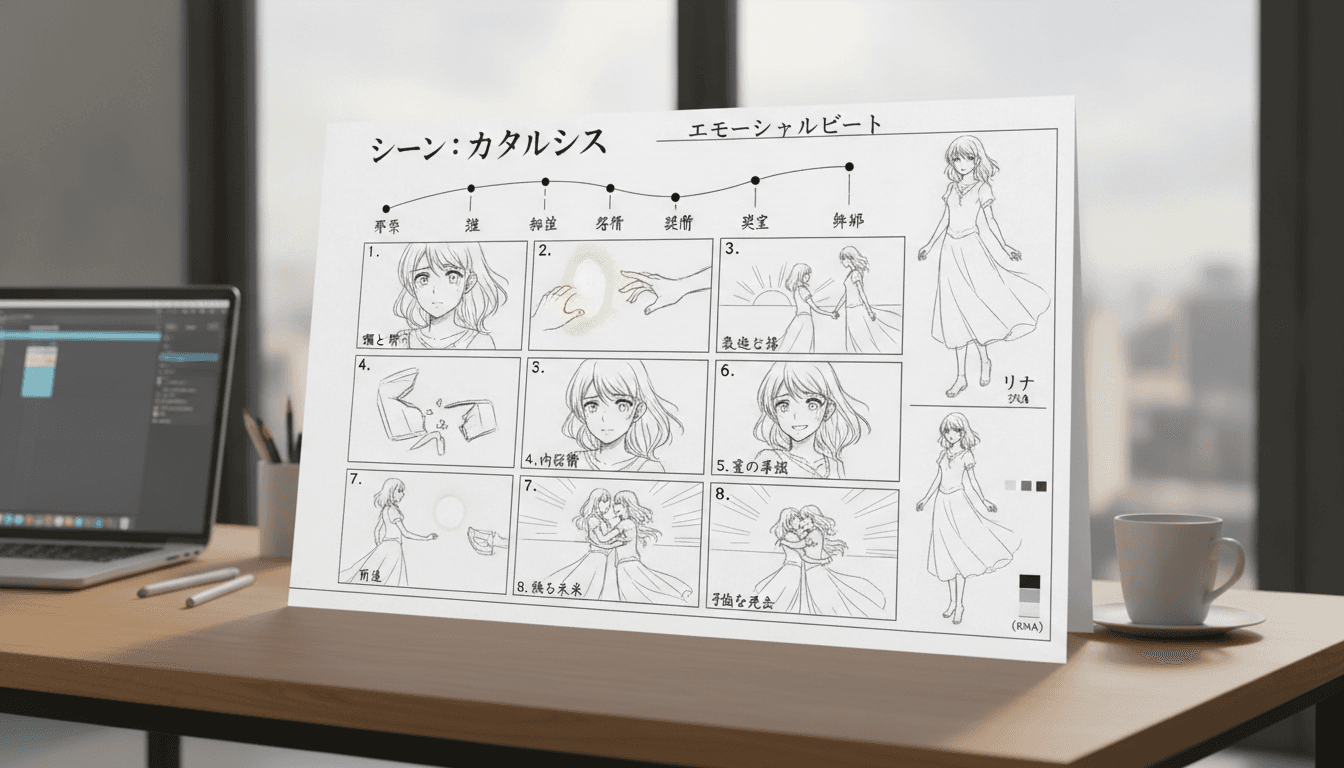
It also needs the feeling to move rather than repeat. A longing glance in scene two should not land the same way as the one in scene one — something has to have shifted, even if nobody acknowledges it. That is why the structure is written before anything renders: the plan knows what has already been left unsaid, so the next scene has to cost more to stay silent in.
Romance is the obvious fit, but it is not the requirement. Grief, first jobs, a sports team losing its captain, a quiet fantasy about leaving home — all of these stage the same way: soft light, intimate framing, a pause left in where the dialogue stops. If the stakes are internal, shojo framing will carry them.
Sample prompts for a shojo style anime
Useful prompts name the light, the framing and the thing nobody is saying — not just who is in the room. Start from one of these and swap in your own cast.
A confession interrupted
“A student finally starts to say it in an empty classroom after school, and the bell cuts across the sentence. Low golden backlight through dusty windows, curtains lifting, screen tone on the blush, tight close-up on the hands before the wide shot of the room.”
A goodbye at the station
“Two friends stand on opposite sides of a closing train door, neither saying the thing that matters. Overcast diffused light, soft bokeh on the crowd, petals caught in the draught, a held close-up on the eyes through the glass.”
A rooftop after the rain
“A reluctant pair share one umbrella on a school rooftop as the storm clears. Wet highlights and pale blue light breaking through, steam rising off the concrete, negative space around the two figures, sparkle accent on the first real smile.”
An apology years too late
“Two estranged sisters meet in a tea shop and circle the thing neither has forgiven. Warm interior lamplight, shallow focus on the untouched cups, screen tone shadow across one face, slow push in as the voice finally breaks.”
Why close-ups are the hardest test of consistency
An action scene can hide a lot behind motion blur and dust. A shojo scene cannot. The camera is a foot from someone's face, the shot is held while they decide whether to speak, and the audience is reading the corner of a mouth. Every one of those frames is a chance for a generator working shot by shot to hand you a slightly different person.
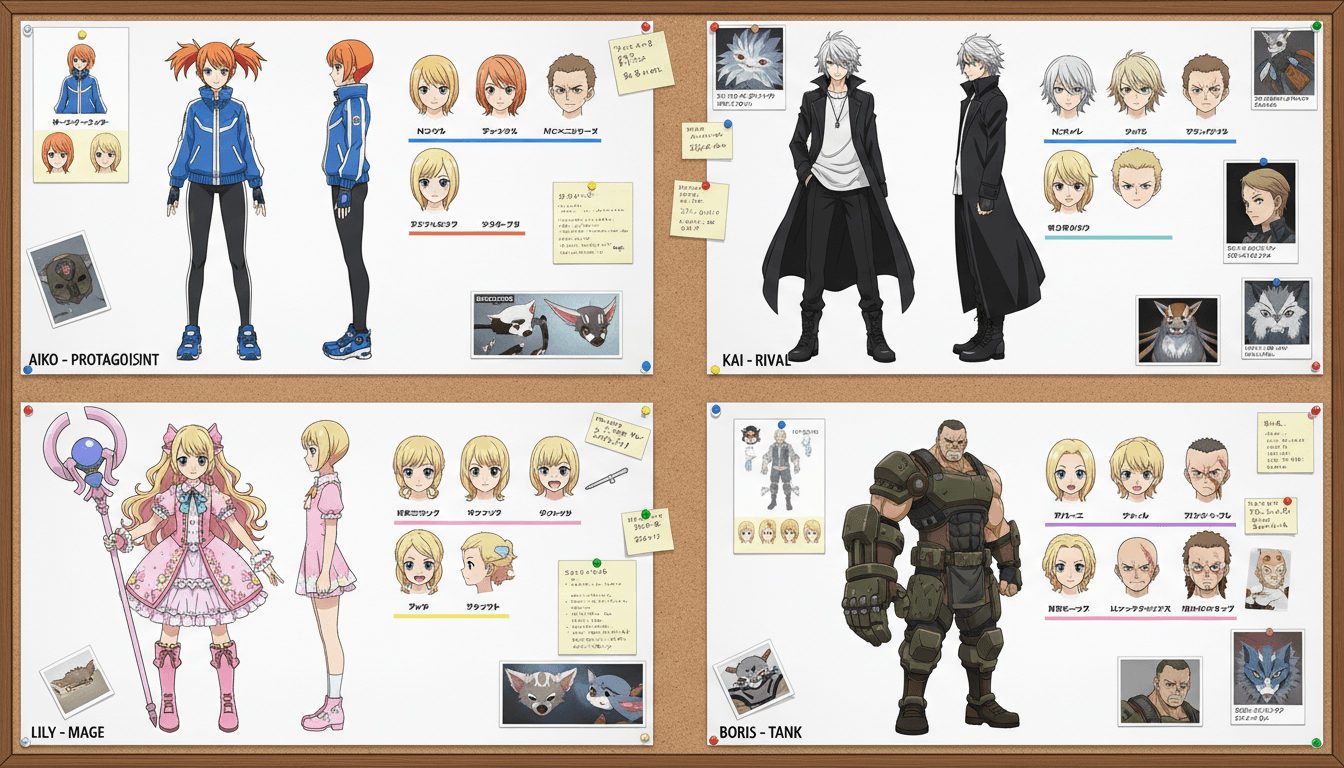
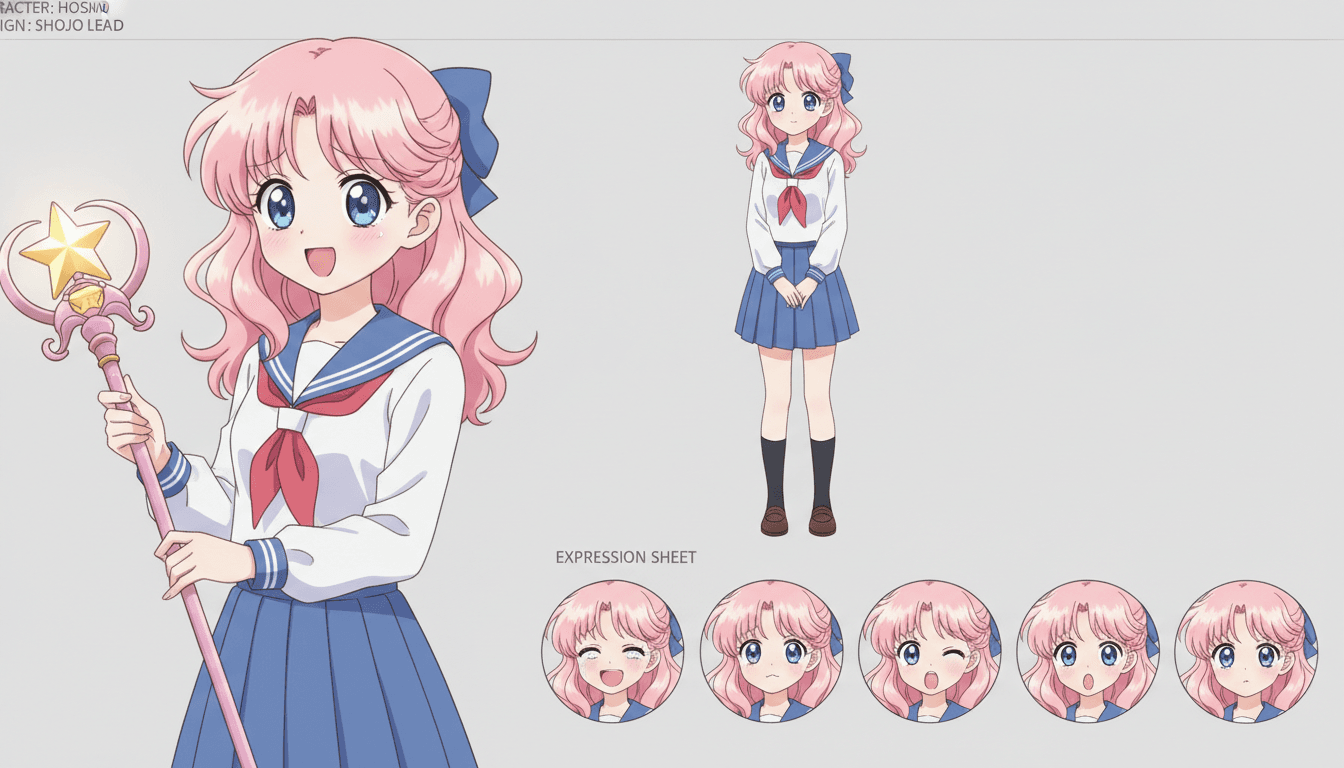
C2Anime designs each character once, before any scene renders, and treats that model sheet as fixed for the rest of the production. The eye shape keeps its proportions, the mole stays on the same cheek, the uniform ribbon stays the colour it was in the first episode rather than drifting a shade per cut.
The same discipline applies to the emotional continuity. Because the screenplay is planned whole, the scene knows who apologised last time, what was admitted and what is still being avoided — so a slow burn reads as one developing relationship rather than a sequence of beautiful but unconnected moments.
What C2Anime handles for you
One cast across every close-up
Romance lives at close range, where any drift is obvious. C2Anime designs each character once and reuses those references, so a face does not quietly change between reaction shots.
Emotional beats that are planned
The almost-confession, the misunderstanding, the reconciliation — laid out in the screenplay before rendering, so the feeling builds instead of resetting each scene.
Dialogue that carries the scene
Characters hesitate, deflect and finally say it, and they keep their own voices doing it. Scenes are built around speech, not narration over pretty stills.
Continuity in the small things
Who is holding the umbrella, who looked away first, whose ribbon came loose — tracked across the scene rather than reinvented shot to shot.
Shojo style anime: common questions
- What is a shojo style anime?
- Shojo style anime — often spelled shoujo — is the visual language of romance and drama animation aimed originally at a young female readership: screen tone texture, floating petals, diffused pastel light, large expressive eyes and framing that favours close-ups over spectacle. C2Anime applies that grammar to a story you supply and renders it as a voiced anime video with real dialogue, rather than producing a single still or a short clip.
- Can I use my own original characters?
- Yes, and it is the intended workflow. Describe your original cast in the story you hand over and the AI Film Director designs them in this visual language, then holds those designs across the whole runtime. Nothing here is tied to an existing franchise.
- Will my characters stay consistent in close-ups?
- That is the part C2Anime is built around. The cast is designed once, before any scene renders, and those model sheets are reused everywhere a character appears. A shojo style anime is an unusually hard test of this, because the camera sits close to faces for most of the runtime and the audience is reading tiny changes in expression — so fixing the designs up front matters more here than in a style that hides behind motion.
- What kind of story works best for a shojo style anime?
- Stories where the obstacle is internal. A slow burn between two people who keep missing each other, a friendship that breaks over something small, a family grief nobody will name, a first year at a new school. It works for plot-light material because the style is designed to make a glance carry a scene.
- Is shojo the same as romance?
- Romance is the most common use, but the two are not identical. Shojo is a set of visual and pacing choices — intimate framing, soft light, time given to reaction — and those choices suit any emotionally driven story. Coming-of-age, sports drama, quiet fantasy and grief narratives all stage well in it.
- Does it handle dialogue, or just atmosphere?
- Scenes are written as dialogue first. Because the screenplay exists before anything renders, the production knows what each character is avoiding saying and when they finally say it, so the quiet scenes have a shape instead of being attractive filler.
- Do I need animation experience?
- No. Structure, staging, casting and timing are planned for you and shown as an editable screenplay before anything renders. What you bring is the story and opinions about how the scenes should feel.
Bring the feeling. Leave with an episode.
You stay the director. C2Anime handles the cast, the screenplay and the scenes.
Making a shojo style anime from a story you wrote
Most tools that promise a shojo style anime give you one lovely frame. The screen tone is right, the petals are right, and then it stops — because nothing in the system knows who these two people are or what they have been failing to say to each other. C2Anime works the other way round. It reads your story first, proposes a structure, designs the cast, writes a screenplay with real dialogue, and only then renders scenes, every one of them against the same plan and the same visual rules.
That order matters most in romance and drama. This aesthetic lives on recognition at close range: you have to know instantly whose hand that is, which friend just walked in, whether that is the same person who looked away three scenes ago. Those are exactly the details that collapse when shots are generated independently. A shojo style anime where the lead's eye shape shifts between reaction shots, or where a haircut undoes itself after the cut, reads as a mood board instead of a story. Fixing the cast and the emotional continuity before rendering is what keeps it a story.
It is also what lets the material run long. A five-second clip can absorb a little drift; an episode cannot, and a slow burn across several arcs absolutely cannot. If what you want is a recurring cast whose relationship changes over a school year — a club, a shared flat, two families — the production has to be planned whole. C2Anime plans it whole, and the plan is visible and editable before a frame is committed.
Bring whatever you already have: a premise, a short story, a chapter of a web novel, a finished script. Name the two people, the thing between them and the moment it finally surfaces, and C2Anime will stage the scenes, hold the cast and voices, and render a romance anime driven by dialogue rather than narration over stills. Every character is your own original design — nothing on this page is affiliated with any existing anime studio or franchise.