An anime storyboard generator that boards the whole story
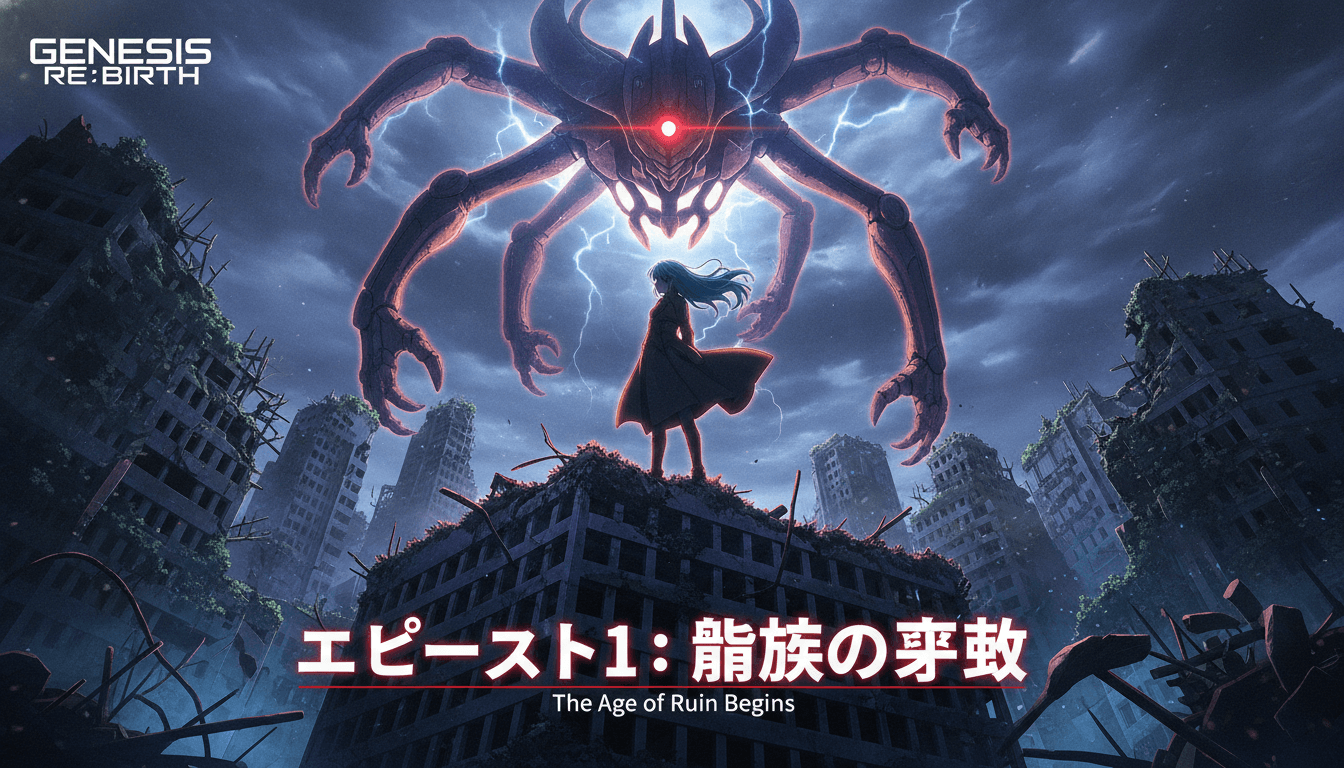
See the shots before you render them. C2Anime works as an anime storyboard generator: hand it a script and it comes back with an ordered board — the shot list, who is in frame, what each panel is doing — built around a cast that has already been designed. Fix the staging while it is still cheap, then render the board as anime.
How the anime storyboard generator works
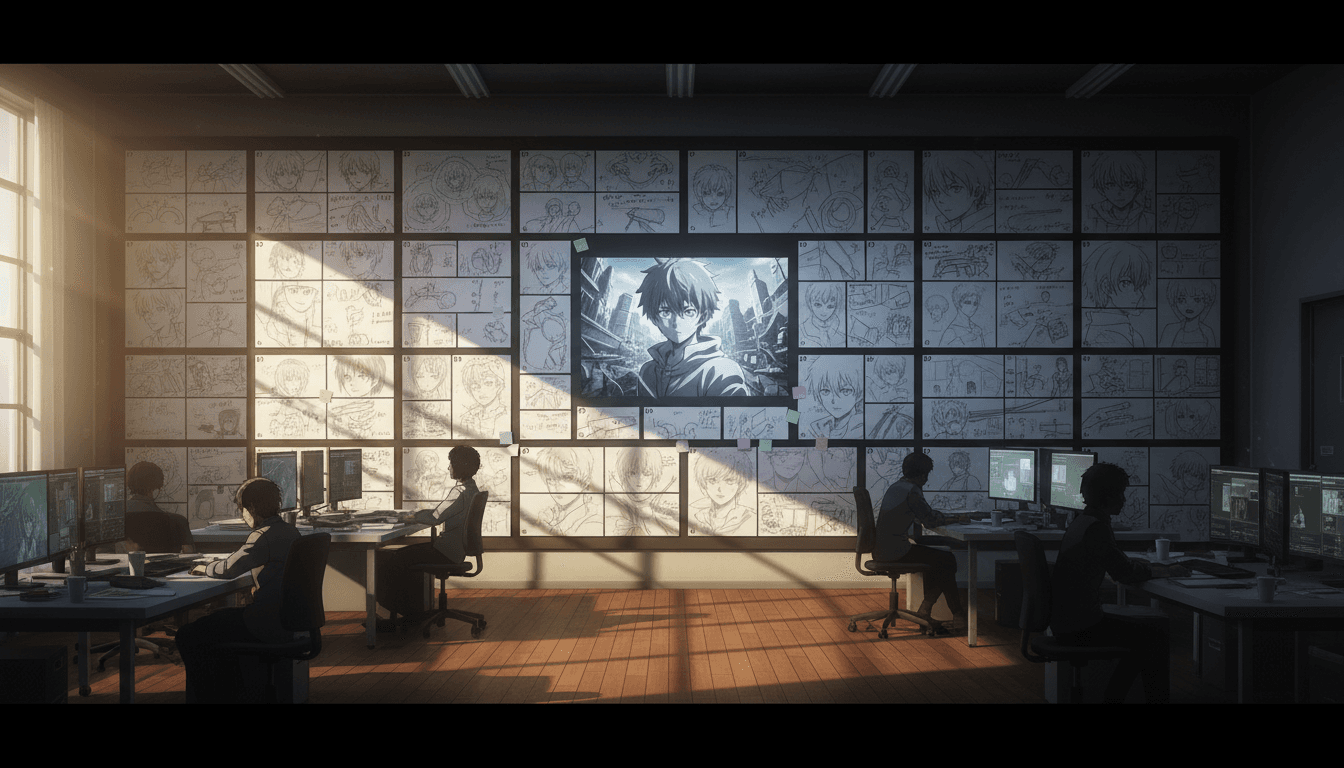
Three stages. Boarding sits in the middle on purpose — it is the last point where changing your mind costs nothing.
Give it the story
Paste a premise, a scene, a screenplay or a chapter. C2Anime reads it for structure first — what happens, who is in it, and where the turns are.
It boards the scenes
The story comes back as an ordered shot list: what is in frame, who is speaking, how the camera sits. You read the board before anything renders.
The board becomes anime
Approve the staging and the same panels are rendered as voiced anime scenes, using the cast designs the board was built around.
Why board before you render
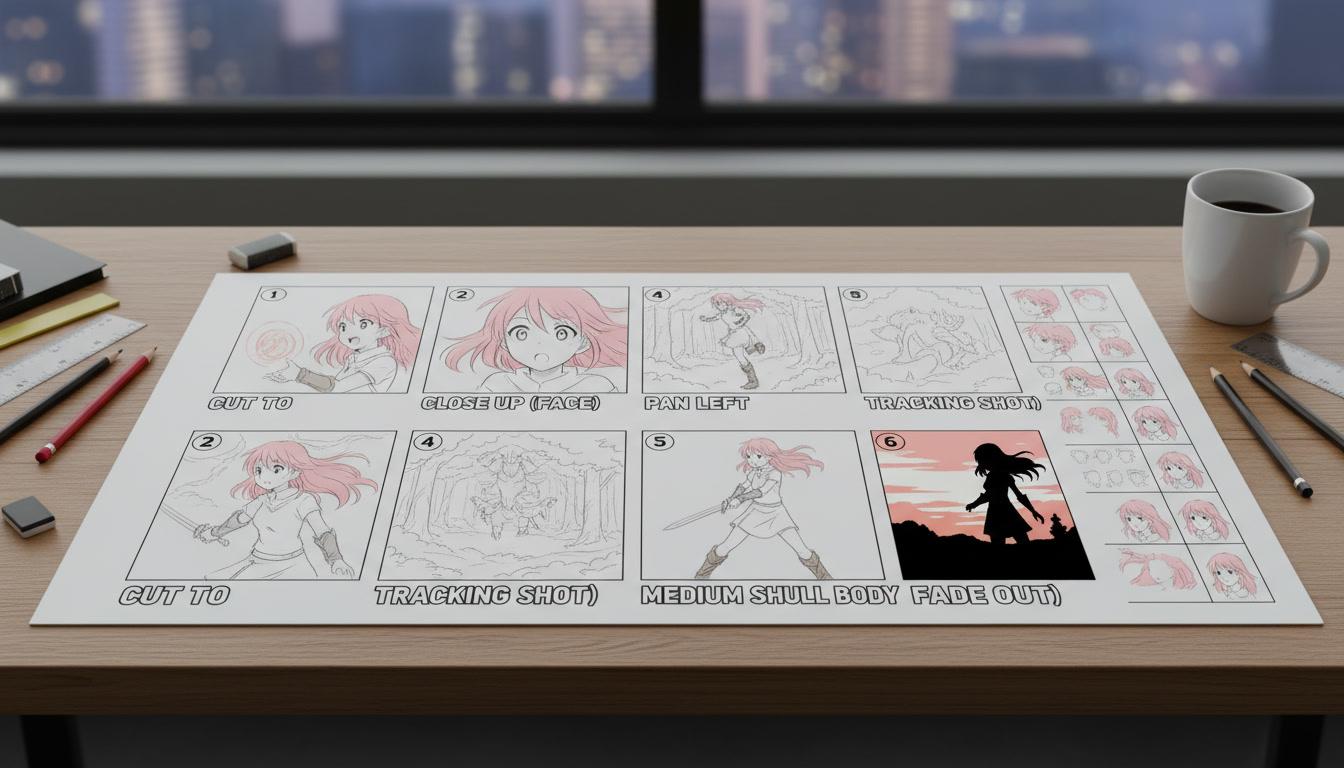
Storyboards exist in real animation for one reason: rendering is the expensive step and staging mistakes are the common ones. A shot that crosses the line, a conversation with no establishing wide, a beat that lands two panels too late — all of it is obvious on a board and invisible in a prompt.
Generating finished shots first inverts that. You pay for the render, watch it back, notice the scene does not read, and pay again. Do that across a whole short and most of your effort goes into discovering problems a board would have shown you in a minute.
So C2Anime boards first. You get the sequence as a plan you can read and edit — reorder shots, cut a panel, change who is on screen — and only then does anything get rendered.
A board is only useful if the cast holds
Panels are worthless as a plan if the characters change between them. The whole point of boarding a scene is to check continuity, and you cannot check continuity against a character who gains a jacket in panel six and loses it in panel nine.
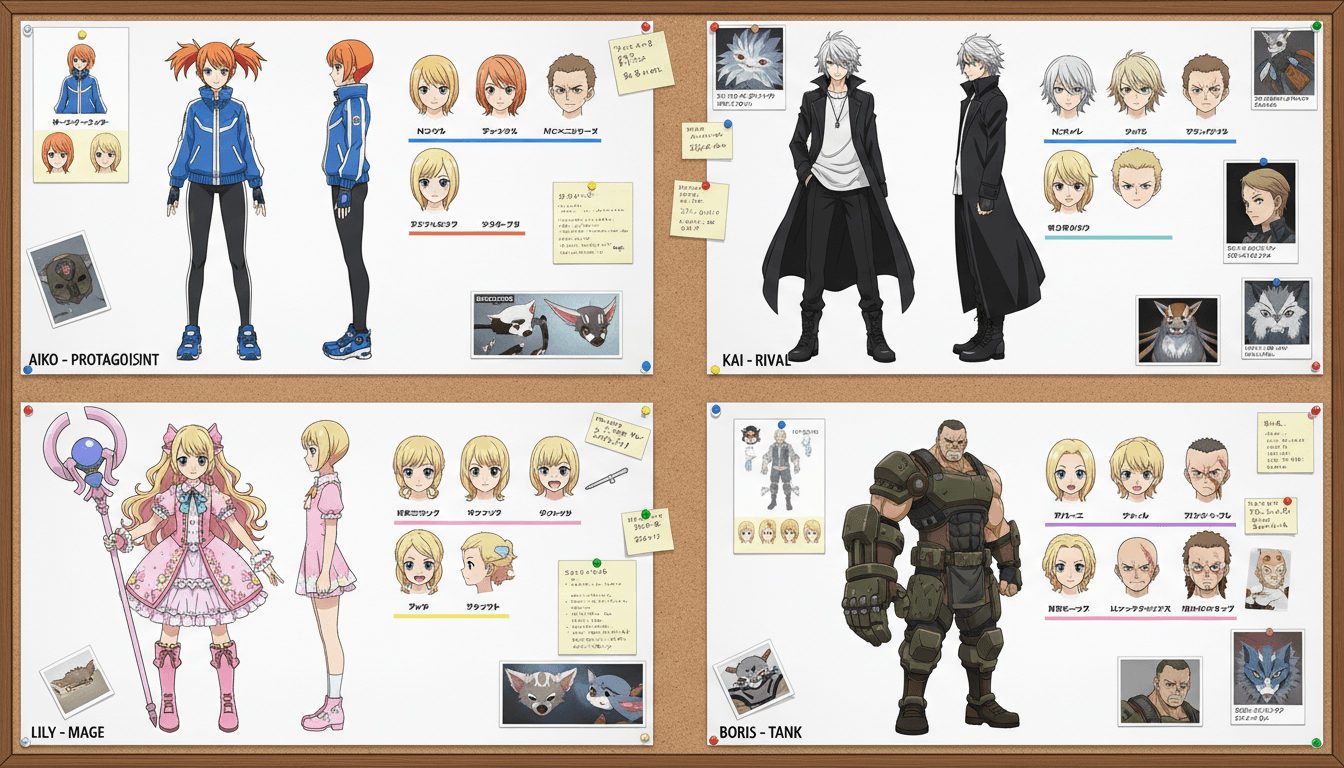
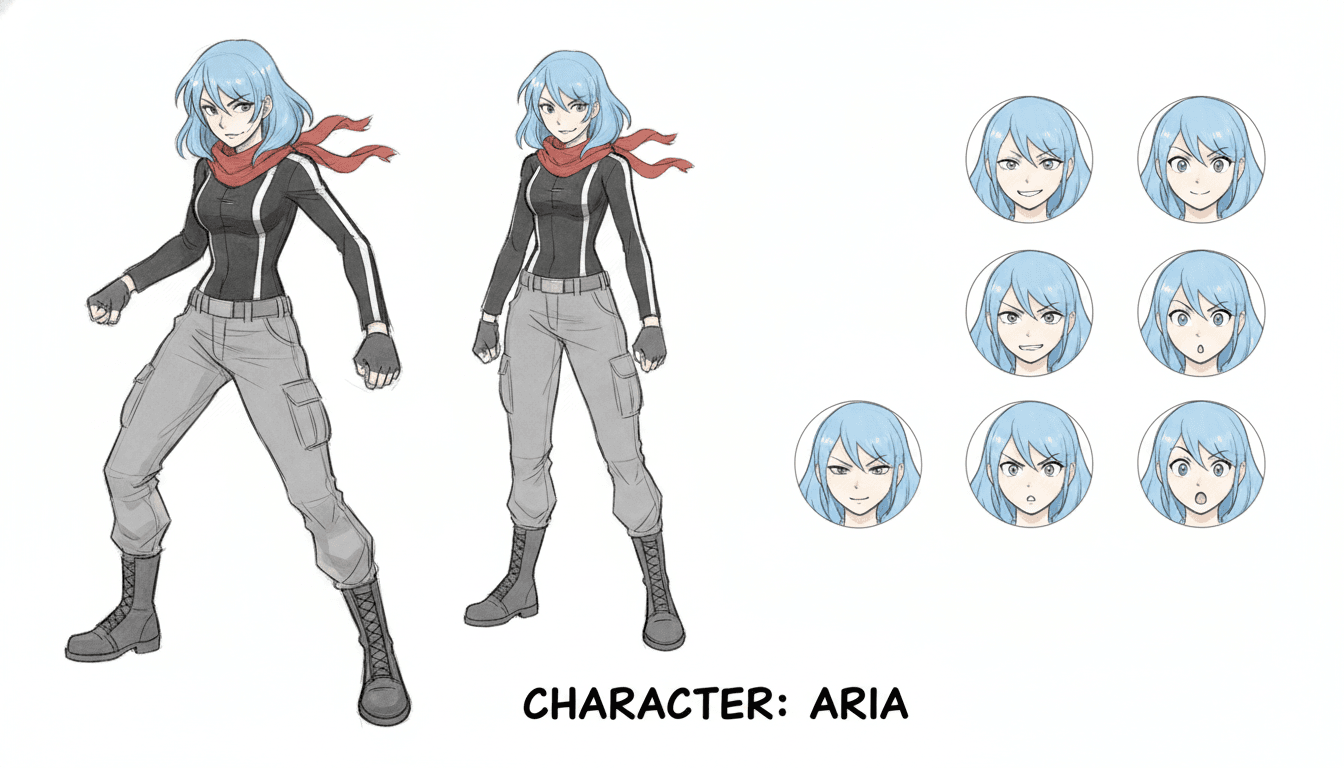
C2Anime designs each character before boarding starts and treats that design as a fixed reference. The board is drawn against the cast, and the render is drawn against the same cast, which is why what you approve is close to what you get.
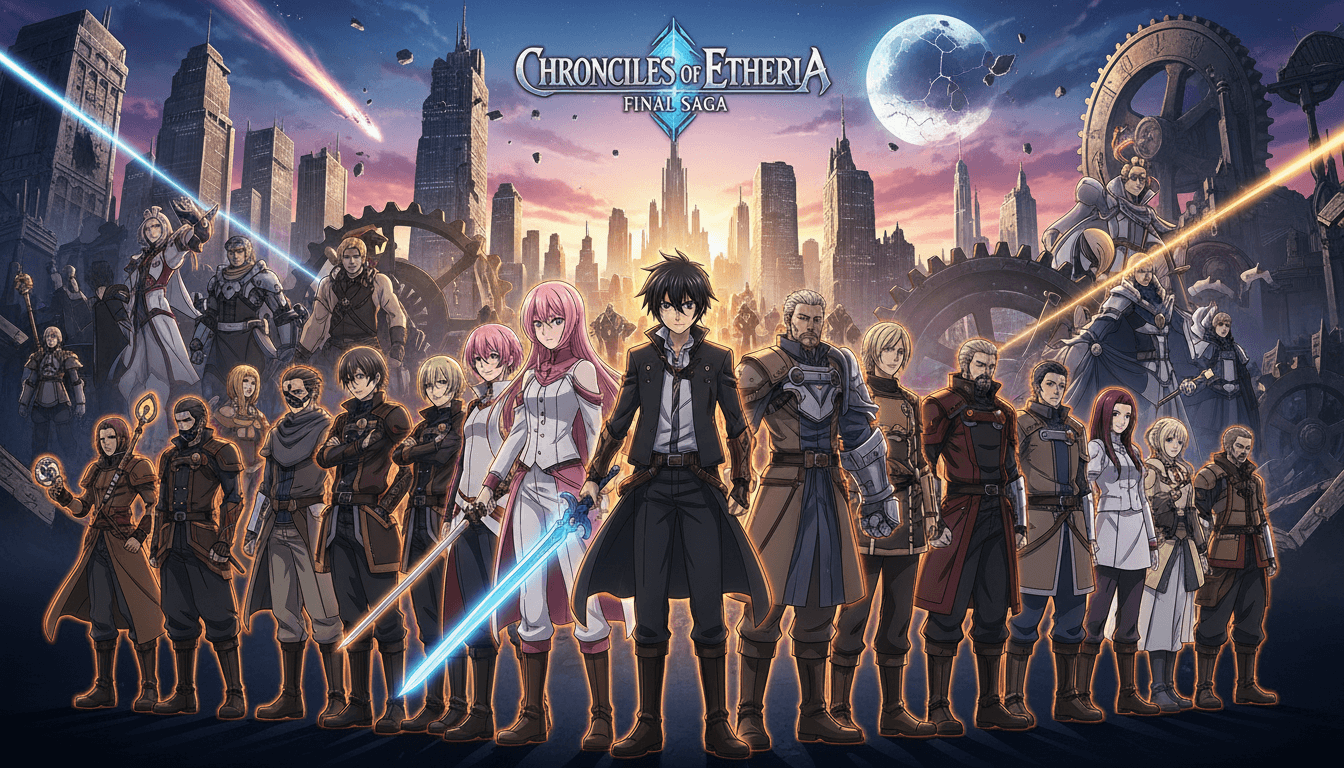
It is also what makes a second episode possible. The same character references carry forward, so a board for episode two starts from the cast you already have rather than from scratch.
What the anime storyboard generator gives you
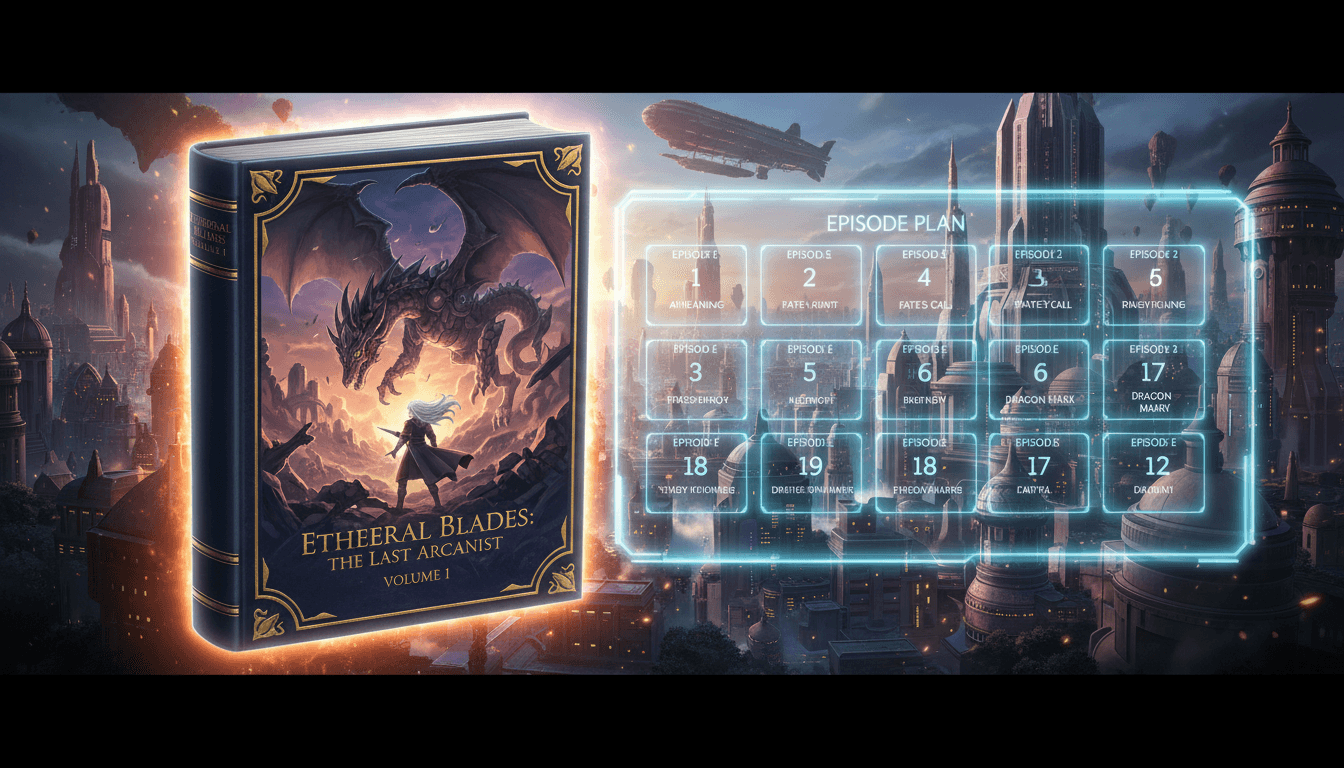
Numbered shots, in order
Every scene arrives as a sequence you can read top to bottom, so you can see the pacing before you spend a single render on it.
The same cast in every panel
Characters are designed once and referenced by the board, so the face in panel 2 is the face in panel 40.
Staging you can argue with
Framing, who is on screen and what the shot is doing are written down. If the coverage is wrong, you change it on the board.
Boards tied to a screenplay
The panels are not free-floating images. Each one belongs to a scene in a real screenplay with headings, action and dialogue.
Who uses an anime storyboard generator
Directors working alone. Boarding is normally the stage where you find out whether a scene works, and normally it needs a board artist. Generating the board means you can test the staging the same day you write the scene.
Storyboard artists blocking out coverage. A generated pass is a starting position, not a finished board. Use it to block a sequence quickly, then push the shots that matter.
Writers who cannot picture their own scene. Some scenes read fine and stage badly. Seeing the shot list is the fastest way to find out which kind you wrote.
Anyone adapting something long. A novel chapter has more beats than it looks like. Boarding shows you the pacing of the adaptation before you commit to rendering it.
Anime storyboard generator: common questions
- What is an anime storyboard generator?
- An anime storyboard generator turns written material into a planned sequence of shots before anything is animated. Instead of rendering a clip and hoping it fits, you get an ordered board — what is in each panel, who speaks, how the camera sits — and you fix the staging there, where changes are cheap.
- How is this different from generating images one at a time?
- An image generator answers one prompt with one picture and forgets it immediately. A storyboard is a plan for a whole scene: panel four knows what happened in panel three, the same characters carry through, and the shots are ordered to tell the story rather than to look good in isolation.
- Can the anime storyboard generator keep my characters consistent?
- Yes — that is the part it is built around. C2Anime designs your cast once and treats those designs as fixed references for every panel and every rendered scene, so hair, outfit and face stay the same across the board.
- Do I have to draw anything?
- No. You bring the writing and the opinions. The board is generated from your story, and you direct it by changing the plan rather than by drawing panels.
- Can I change the board before it renders?
- That is the point of boarding first. Reorder shots, cut a panel, change who is in frame or rewrite a line, then render. You can also re-render one scene without rebuilding the whole video.
- Does the storyboard turn into an actual video?
- Yes. C2Anime is not a boards-only tool — the approved board is rendered as voiced anime scenes with dialogue, not as a slideshow of stills with narration over the top.
- What length of story does it handle?
- Anything from a single scene to a full short or an episode. Longer stories are exactly where boarding pays off, because that is where pacing problems hide until it is expensive to fix them.
Board it first. Then shoot it.
Read the shots, fix the staging, render the anime.
Start your storyboardPlanning a scene with an anime storyboard generator
An anime storyboard generator sits between the script and the render. Its job is to answer the questions a screenplay leaves open: how many shots this scene needs, what is in each frame, who is speaking, and what the camera is doing while they speak. C2Anime produces that board from your own writing — a premise, a scene, a screenplay or a chapter — and shows it to you as an ordered sequence of panels rather than as a finished video you can only accept or throw away.
What separates a useful board from a set of pretty images is continuity. A storyboard maker for anime has to hold the cast steady, because the entire value of the board is that you can check whether the scene reads — and you cannot check that against characters who change between panels. C2Anime designs the cast up front and boards against those references, so the same face, hair and outfit appear in every panel and again in every rendered shot.
Boarding also changes what an edit costs. On a board, cutting a shot, reordering two panels or moving a line of dialogue is a small change you make in seconds. After rendering, the same change means regenerating footage and hoping the new take matches the old one. This is why professional animation boards first, and it is the same reason an AI storyboard for anime is worth generating before you render anything.
C2Anime does not stop at the board. Once the staging is approved, the same panels are rendered as voiced anime scenes with real dialogue, using the screenplay and the cast the board was built on. Bring the story, read the shots, and start directing.