Manga to anime video, with your cast still on model
You already drew the hard part. C2Anime takes manga to anime video the way a studio would: it reads the chapter, designs your cast once, writes a screenplay from your panels and dialogue, then renders voiced scenes that connect. Not five-second clips — actual scenes, with the same character walking through all of them.
How manga to anime video works
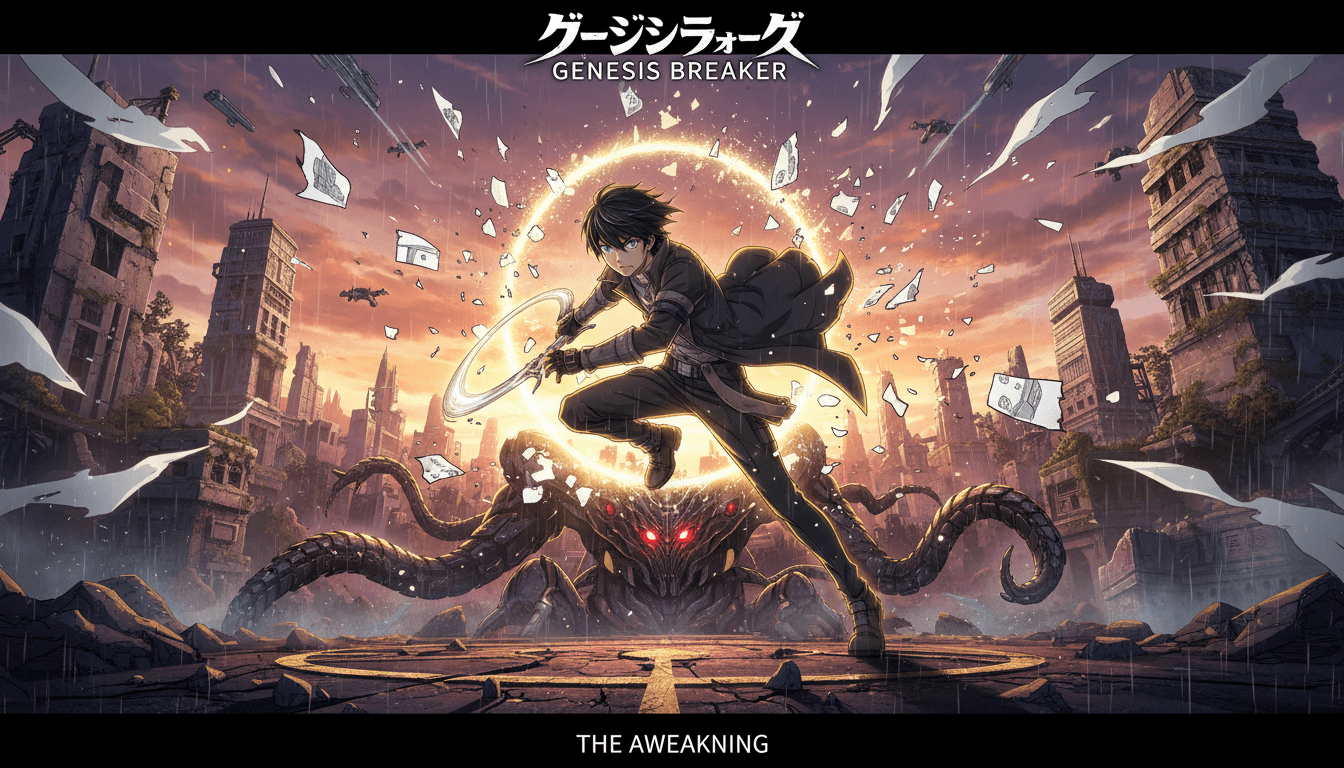
Three stages, in this order. The order is why the finished video holds together instead of drifting.
Bring the manga
Describe your chapter, paste the script behind it, or hand over the story your panels tell. C2Anime reads it for structure — who is in it, what changes, where the turn lands.
Cast and screenplay first
Your protagonist is designed once and locked as a reference. Then the panels become a real screenplay: scene headings, action lines, and the dialogue your speech bubbles already carry.
Scenes get rendered and voiced
Each scene is staged and rendered against that plan, with characters who speak. What comes back is an anime video, not a slideshow of your artwork.
What happens between the panels
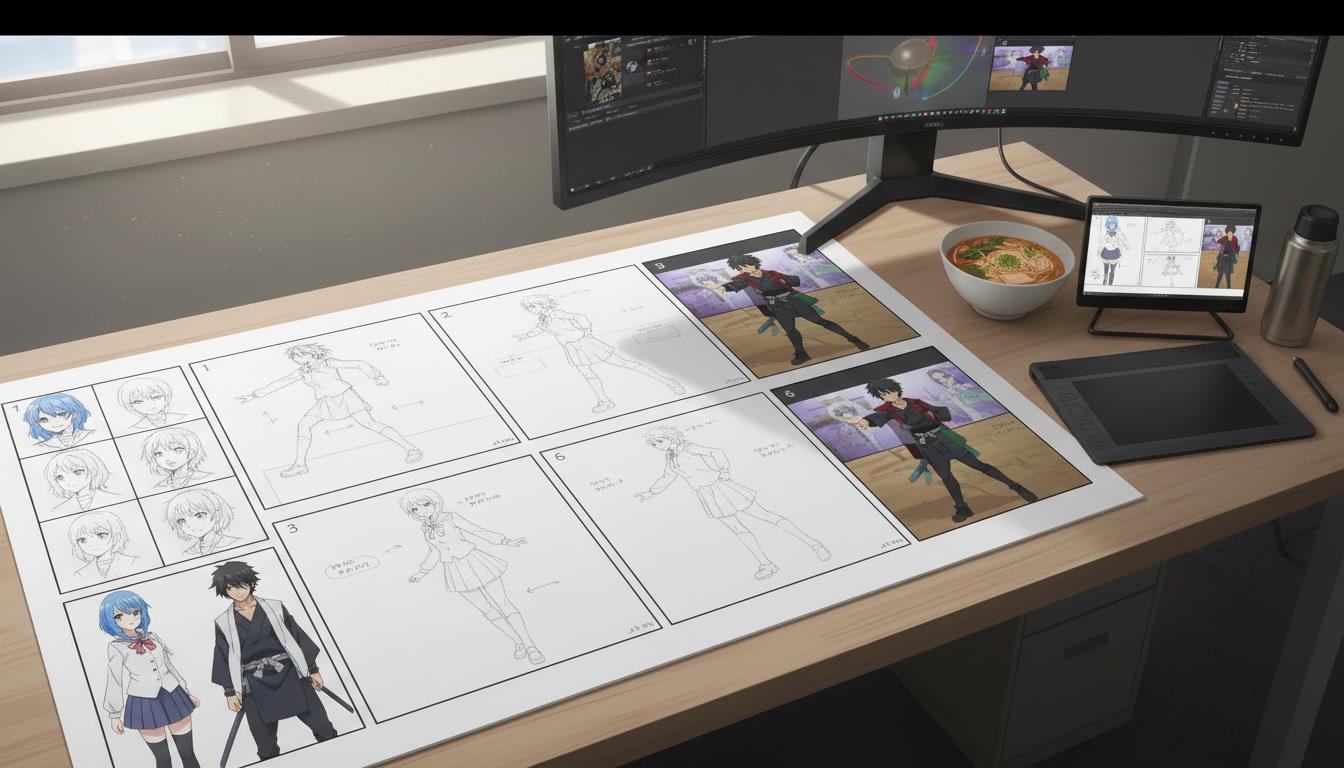
Manga works by ellipsis. You draw the swing and you draw the aftermath, and the reader fills the gap in their head. Anime cannot do that — the camera has to be somewhere for every frame in between, and someone has to decide where.
That decision is the whole job of the screenplay step. Before anything renders, C2Anime works out the shot order inside a scene: which panel is an establishing wide, which is the close on the reaction, how long a beat holds before the next line lands. Your panels stop being isolated moments and become the key frames of a continuous sequence.
It is also where pacing gets fixed. A page turn in manga is a cut with weight behind it. In the plan, that turn becomes a real edit instead of a shot that ends because the clip ran out.
Why manga to anime breaks without a locked cast
Ask any artist who has tried to animate manga with AI what fails first and the answer is the character. The face shifts. The hair gains a strand. The jacket that was black in panel one comes back charcoal three scenes later. Your readers recognise your protagonist instantly, which means they notice the drift instantly too.
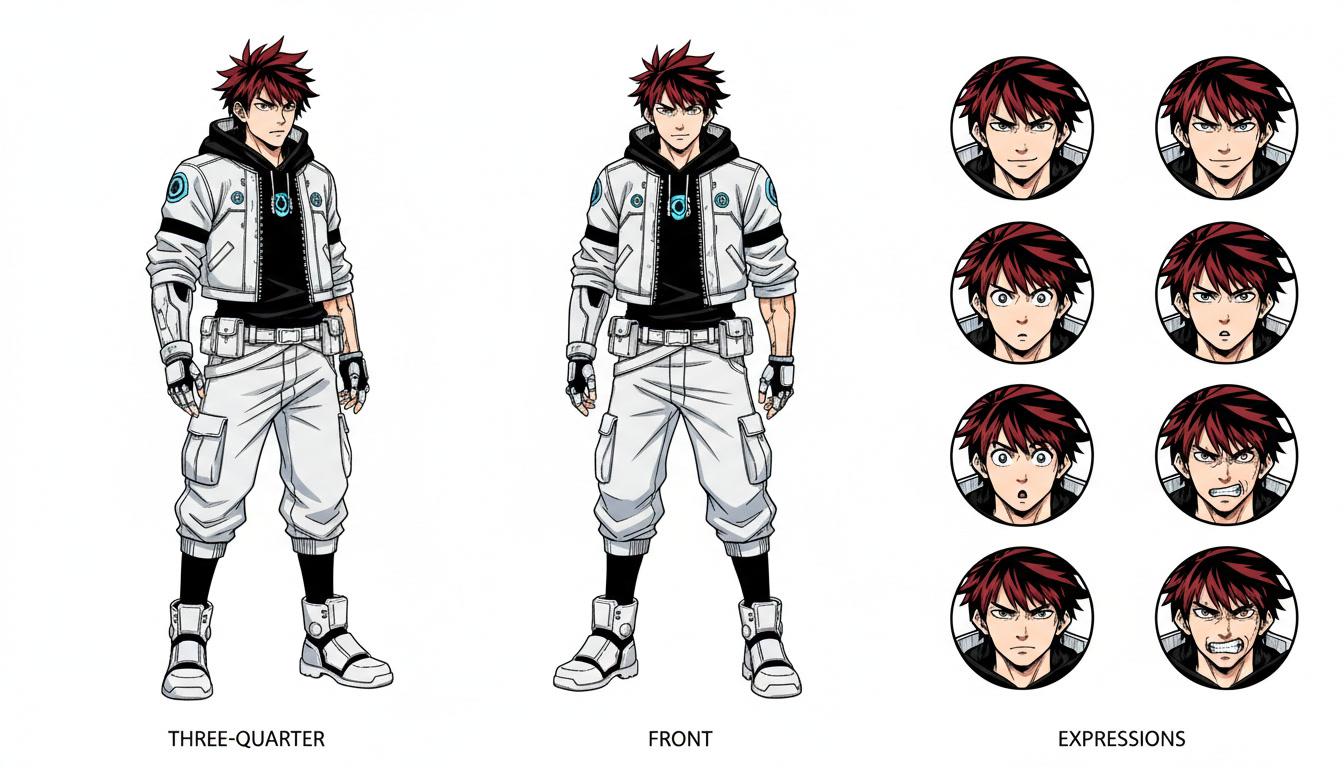
C2Anime designs each character once, before rendering begins, and treats that design as a fixed reference for the rest of the production. When your lead walks into the ninth scene, the system is not reinventing them from a prompt — it is reusing a cast member it already built.
For a serialised manga this is the difference between a one-off experiment and something you can keep making. The same cast can carry from chapter to chapter, which is what an audience comes back for.
What C2Anime handles for your manga
Your protagonist stays your protagonist
A manga reader knows your character by silhouette. C2Anime designs the cast up front and reuses those references in every scene, so the face in the final cut matches the face in the opening one.
Panels become scenes, not clips
A panel is a moment; a scene is a moment with a before and an after. The screenplay step works out what happens between your panels so the motion reads as continuous.
Speech bubbles become voices
Dialogue is the spine of most manga. Every character gets a voice and keeps it, so a conversation plays as a conversation instead of narration over stills.
Long enough for a chapter
Full scenes and episode-length runtimes, so a chapter can actually arrive somewhere rather than cutting off after five seconds.
Who adapts manga here
Serialised manga artists. You have chapters banked and readers waiting. An animated version of chapter one is the thing that reaches people who will never click a page of panels, and it uses the story you have already finished.
Doujin and self-published creators. Animation has always been the wall — a studio, a budget, a year. A animated adaptation you direct yourself gets your work moving without any of that.
Artists pitching a series. A voiced scene with a consistent cast says more about how your manga should feel on screen than a deck ever will.
Webtoon and vertical-scroll creators. The same logic applies to scroll-format work: the story and the dialogue are already there, and the adaptation turns them into scenes.
Manga to anime video: common questions
- How does manga to anime conversion work here?
- C2Anime works from the story, not from tracing your drawings. You give it the chapter — the plot, the characters, the dialogue — and it plans the adaptation: act structure, scene list, a designed cast, then a screenplay. Only after that does it render voiced anime scenes against the plan.
- Can I upload my manga pages?
- The adaptation is driven by your story and character descriptions rather than by scanned artwork. The more precisely you describe your cast — hair, build, outfit, the details a reader would notice — the closer the rendered characters land to the ones on your pages.
- Will my characters look consistent across the whole video?
- That is the part C2Anime is built around. Characters are designed once before rendering starts and reused as fixed references, so hair length, outfit details and face do not drift between scene two and scene nine.
- Does the finished anime video include dialogue?
- Yes. Scenes are built around spoken dialogue, with a voice assigned per character and held for the whole production. Your speech bubbles become lines that get delivered, not subtitles over a still image.
- How much of a chapter can I adapt at once?
- Enough for a complete sequence with a beginning, middle and end, rather than a single beat. How many scenes it takes depends on how much happens in the chapter, and you review the plan before anything renders.
- Do I need animation or storyboarding experience?
- No. Staging, shot order, pacing and casting are handled for you. What you bring is the manga and your opinions about how the scenes should feel — you stay the director.
- Can I change the adaptation before it renders?
- Yes. The scene plan and the screenplay are editable before rendering, and individual scenes can be re-rendered without redoing the whole video.
Your panels already move in your head
Bring a chapter. Leave with an anime scene everyone else can see too.
Start your adaptationTaking manga to anime video without losing the work
Going from manga to anime video is an adaptation problem before it is a rendering problem. A chapter is built out of chosen moments and the silence between them; an episode has to fill that silence with staging, timing and voice. C2Anime treats those as separate jobs done in order: read the chapter, design the cast, write the screenplay, then render. Every one of those stages is visible and editable before a frame exists, which is why the finished scene resembles the one you had in mind.
The reason most manga to anime attempts fall apart is continuity. Tools that generate each shot from a fresh prompt have no memory of the previous shot, so the character your readers know by silhouette turns into a slightly different person every few seconds. C2Anime fixes the cast up front and reuses those references for the whole production, so the protagonist in the final shot is the protagonist from the first panel — same face, same hair, same outfit details.
Dialogue matters just as much. Manga carries most of its character work in speech bubbles, and an adaptation that drops that in favour of narration over stills loses what made the chapter land. Scenes here are built around spoken lines, with a voice assigned per character and held across the runtime, so an argument plays like an argument and a quiet exchange keeps its weight.
C2Anime is in invite-gated Early Access with paid credit tiers, and it works from whatever form your story is in — a chapter script, a detailed premise, the plot and dialogue behind your panels. If you have a manga and you have wanted to see it animated, this is the manga to anime video route that keeps your cast, your dialogue and your pacing intact. Start with one chapter and direct it yourself.