Web novel to anime, arc by arc
A serial is already built for episodes. C2Anime turns a web novel to anime the way your readers actually read it — one arc at a time, with the same cast and the same world holding steady across the whole run. Give it the chapters; it plans the structure, writes the screenplay and renders voiced scenes.
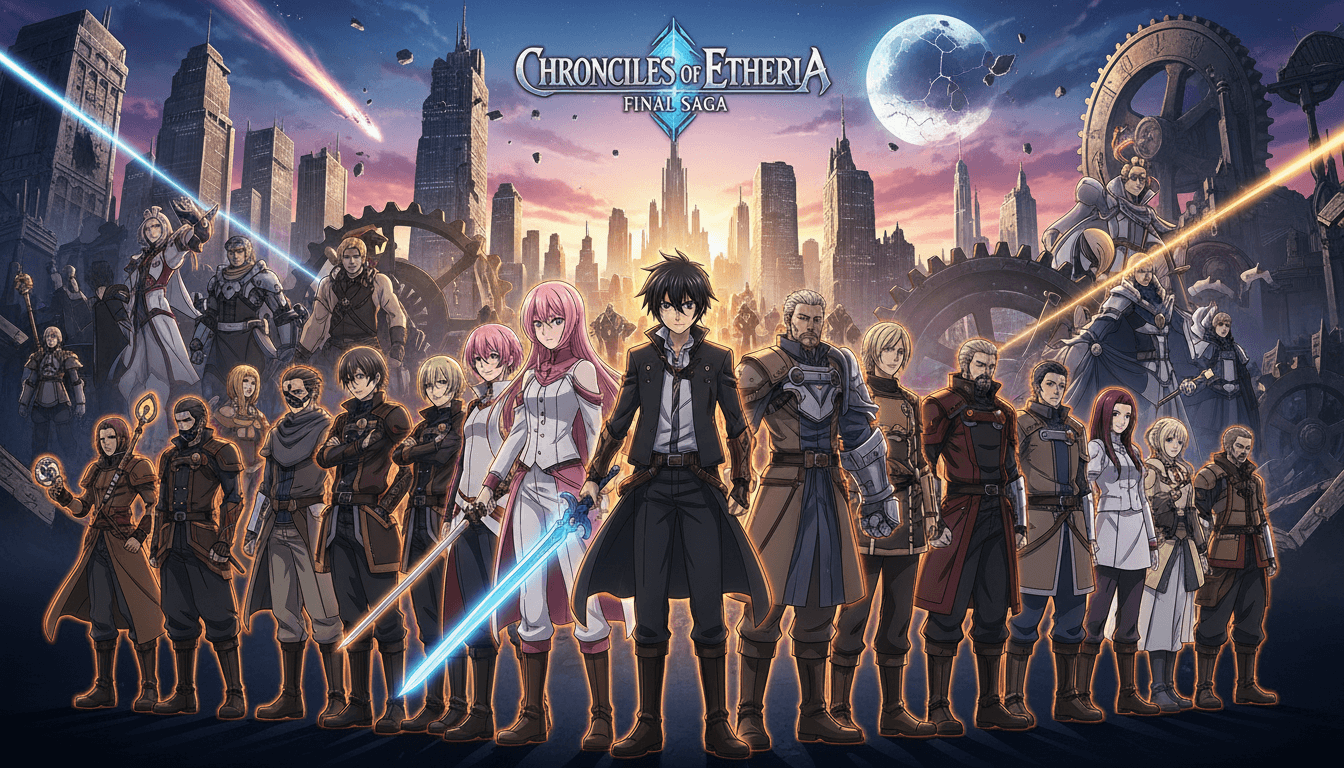
How web novel to anime adaptation works
Three stages. The planning comes first, which is why the episodes end up connected to each other.
Pick the arc, not the whole archive
Paste the chapters that make up one arc. A web serial is already cut into units — the arc is the natural unit of an episode, not chapter one through four hundred.
The director plans the episode
It reads the chapters, finds the beats that carry the arc, decides who is in each scene, and writes a screenplay with real dialogue. You read the plan before anything renders.
Scenes render with your cast
Characters are designed once and reused, so the protagonist looks the same in the arc you adapt next month as in the one you adapt today.
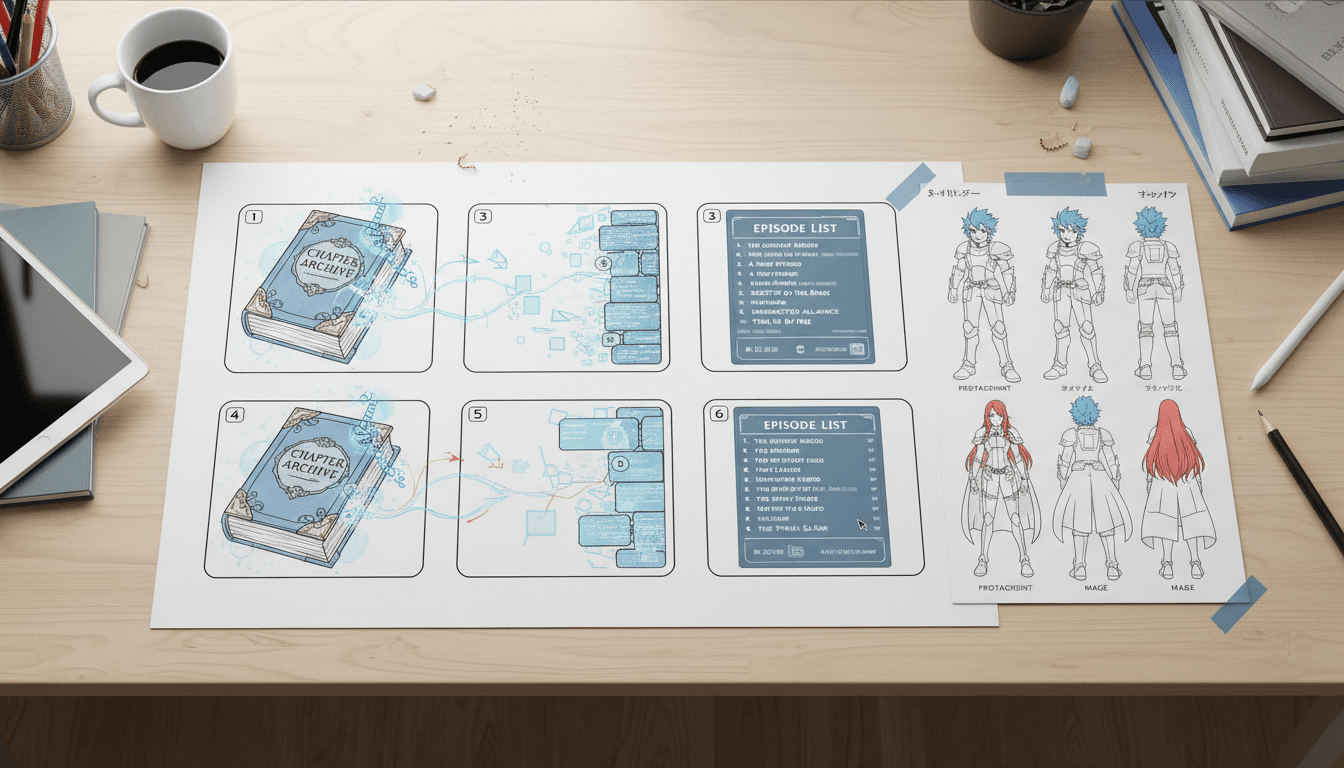
A serial is already an episode list
Web serials are written under constraints that happen to be television constraints. Chapters end on a hook because the next update is a week away. Arcs open a problem and close it. A cast rotates in and out depending on whose turn it is to matter. That is episodic structure, arrived at honestly.
So the adaptation question is not “how do I compress four hundred chapters”. It is “which arc do I shoot first”. C2Anime takes the chapters of one arc, finds the beats that carry it, and lays them out as scenes — establishing the situation, escalating it, paying it off — before writing a line of dialogue.
You see that plan and can argue with it. Cut a subplot, promote a side character, move the reveal later. Once it reads right, the scenes get rendered against it.
The cast has to survive the long run
Length is what makes serial fiction hard to adapt with AI. Anyone can get one good-looking shot. The problem shows up at shot forty, and again at episode six, when the protagonist's hair is a shade off and the sect robes have grown an extra trim. Readers who have followed your serial for a year will catch it instantly — they know that character better than you do on a bad day.
C2Anime designs each character once and treats that design as a fixed reference for everything that comes after. A rival introduced in arc two is not re-imagined when he reappears in arc nine; the same reference is pulled again. The same applies to the world: uniforms, cities and signature weapons are locked rather than re-guessed.
That stability is the whole reason a web novel to anime run can be a series rather than a scattering of clips.
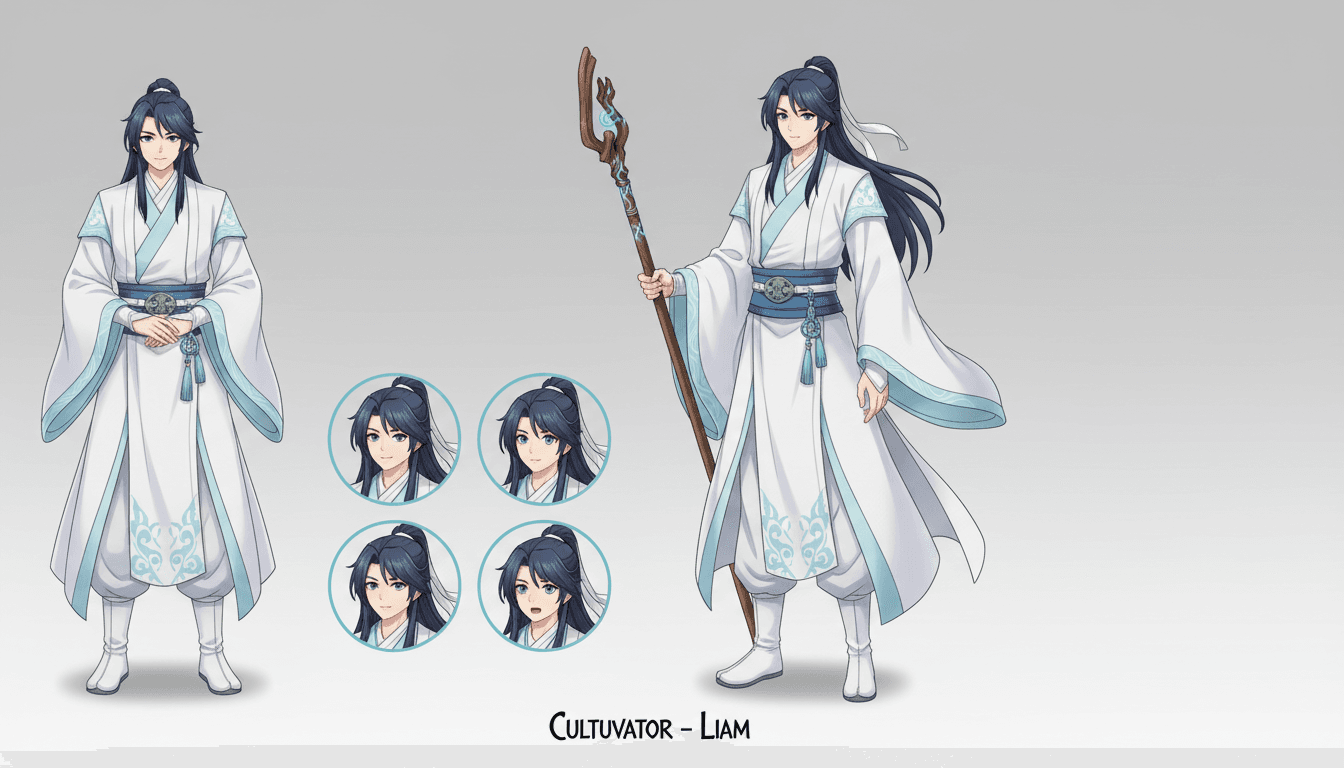
What the web novel to anime workflow handles
A cast that survives a long run
Serials accumulate characters. Each one is designed once and stored as a reference, so a face introduced in arc one still matches when they return two hundred chapters later.
A world that stays put
Sects, cities, uniforms, weapons — the visual rules of your setting are fixed up front instead of being reinvented every time a scene mentions them.
Screenplay before render
Prose is description; anime is action and dialogue. The screenplay step turns your chapters into staged scenes you can edit before a frame is made.
Characters with voices
Dialogue-heavy serials become dialogue-driven anime. Every character gets a voice and keeps it across episodes instead of a narrator reading your prose aloud.
Where serials trip up ordinary AI video tools
Too many named characters. A serial with fifty chapters already has a dozen people who need to be recognisable. A tool that generates each shot from a fresh description has no way to keep them apart, so everyone drifts toward the same face.
Information density. Web novel chapters explain a lot: power systems, rankings, politics. Dropped straight into a video prompt, that becomes narration over stills. The screenplay step converts the exposition into scenes where characters say things to each other.
The run never ends. You are still publishing. An adaptation that cannot be resumed six weeks later with the same cast is not much use to you — which is why the character references persist rather than living inside one generation.
Web novel to anime: common questions
- How does web novel to anime adaptation actually work?
- You give C2Anime the chapters for one arc. The AI Film Director reads them, proposes a scene structure, designs the characters who appear, writes a screenplay with dialogue, and then renders the scenes as voiced anime. You approve the plan before rendering starts, so the adaptation follows your beats rather than inventing new ones.
- My serial is 300+ chapters. Do I have to adapt all of it?
- No, and you should not try. Adapt one arc at a time, the same way your readers consumed it. Because the cast and world are stored as fixed references, the arcs you adapt later still match the ones you adapt now — so the run builds up into a series instead of a set of unrelated videos.
- Will my characters look the same across every episode?
- That is the core of it. Each character is designed once and that design is reused for every scene and every later episode they appear in. Same face, same hair, same outfit rules. This is the part that breaks first when people try to make anime by prompting shot by shot.
- Does it work for cultivation, system and isekai serials?
- Yes. Those genres lean on recurring visual signatures — sect robes, status windows, a specific sword, a beast companion — and those are exactly the things a fixed character and world reference holds steady. The more consistent your setting is on the page, the more faithfully it can be staged.
- What if I am still publishing chapters weekly?
- Then a web novel to anime workflow fits the way you already write. Adapt the arc that just closed while you draft the next one. Nothing requires the serial to be finished.
- Can I change the adaptation before it renders?
- Yes. The scene plan and the screenplay are editable. If the director cut a beat you care about or gave a line to the wrong character, you fix it there rather than re-rolling finished video.
- Do I need any animation or editing experience?
- No. You need chapters and opinions. Staging, casting, timing and voices are handled for you; your job is to say whether the adaptation is right.
Your readers have been imagining it for years
Start with the arc they still argue about.
Adapt your serialAdapting a web novel to anime with AI
Web serials are the closest thing prose has to a television schedule. They run for years, they end chapters on hooks, and they group their story into arcs that open and close. That structure is why a web novel to anime adaptation is a more natural fit than adapting a standalone book: the episodes are already implied by the way the story was published. C2Anime works with that grain rather than against it, taking one arc at a time and building it into a planned, voiced anime episode instead of trying to compress an entire archive into a trailer.
The hard requirement for serial adaptation is continuity, and it is where shot-by-shot AI video falls down. A long-running cast has to be recognisable every time it appears — not just within one video, but across episodes made weeks apart. C2Anime designs each character once and keeps that design as a fixed reference, so the protagonist of arc one is still the protagonist of arc twelve. World details get the same treatment: the sect uniform, the city skyline, the sword everyone knows by name.
Before anything renders, the AI Film Director writes a screenplay. This step matters more for serial fiction than for any other source, because web novels carry a lot of their story in explanation — power systems, rankings, internal monologue. A screenplay turns that into staged scenes with dialogue between characters, which is what anime actually is. You can read the screenplay, change it and re-plan before committing to a render.
Whether your serial is cultivation, system, isekai, romance or litRPG, the workflow is the same: pick an arc, review the plan, render the scenes, keep the cast. If you are still publishing weekly, adapt the arc that just closed and come back for the next one — a web novel to anime run is meant to be built up over time, the same way you wrote it. Bring your chapters and start directing.