Webtoon to anime, with your cast intact
Going from webtoon to anime is not a filter you run over your panels. It is an adaptation: the scroll has to be re-cut into scenes, the silent bubbles have to be spoken, and your leads have to look like themselves in every shot. C2Anime plans that adaptation as a screenplay first, designs your cast once, then renders voiced anime scenes against the plan.
How webtoon to anime works in C2Anime
Three stages, in this order. Planning before rendering is the reason the finished episode holds together.
Bring the episode
Paste the script of an episode, the dialogue as it appears in your panels, or a written summary of the arc you want animated. C2Anime reads it as source material for an adaptation.
The scroll becomes a scene list
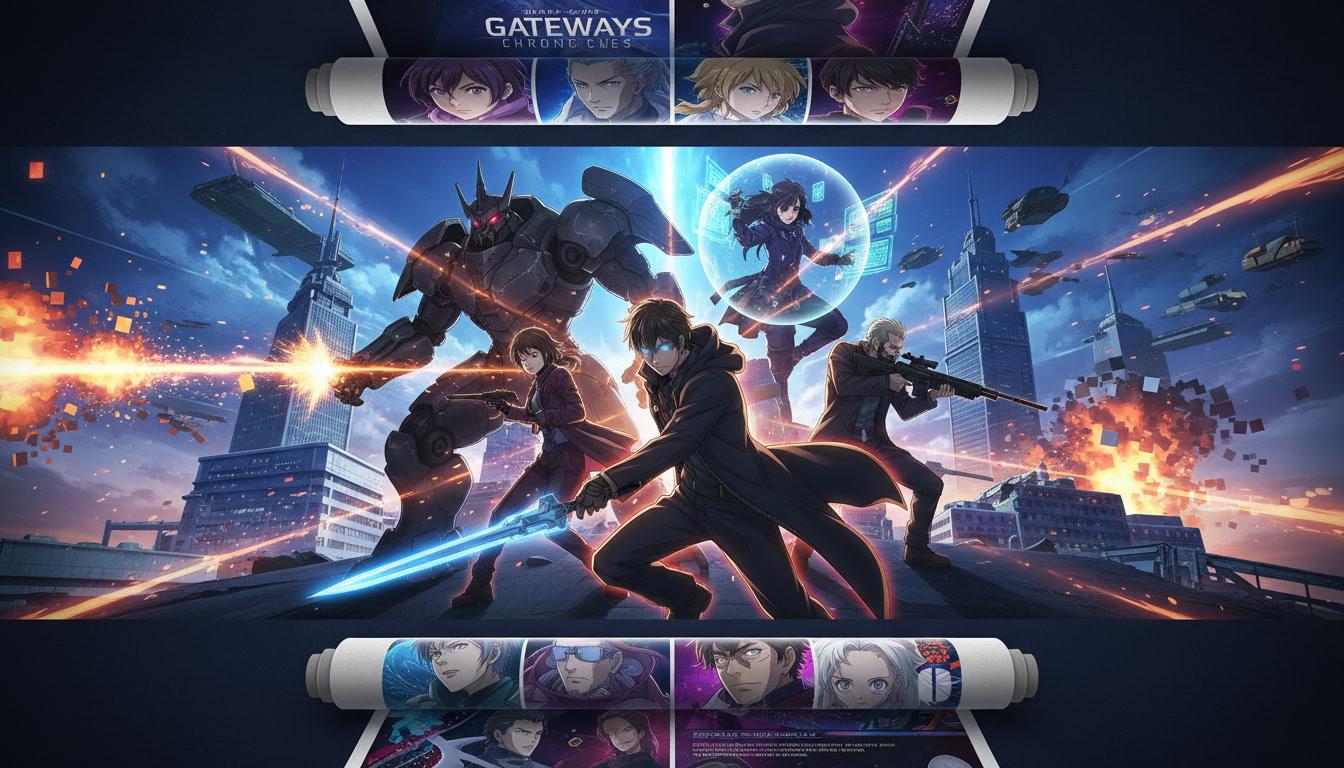
Vertical panels do not map one-to-one onto shots. The AI Film Director re-cuts your episode into scenes with entrances, beats and exits, and shows you the plan before rendering.
Scenes render with voices
Each scene is staged and rendered with the cast designed for your webtoon, with characters speaking their lines instead of a narrator reading them.
A scroll and an episode are paced differently
A webtoon controls time with the reader's thumb. You stretch a gap to make a silence land, stack three tight panels to speed up a fight, and drop a full-bleed panel where you want the reader to stop. All of that timing lives in how far someone has to scroll.
Video has no thumb. Timing has to be spent in seconds instead of pixels, which means a straight panel-to-frame conversion always reads wrong — either rushed through the beats you wanted held, or stalling on panels that were meant to fly past.
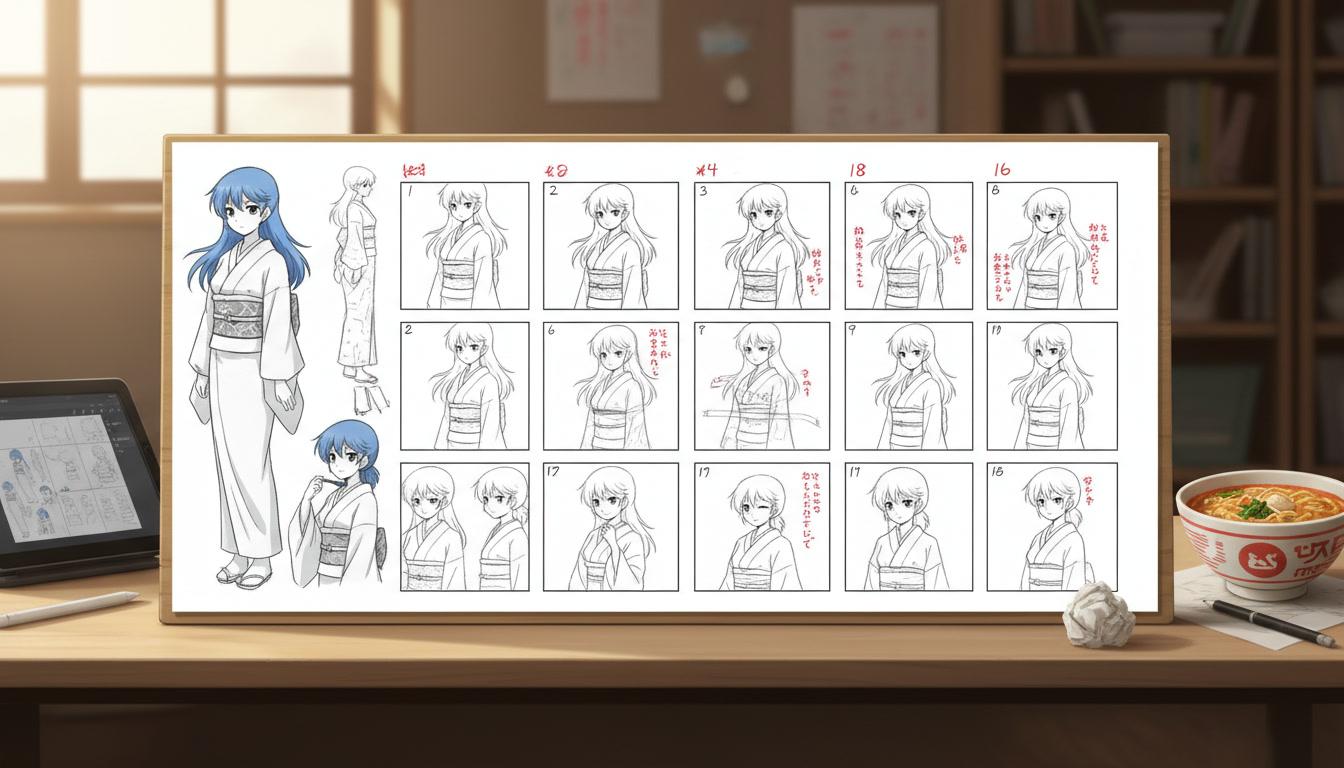
So the adaptation re-cuts. Your episode is broken into scenes with their own entrances and exits, the vertical gaps become held reactions, and the stacked panels become a run of quick cuts. You see that scene list and can change it before a frame is rendered.
Readers recognise your cast — keep it that way
The thing that kills most AI webtoon animation is character drift. A lead's hair gets longer between shots, an eye colour shifts, a jacket gains a strap it never had. Your readers spot it instantly, because they have been looking at that character for a hundred episodes.
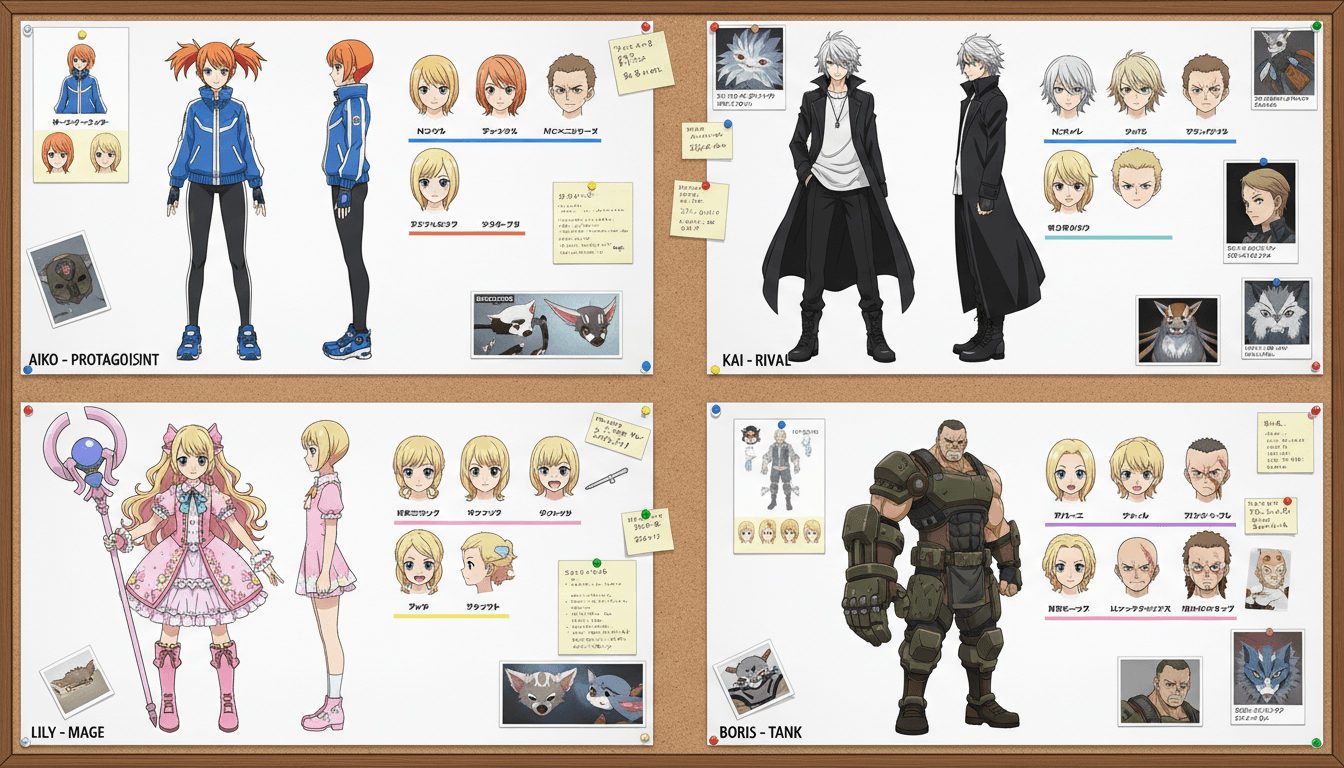
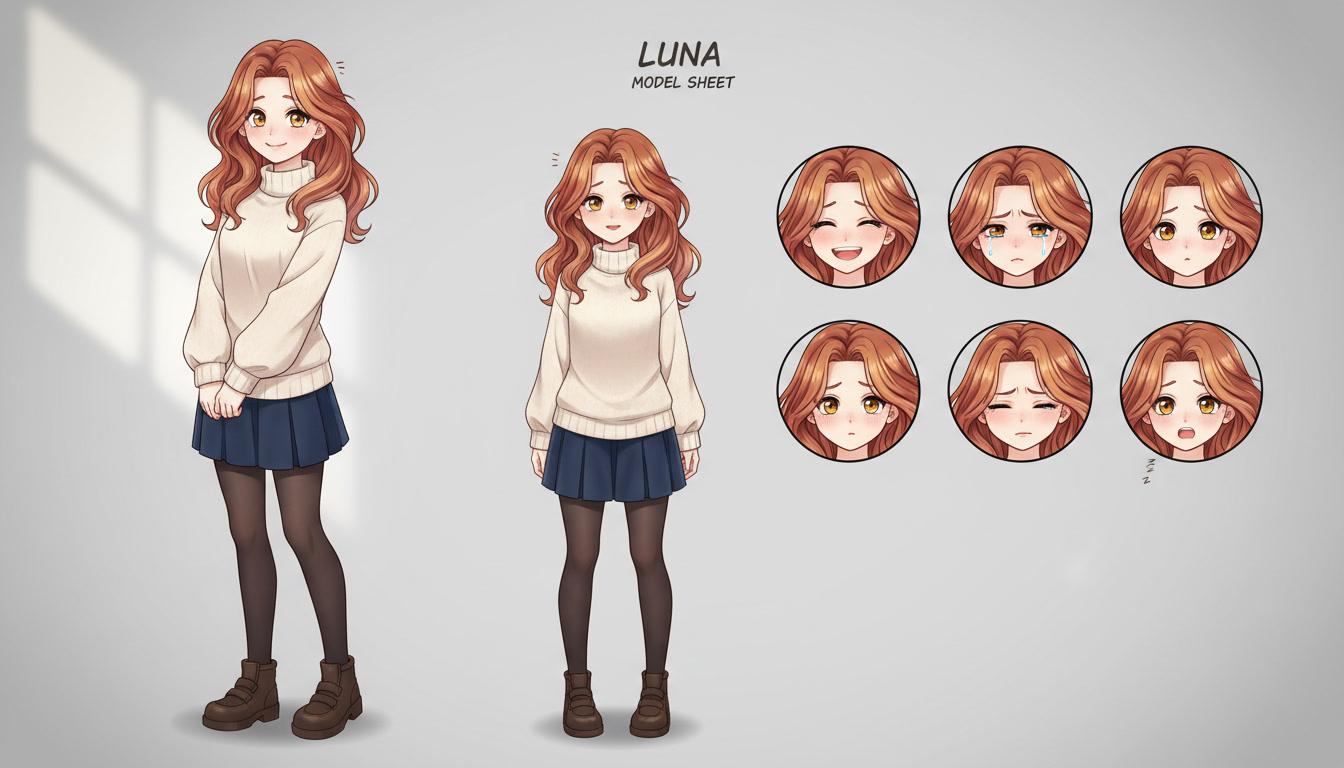
C2Anime designs each character once and treats that design as a fixed reference for the rest of the production. When your lead walks into scene nine, the system is reusing an existing design rather than reinventing one from a sentence of prompt.
That is also what makes more than one episode possible. The same cast carries forward, so episode two looks like it came from the same studio as episode one.
What the adaptation handles for you
Your leads stay your leads
Webtoon readers know your cast by silhouette. Characters are designed once and reused in every scene, so the face in the last shot matches the face in the first.
A screenplay before a frame
The adaptation is planned as a screenplay with scene headings, action and dialogue. You can read it and change it before anything renders.
Speech bubbles become voices
Dialogue that lived in bubbles gets performed. Each character keeps one voice across the episode, which is what makes a scene feel animated rather than narrated.
Vertical pacing, rebuilt for screens
A scroll paces itself by thumb. Video paces itself by time, so beats are given actual seconds — a held reaction, a cut on a line, a scene that lands.
Which webtoon creators this is for
Creators with a finished arc. You already know which chapter is the one people quote back at you. Adapting that arc into an animated episode gives returning readers something new without asking you to write a new story.
Creators launching a new series. An animated pilot scene travels further on short-form video than a cover image does. Same cast, same world, in a format the feed actually pushes.
Writers whose webtoon is still a script. If the art is the part you have never been able to finance, going straight from script to anime skips the drawing entirely and still gets the story on screen.
Webtoon to anime: common questions
- How does webtoon to anime conversion actually work?
- You give C2Anime the story of an episode — script, dialogue or a written breakdown. The AI Film Director plans the adaptation as a screenplay, designs a consistent cast, then stages and renders each scene as voiced anime video. You are adapting the story, not tracing the panels frame by frame.
- Do I upload my panel images?
- The adaptation is driven by your story and your character descriptions rather than by uploading a finished page. Describe your leads in detail — hair, build, outfit, the things readers recognise them by — and those descriptions become the character references used for every scene.
- Will the characters look consistent across the whole episode?
- That is the core of it. Character designs are locked before rendering and reused in every scene the character appears in, so your cast stays on model across a full episode instead of drifting shot to shot.
- How many panels make one scene?
- There is no fixed ratio. A long scroll of reaction panels might be four seconds of held silence; a single wide panel might become a thirty-second confrontation. The scene list is planned around story beats, and you review it before anything renders.
- Can I adapt a webtoon to anime across several episodes?
- Yes. Because the cast is defined once and stored, the same characters can carry from one episode into the next — which is what makes a series feel like a series rather than a set of unrelated videos.
- What art styles does it handle?
- Modern TV anime looks, soft romance colouring, high-contrast action and darker fantasy palettes are all workable. Pick the register your webtoon already reads in and keep it consistent for the whole adaptation.
- Do I need animation experience?
- No. You need the story and opinions about how it should feel. Staging, timing, casting and voice work are handled for you; your job is directing the result.
Your readers have been imagining it moving
Bring one episode. Leave with a scene that speaks.
Start your adaptationAdapting a webtoon to anime without losing what readers came for
Taking a webtoon to anime means changing the medium the story lives in, and the two media do not share the same tools. A scroll gives the reader control of time and puts dialogue on the page as text. An anime episode takes that control back: every beat is spent in seconds, every line is spoken aloud by a voice that has to sound like the character readers already hear in their head. C2Anime treats the conversion as an adaptation rather than a conversion — the story is re-planned as a screenplay, the scenes are staged deliberately, and the dialogue is performed.
The part that decides whether a webtoon to anime adaptation works is character consistency. Webtoon audiences are unusually good at spotting drift, because they have followed the same faces through hundreds of vertical panels. Tools that generate each shot in isolation cannot hold a design steady, since nothing in them remembers what the previous shot looked like. C2Anime designs the cast once, stores those designs as references, and renders every scene against them, so a lead who appears in the opening shot is still recognisably the same person at the end of the episode.
Pacing is the second half of the job. When you animate a webtoon, the vertical gaps you used for silence and the stacked panels you used for speed both have to be re-expressed in time. That is why C2Anime builds a scene list before rendering anything: you can see where a beat is being held, where the cuts speed up, and where a scene begins and ends, and you can change any of it while changes are still cheap.
Whether you are adapting a finished arc for readers who have waited years to see it move, cutting an animated pilot to launch a new series, or turning a webtoon that only ever existed as a script into something watchable, the same pipeline applies: story in, screenplay planned, cast designed, scenes rendered with voices. Bring an episode and start the adaptation.