A Dreamina alternative built for the whole story
Most people searching for a Dreamina alternative are not short on ways to make a single clip. They have a story — a premise, a script, a novel chapter — and they want it to come out as one coherent anime, not a folder of 15-second videos. C2Anime takes the writing, plans a screenplay, designs a cast that holds together, and renders voiced anime scenes from it.
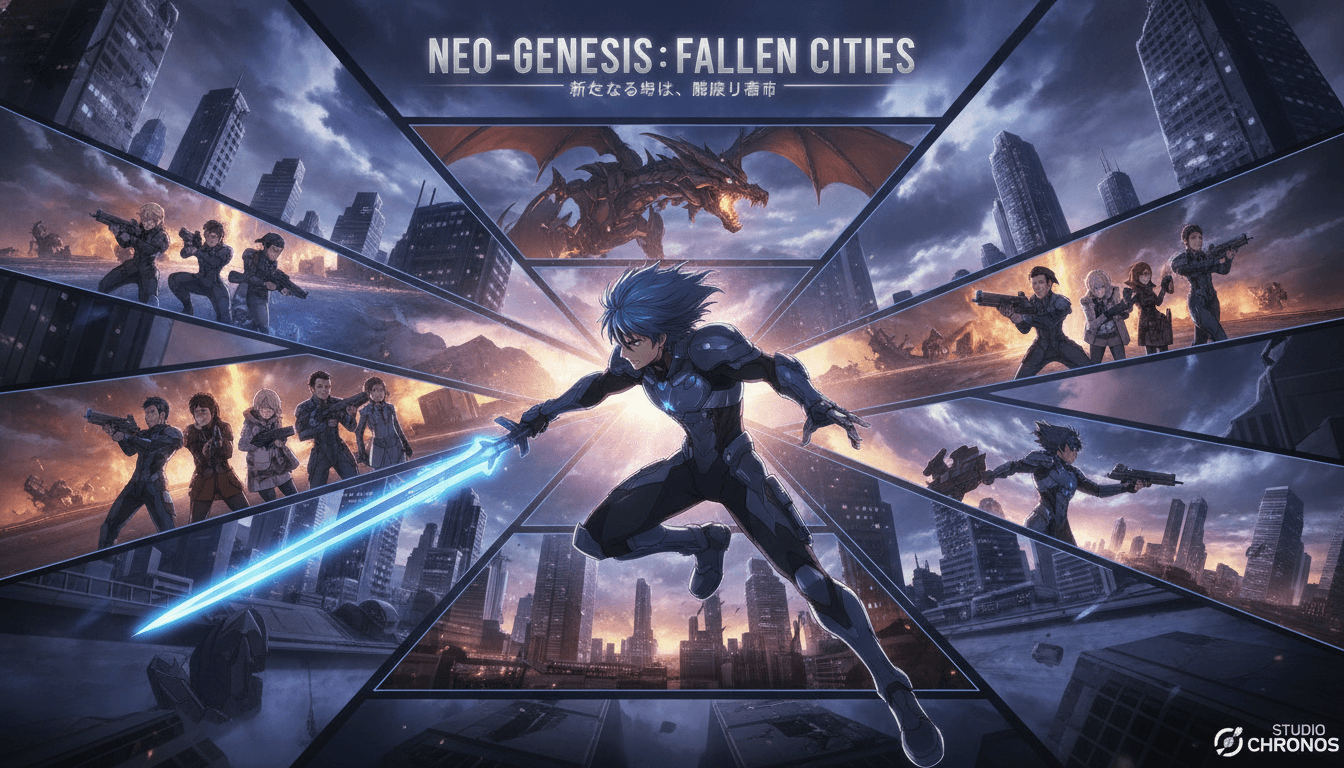
Why people look for a Dreamina alternative
Dreamina's own site is a well-stocked generation toolkit. It offers text to image, image restyling, text to video, image to video, sketch to video and a cartoon video generator, with a model picker that currently lists Seedance 2.5, Seedance 2.0, Sora 2 and Veo 3.1 for video and Seedream 5.0 and Nano Banana for images. For producing a striking image or a short clip, there is a lot there.
The catch is the unit of work. The examples on the page are single clips — 15 seconds here, 30 seconds there — each one generated from a prompt or an uploaded image. Character consistency appears inside the Seedance prompt examples rather than as a feature the system guarantees across a whole project.
So if your raw material is a story and your goal is a finished anime, you are left stitching. A Dreamina alternative that plans the structure first, and keeps one cast across every scene, is a different tool for a different job.
How this Dreamina alternative works
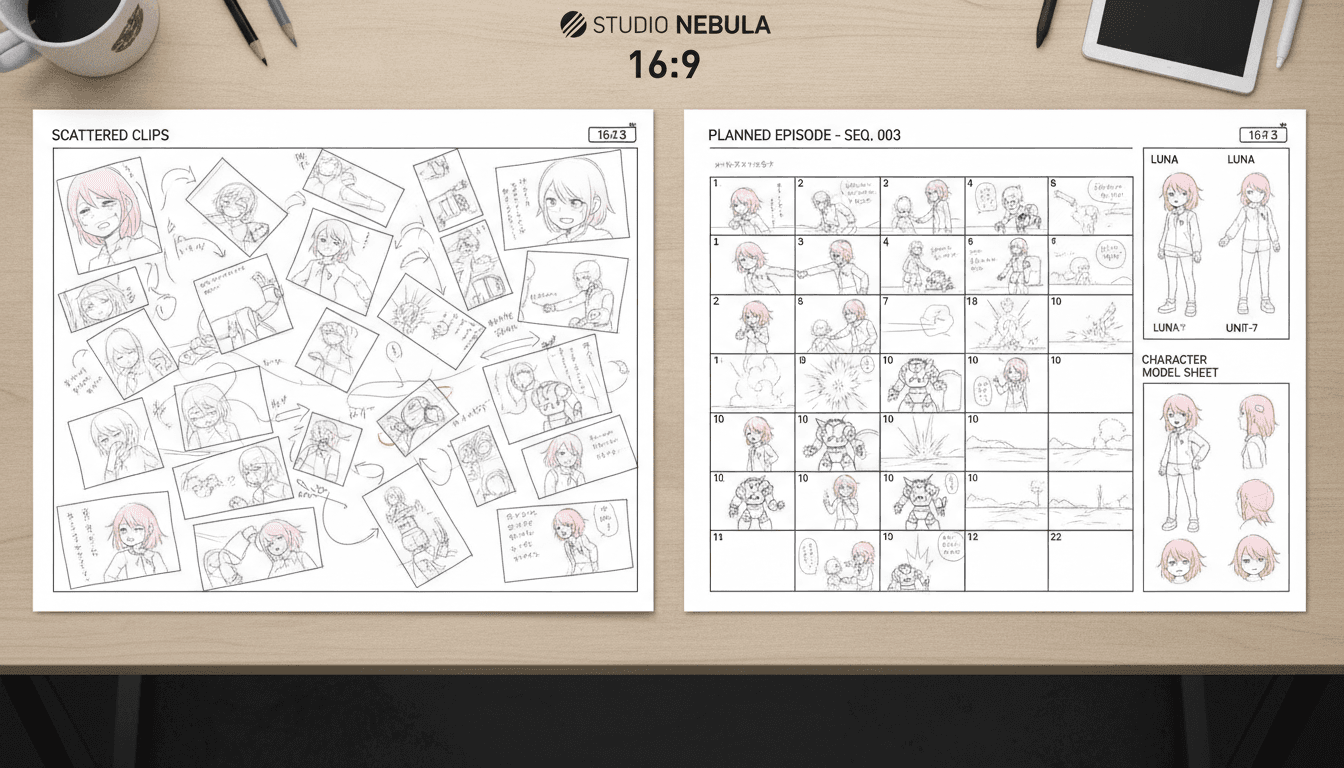
Three stages, in this order. The order is the reason the output holds together.
Hand over the writing
Paste a premise, a script or a chapter of your novel. There is no prompt-per-clip and no reference image to animate — the words carry the whole story in.
Read the plan first
You get act breaks, a scene list, a cast with fixed designs and a screenplay with real dialogue. All of it is editable before a single frame renders.
Watch the scenes get shot
Each scene is staged, voiced and rendered against that plan and the same character references, so scene nine still matches scene one.
C2Anime and Dreamina, side by side
The Dreamina column describes only what dreamina.capcut.com currently says on its own site, checked in October 2026. Platforms change — check theirs before you decide.
| C2Anime | Dreamina, per its own site | |
|---|---|---|
| What you hand over | A story, script or novel chapter | A text prompt, an image, a sketch, or a clip to restyle |
| What comes first | A screenplay and a scene plan you can read and edit | Generation — the prompt or uploaded media goes straight to a chosen model |
| Characters | Designed once, reused as fixed references across every shot | Consistency appears in Seedance prompt examples (stable identity, multi-character), not as a separate feature |
| Audio | Voiced dialogue; scenes are written around characters talking | Talking avatars, lip sync to an audio input, and “natural narration” in Sound Edit |
| Output shape | Connected scenes that add up to a short or an episode | Single clips; example prompts describe 15-second and 30-second videos |
| Models | One directed pipeline, tuned for continuity across scenes | A model picker: Seedance 2.5, 2.0, Sora 2 and Veo 3.1 for video; Seedream 5.0 and Nano Banana for images |
| Anime | Anime video, start to finish | Anime style transfer, an anime avatar maker and a cartoon video generator |
| Access | Invite-gated Early Access with paid credit tiers | Free daily credits plus promotional paid plans listed on its site |
These are two different bets. Dreamina bets on breadth — many models, many transformations, a fast way to make any single image or clip. C2Anime bets on continuity: one directed pipeline, a screenplay first, and a cast that survives the whole runtime. Pick the bet that matches the thing you are actually making.
The cast is where clip tools break
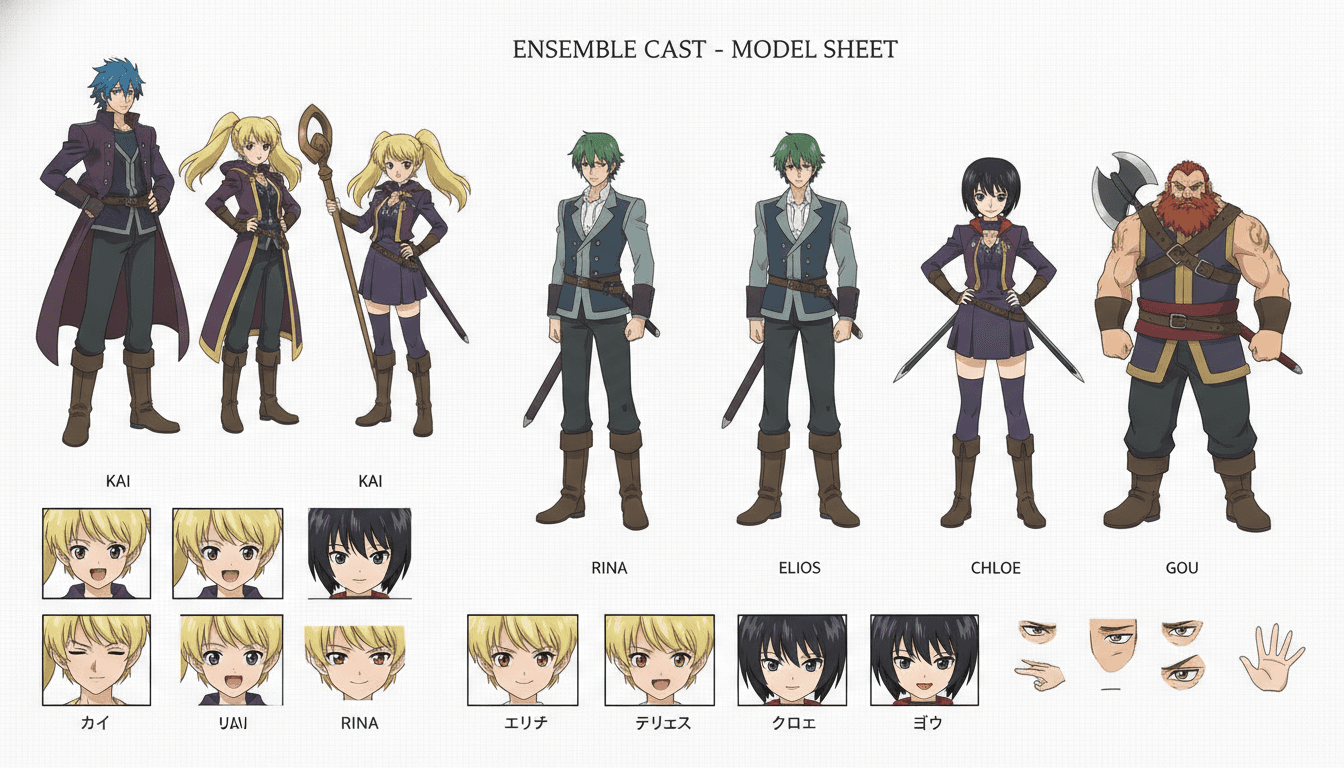
Ask anyone who has tried to build an anime out of generated clips what fails first and they will say the characters. Faces drift. Hair changes length. A jacket gains a buckle in one shot and loses it in the next. Viewers notice immediately, even when they cannot name what is wrong.
Prompting each clip for “stable identity” and “multi-character consistency,” the way Dreamina's Seedance examples are written, helps one clip at a time. It does not give you a cast. There is no shared design that scene twelve can look up.
C2Anime designs each character once, up front, and treats that design as a fixed reference for the rest of the production. When a character walks into scene nine, nothing is being reinvented. That is what makes a series possible rather than a run of standalone videos.
What you get instead of a prompt box
One cast, every scene
Characters are designed up front and treated as fixed references for the rest of the production. Faces, hair and outfits stop drifting between shots.
A screenplay before pixels
Structure, scene headings, action and dialogue are written and reviewable first. The render serves the script instead of the other way around.
Characters that speak
Every character gets a voice and keeps it, so scenes play as dialogue rather than narration laid over pretty stills.
Scenes that connect
Because the whole runtime is planned up front, an early scene can set something up and a later one can pay it off.
What switching actually looks like
There is nothing to export, because the two tools take different inputs. A finished clip is not what C2Anime wants to start from. Your writing is.
Bring the script. Paste the premise, the outline, the chapter or the full screenplay. More specific text produces a more faithful adaptation, so do not compress it down to a one-line prompt out of habit.
Describe the cast in words. If you were feeding reference images into a clip tool, write those characters out instead — age, build, hair, costume, the one detail you would notice if it changed. The designs get built from that and then held steady.
Read the plan before you render. The scene list and screenplay arrive first and are editable. This is the step that has no equivalent in a generate-and-regenerate loop, and it is where most of the quality comes from.
Keep Dreamina for what it is good at. Spinning up a striking poster, restyling a photo into anime, or making a quick cartoon clip — those are real jobs and it advertises them directly. The two tools are not substitutes so much as answers to different questions.
Dreamina alternative: common questions
- Why would I want a Dreamina alternative for anime?
- Usually because of the shape of the output. Dreamina’s site is organised around single clips — its example prompts describe 15-second and 30-second videos, generated one at a time from a prompt or an uploaded image. If what you want is a full anime story that holds together across many scenes, you need a tool that plans the whole thing first. That is the gap a Dreamina alternative like C2Anime fills.
- Is C2Anime the same kind of tool as Dreamina?
- Not quite. Dreamina presents a broad model picker — Seedance 2.5 and 2.0, Sora 2 and Veo 3.1 for video, Seedream 5.0 and Nano Banana for images — plus style transfer, talking avatars and lip sync. C2Anime is one directed pipeline: it reads your writing, plans a screenplay, locks a cast and renders voiced scenes against that plan.
- Will my characters stay on model across the whole video?
- That is the part C2Anime is built around. The cast is designed once, before rendering, and those designs are reused as references for every scene a character appears in. On Dreamina’s own site, character consistency shows up inside Seedance prompt examples rather than as a separate, named feature.
- How long can the video be?
- Long enough to tell a complete short — beginning, middle and end — rather than a single clip. Length depends on your plan and on how many scenes the story needs. Dreamina’s example prompts, by contrast, describe 15-second and 30-second clips.
- Can I move a project I started on Dreamina?
- There is no import, because the two tools take different inputs. What transfers is the writing and the character descriptions. Paste your premise or script into C2Anime, describe the cast in words, and the planning stage rebuilds the production from there.
- Does Dreamina do anime at all?
- Its site lists anime style transfer, an anime avatar maker and a cartoon video generator, so it can produce anime-styled images and clips. The difference is scope: those are per-asset tools, while C2Anime aims at a finished, voiced anime story with a consistent cast.
- Do I need animation experience?
- No. Staging, casting, timing and voices are handled for you. What you need is a story worth telling and opinions about how it should feel.
Bring a story. Leave with an anime.
Not a clip at a time — a whole story, planned and voiced.
Start your animeChoosing a Dreamina alternative for anime
The right Dreamina alternative depends entirely on what you are holding when you sit down. Dreamina is organised around generation: give it a prompt, an image or a sketch and it will make an image or a short clip, choosing from a shelf of models that currently includes Seedance 2.5, Seedance 2.0, Sora 2 and Veo 3.1 for video and Seedream 5.0 and Nano Banana for images. If your raw material is an idea for a single striking shot, that is a sensible place to work.
C2Anime is organised around narrative instead. The input is writing — an idea, a screenplay, a chapter of a novel — and the first output is not a video but a plan: act breaks, a scene list, a cast with fixed designs, and a screenplay with real dialogue you can edit. Only then does rendering begin, scene by scene, against those same character references. People search for a Dreamina alternative when the prompt-and-regenerate loop stops scaling to the length of story they want to tell.
Continuity is the whole argument. Anime is a medium built on recognition: the same face, the same world, the same visual rules, scene after scene. Tools that generate each clip in isolation cannot guarantee that, because nothing in the system is required to remember the last shot. Fifteen or thirty seconds can survive a little drift. An episode cannot, and a series definitely cannot. Planning the production as a whole and locking the cast before rendering is what keeps the characters on model from the opening shot to the last frame.
C2Anime is in invite-gated Early Access with paid credit tiers, and it works from whatever you already have written. If you came here looking for a Dreamina alternative because you have a story and no crew, that is the case it was built for. Bring the writing — the director handles the rest.