Cyberpunk anime generator for the story you already wrote
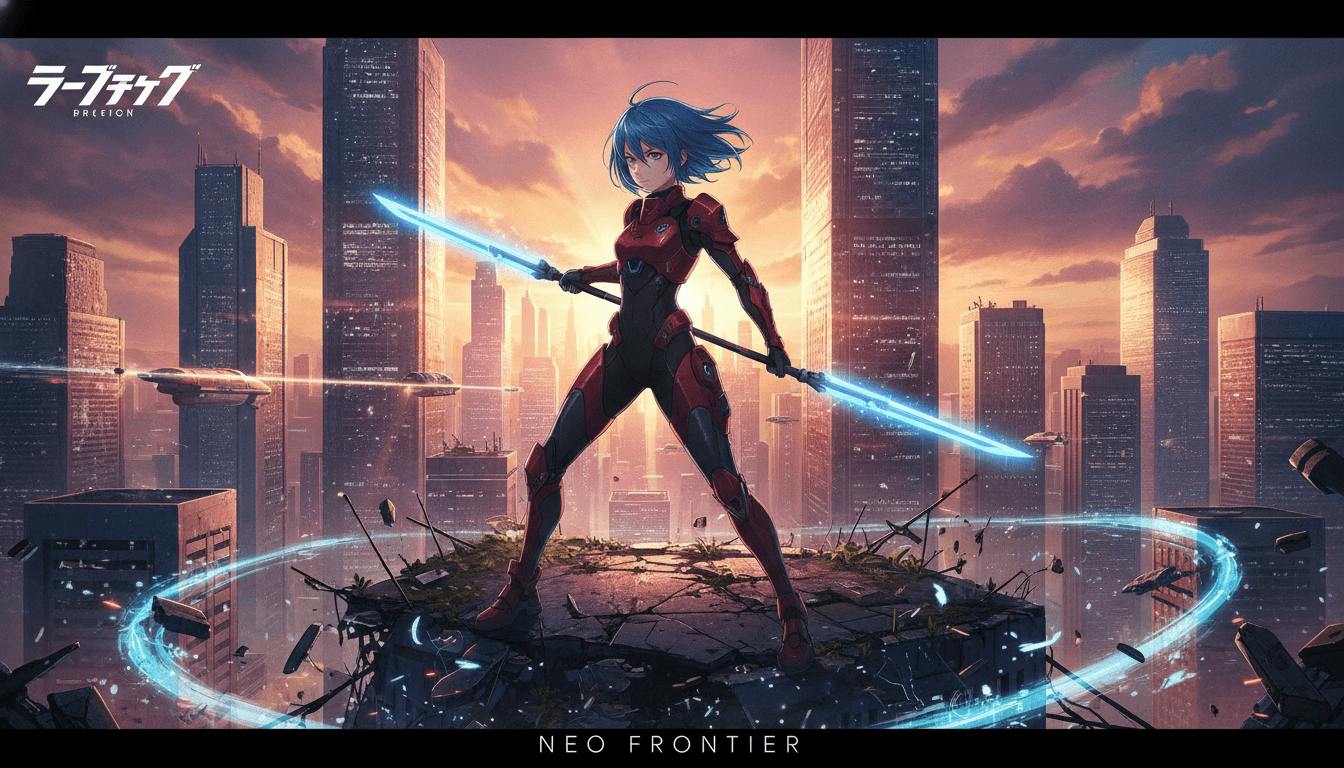
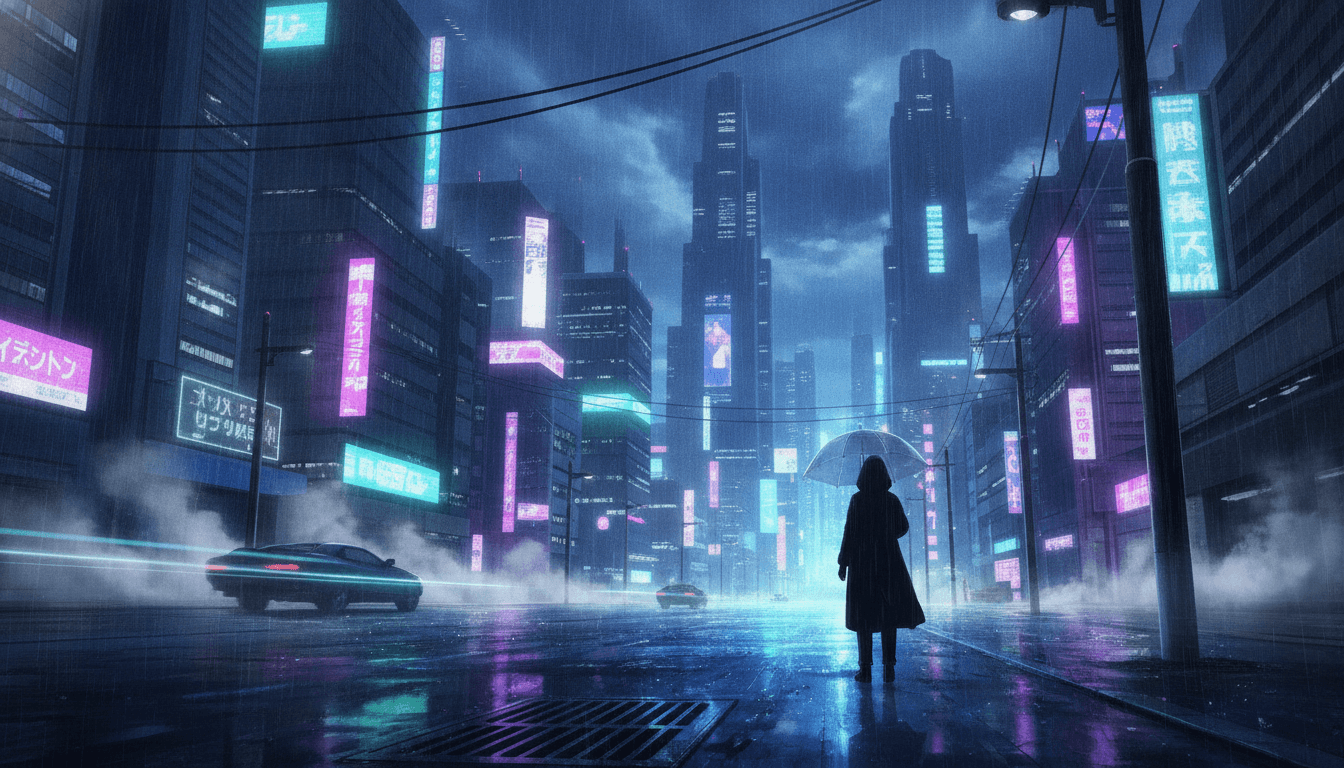
Rain on the asphalt, signage doubling in the puddles, a face lit only by the screen in front of it. C2Anime is a cyberpunk anime generator that takes your story and renders it as a neon anime video — one cast designed up front, a real screenplay written before anything animates, and voiced scenes where your characters keep the same face from the first cut to the last.
How the cyberpunk anime generator works
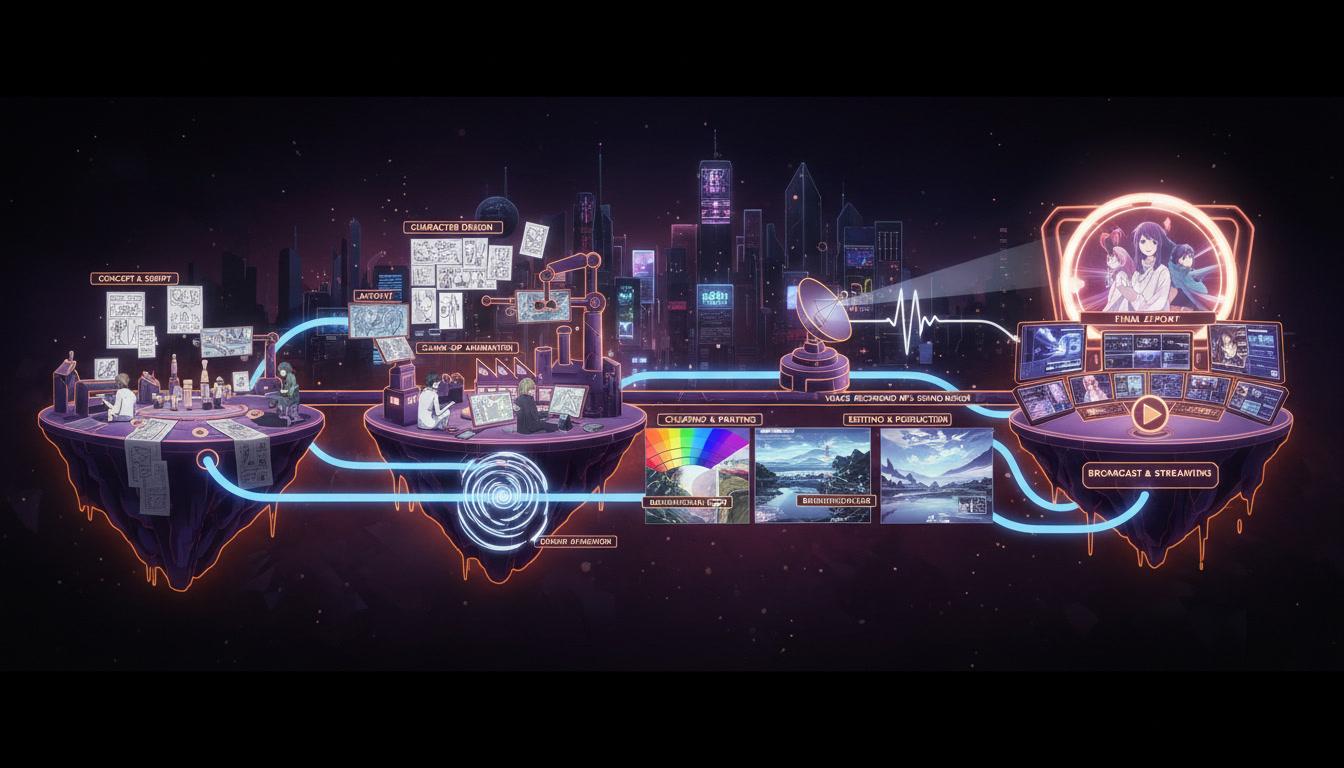
Three stages, in this order. Planning before rendering is what keeps a neon city from dissolving into blue fog halfway through an episode.
Give it the story
Paste a premise, a chapter or a whole arc. This genre runs on leverage, so say who owns whom, what the job pays, and which part of the city the characters are not allowed back into.
Point it at the neon
Set the visual direction to rain, signage and hard-edged practical light. The cyberpunk anime generator applies that staging to every scene, not just the establishing shot.
Watch the scenes render
The screenplay lands first, then voiced scenes render against a cast designed in advance — so the courier who starts the episode has the same chrome arm when it ends.
What the cyberpunk anime look is made of
The genre has a specific set of production habits, and naming them makes them easier to ask for. These six choices do most of the work.
Practical light as the only light
Signage, screens, headlights, a cigarette, a cracked phone. Faces are lit by things that exist in the frame, which is why cyberpunk shots read as places rather than as studio renders.
Rain and standing water
Wet asphalt doubles every light source and gives the ground something to do. Puddles, spray off tires, water running down glass and off awnings — reflection is the genre doing half the work for free.
A tight neon palette
Two or three saturated hues against near-black. Magenta and cyan is the cliché for a reason, but sodium orange against teal, or a single sick green, reads sharper because fewer colors fight.
Hard shadows and heavy contrast
Blown-out highlights next to detail you cannot resolve. Characters pass through dark with only a rim of light on a jaw or a shoulder, then step into a doorway and are suddenly fully readable.
Vertical, crowded staging
Cables, ducting, fire escapes, signage stacked ten storeys up, a walkway crossing the frame. The city should look like it was built on top of itself by people who did not ask permission.
Interface clutter and chrome
HUD overlays, scan lines on a visor, a prosthetic catching a passing light, a terminal glowing on a face. Used as detail on a few shots rather than smeared across every frame.
Stories that suit a cyberpunk anime generator
This genre was built for people who owe something to someone larger than they are. Couriers, fixers, techs, a detective handed a case she is meant to lose, a crew taking a contract they already know is a setup. The city carries the weight — a stairwell, a noodle counter, a service corridor, a tower nobody is allowed into — and the characters move through a place that was clearly built on top of itself long before they arrived.
It also rewards specificity about power. Cyberpunk works when the thing being fought over is concrete: a contract, a building, a piece of hardware, a favour someone can call in. Vague evil corporations stage badly. A named landlord who controls the water on floors sixty through ninety stages extremely well, because every scene can be about that.
What the style does not reward is wall-to-wall action. If every scene is a shootout, the rain and the signage stop being an advantage and become wallpaper. Give it one or two set pieces and spend the rest of the runtime on people in rooms making deals they cannot afford, and the genre does what it was good at.
Sample prompts for a cyberpunk anime video
Useful prompts name the light source, the wet surface and the thing going unsaid — not just who is in the room. Start from one of these and swap in your own cast.
The courier with the wrong package
“A courier with a chrome arm realizes halfway across the city that the case she is carrying is not the one on the manifest. Night, heavy rain, magenta signage reflected in standing water, hard rim light along her visor, a held pan down the street before the cut to her face.”
A fixer calls in a favour
“A fixer summons an old contact to a noodle counter under an overpass to collect on something years overdue. Warm sodium practical light against cold cyan from a screen behind them, steam in frame, the camera staying wide while neither of them says the number out loud.”
Something is wrong with the building
“A maintenance tech on the ninety-first floor finds a service corridor that is not on any plan. Emergency strip lighting, green cast on wet concrete, long silence with only ventilation noise, slow push in as the corridor stops making sense.”
The last honest cop in the precinct
“A detective is handed a case she is clearly meant to close without solving. Overhead fluorescents with hard shadows, rain on the window behind her desk, a city of signage out of focus beyond the glass, cuts held long enough for the implication to land.”
Why neon is the first thing to drift
Ask a generator for cyberpunk shot by shot and you can watch the city fall apart. The signage changes language and color between cuts. The rain stops without anyone mentioning it. The contrast flattens, the magenta slides toward a generic blue wash, and by the third minute the street is a different street with the same character standing in it.
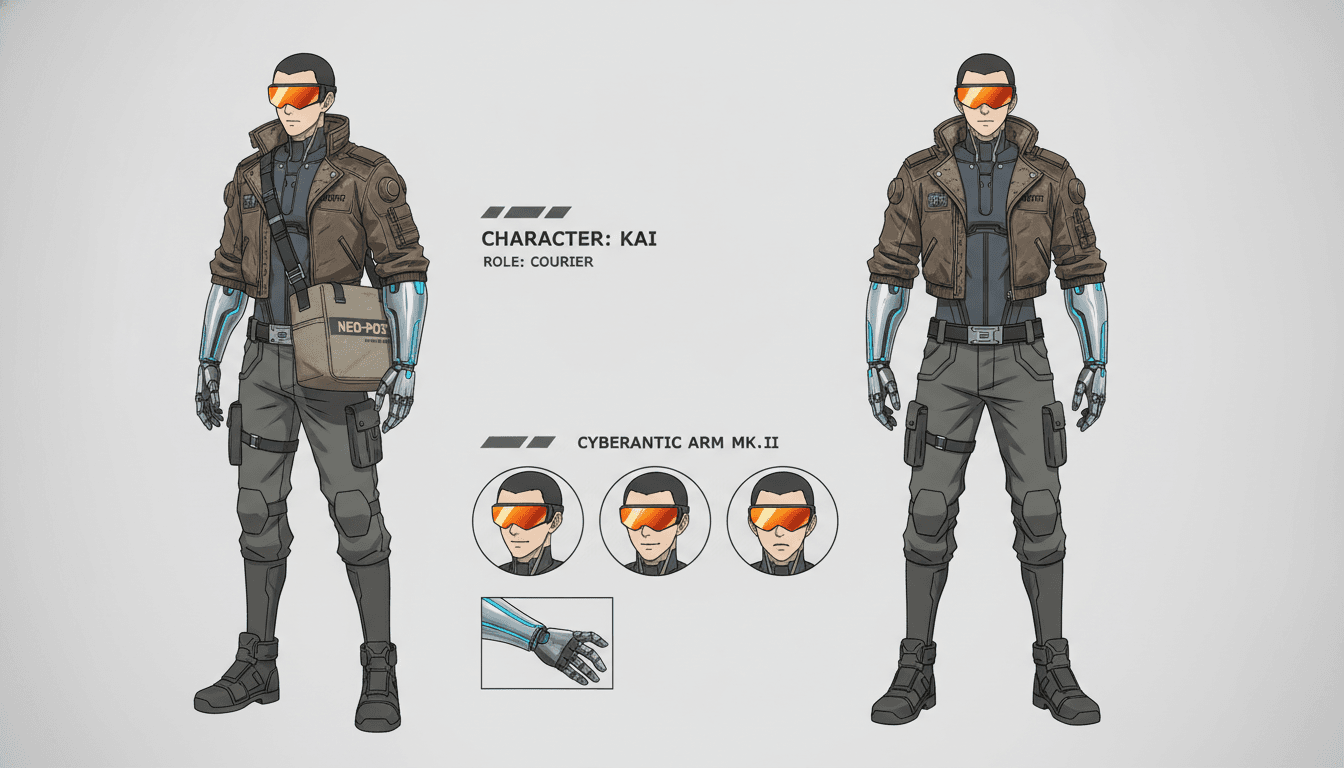
C2Anime fixes those decisions before rendering starts. The palette, the practical light sources, the weather and the contrast treatment are production rules applied to every scene rather than re-guessed per shot. The same goes for the cast: each character is designed once, down to which arm the prosthetic is on, and that model sheet is what later scenes draw from.
Continuity in the writing follows the same logic. Because the screenplay is planned whole, a scene knows which favour was already owed, who lied in the second act and what has not been said yet — so the story reads as one episode instead of a run of good-looking fragments that happen to share a color scheme.
What C2Anime handles for you
One cast across every scene
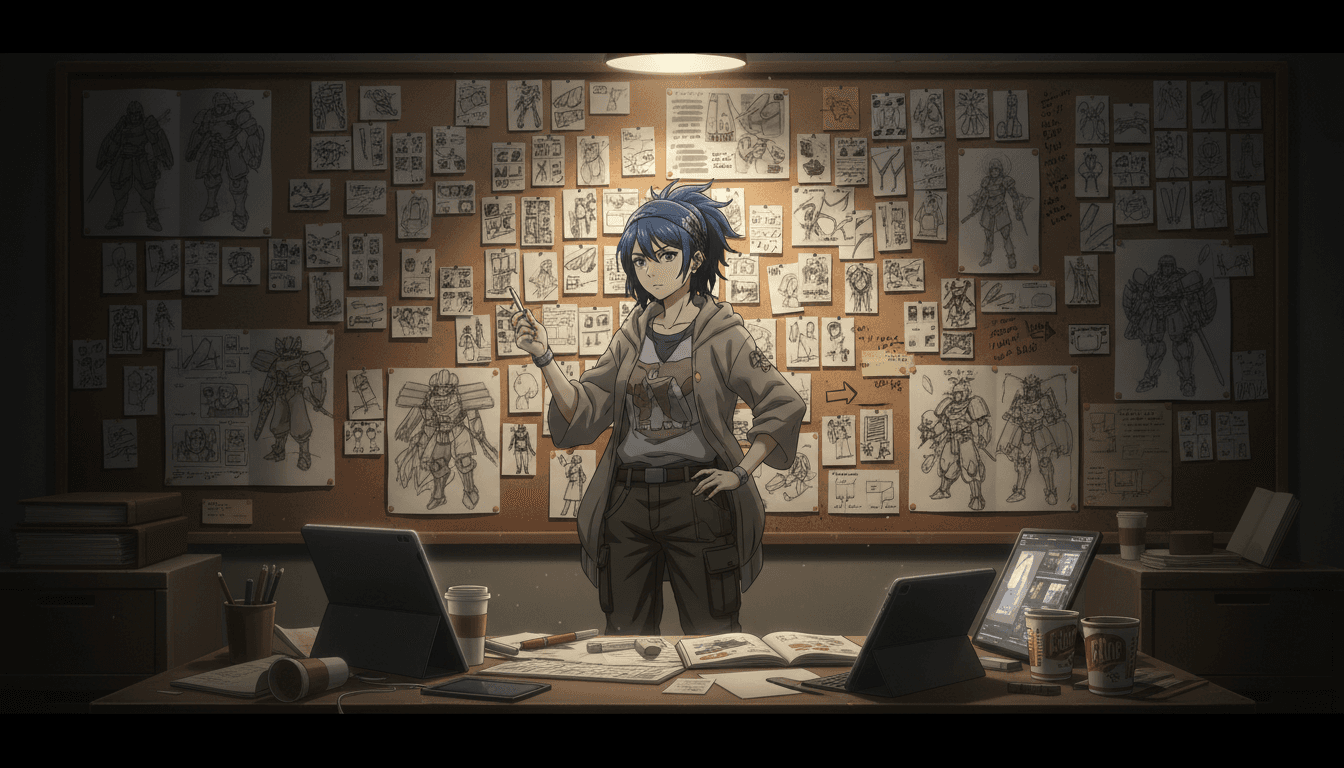
C2Anime designs each character once and reuses those model sheets everywhere. The visor stays the same visor, the prosthetic stays on the same arm, and nobody quietly becomes a different person after a cut.
A screenplay before any frame
Structure, scene order and dialogue are written up front, so a double-cross actually pays off. You can read and edit the plan before anything renders.
Voiced dialogue, not narration
Characters negotiate, threaten and talk over each other. Scenes are built around speech instead of a voice-over laid across neon stills.
Consistent light and color rules
Which signs are magenta, how wet the street is, how hard the shadows fall — set once as production rules, so scene twelve matches scene one instead of drifting into generic blue haze.
Cyberpunk anime generator: common questions
- What does a cyberpunk anime generator actually do?
- A cyberpunk anime generator takes a story you supply and stages it in the visual language of neon-noir science fiction: practical light from signage and screens, rain-slicked streets, a tight saturated palette against near-black, and crowded vertical cities. C2Anime goes further than a single look-up — it plans the structure, designs the cast, writes a screenplay with real dialogue, then renders voiced anime scenes rather than returning a still or a five-second clip.
- Can I use my own original characters?
- Yes, and that is the intended workflow. Describe your cast in the story you hand over and the AI Film Director designs them in this genre language — implants, jackets, visors, whatever the character carries — then keeps those designs fixed for the whole runtime. Nothing here is tied to an existing franchise or studio.
- How does the neon look stay consistent across a long scene?
- The palette, the light sources, the rain and the contrast curve are set as production rules before anything renders, and the cast is designed once in advance. That matters because cyberpunk is unusually easy to lose: generate each shot independently and the signage changes color, the rain stops, the contrast flattens and the city turns into generic blue fog somewhere around the third minute.
- What kind of story suits a cyberpunk anime generator?
- Stories about leverage. Couriers, fixers, detectives, maintenance staff, someone in debt to the wrong institution. The genre rewards plots where power is concrete and local — a building, a contract, a favour — and it suits restraint better than spectacle, because a quiet scene under a sign does more here than a chase does.
- Is this just a neon filter on top of a normal render?
- No. A filter tints a finished image. Here the genre is part of the production decision: the palette is limited at the design stage, the light sources are placed in the scene, the ground is wet so it reflects, and the staging is built vertical and crowded. Interface clutter and chrome are then used as detail rather than as the whole effect.
- Can it make a full episode, not just a clip?
- Length is the reason the planning comes first. Because the structure, cast and dialogue exist as an editable screenplay before rendering, scenes connect — so the production can run to full scenes and episodes instead of a handful of disconnected shots that happen to share a color scheme.
- Do I need animation experience?
- No. Structure, casting, staging and timing are planned for you and shown as a screenplay you can edit before anything renders. What you bring is the story and opinions about how the city should feel.
Bring the city. Leave with an episode.
You stay the director. C2Anime handles the cast, the screenplay and the scenes.
Using a cyberpunk anime generator on a story you wrote
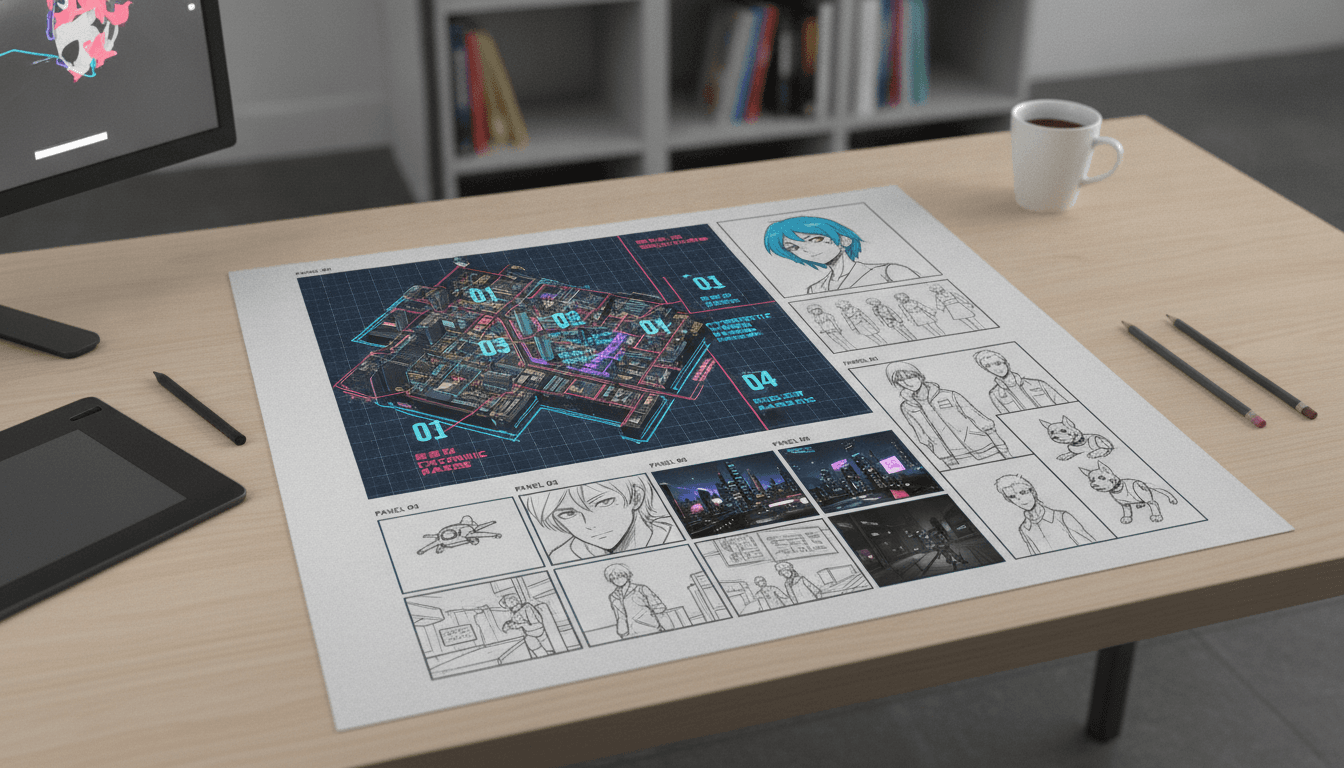
Most tools that advertise a cyberpunk anime generator give you one convincing frame. The rain is right, the magenta sign doubling in the puddle is right, and then it stops — because nothing in the system knows who this person is, what is in the case or why this particular alley matters. C2Anime works the other way round. It reads your story first, proposes a structure, designs the cast, writes a screenplay with real dialogue, and only then renders scenes, every one of them against the same plan and the same city rules.
Order matters especially with neon-noir, because the look is a set of placed decisions rather than a tint. Which signs are lit and what color they are. Where the water is standing so it can reflect them. How hard the shadows fall and how much detail is allowed to disappear into them. How high the city goes and how much of it crosses the frame. Those decisions hold only if they are made once for the production; made per shot, they drift, and a cyberpunk anime video quietly turns into a blue haze with a character standing in it somewhere around the third scene.
The same is true of the cast, which is the part competitors handle worst. A recurring courier has to have the same face, the same jacket and the prosthetic on the same arm in scene one and scene fourteen. C2Anime designs each character before rendering and reuses those references everywhere they appear, so an audience can follow a crew across an episode without re-identifying everyone after every cut. Voices stay fixed the same way, and the dialogue is written as dialogue — characters negotiating with each other, not a narrator talking over stills.
Bring whatever you already have: a premise, a short story, a chapter of a web novel, a finished script. Name the city, the debt and the job that goes wrong, and the cyberpunk anime generator will stage the scenes, hold the cast and the palette, and render a neon anime driven by dialogue rather than narration. Every character is your own original design — nothing on this page is affiliated with any existing anime studio or franchise.