Anime scene design that stays put between episodes
A story keeps returning to the same places — a bedroom, a school hallway, a rooftop. C2Anime's anime scene design turns each location into a real, reusable set, so the room your scene visits in episode three still looks like the room from episode one.
How anime scene design works in C2Anime
A location gets designed once and treated as a set from then on.
Name the location
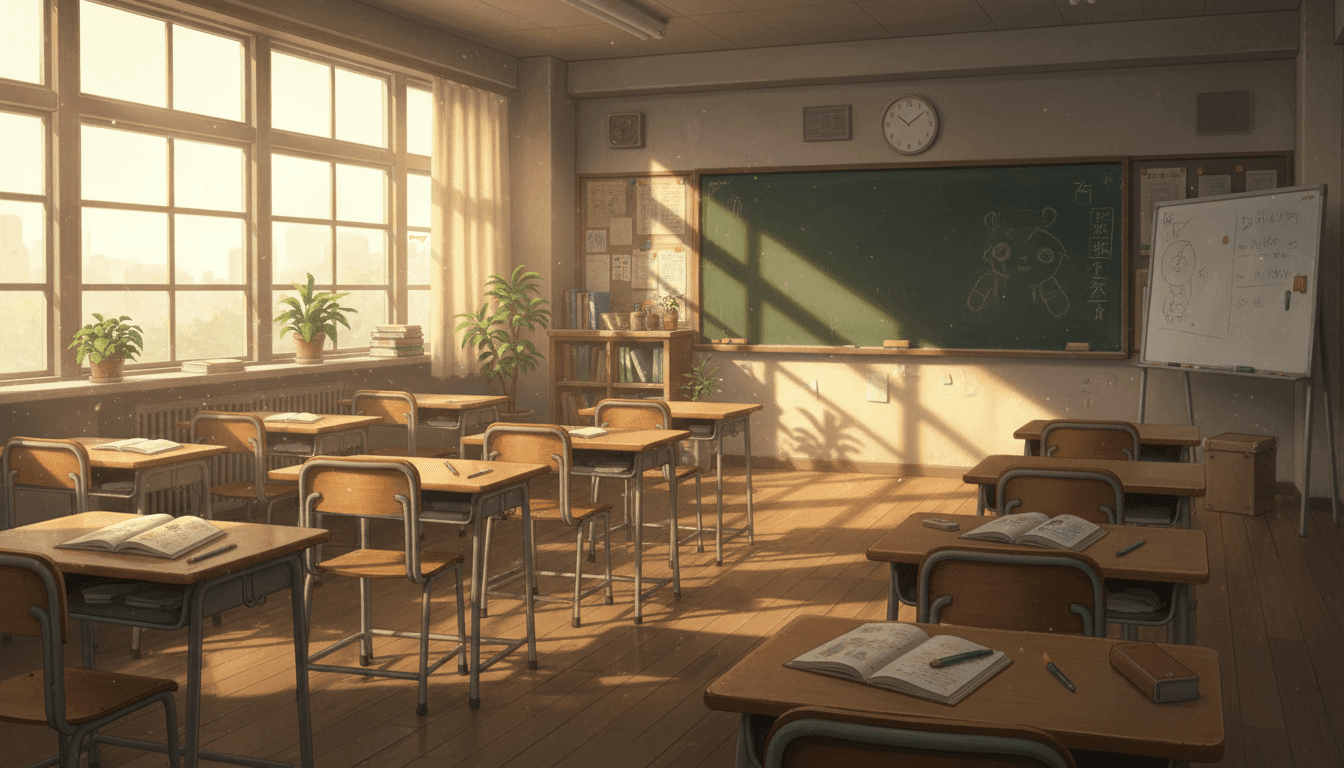
A classroom, a rooftop, a train platform — describe where a scene happens and what matters about it, in as much or as little detail as you have.
C2Anime designs the set
It resolves the layout, architecture and mood into a real anime background design, the way an art director builds a location for a production.
The story returns to it
When your screenplay comes back to that classroom in episode two, C2Anime renders it against the same design instead of inventing a new room.
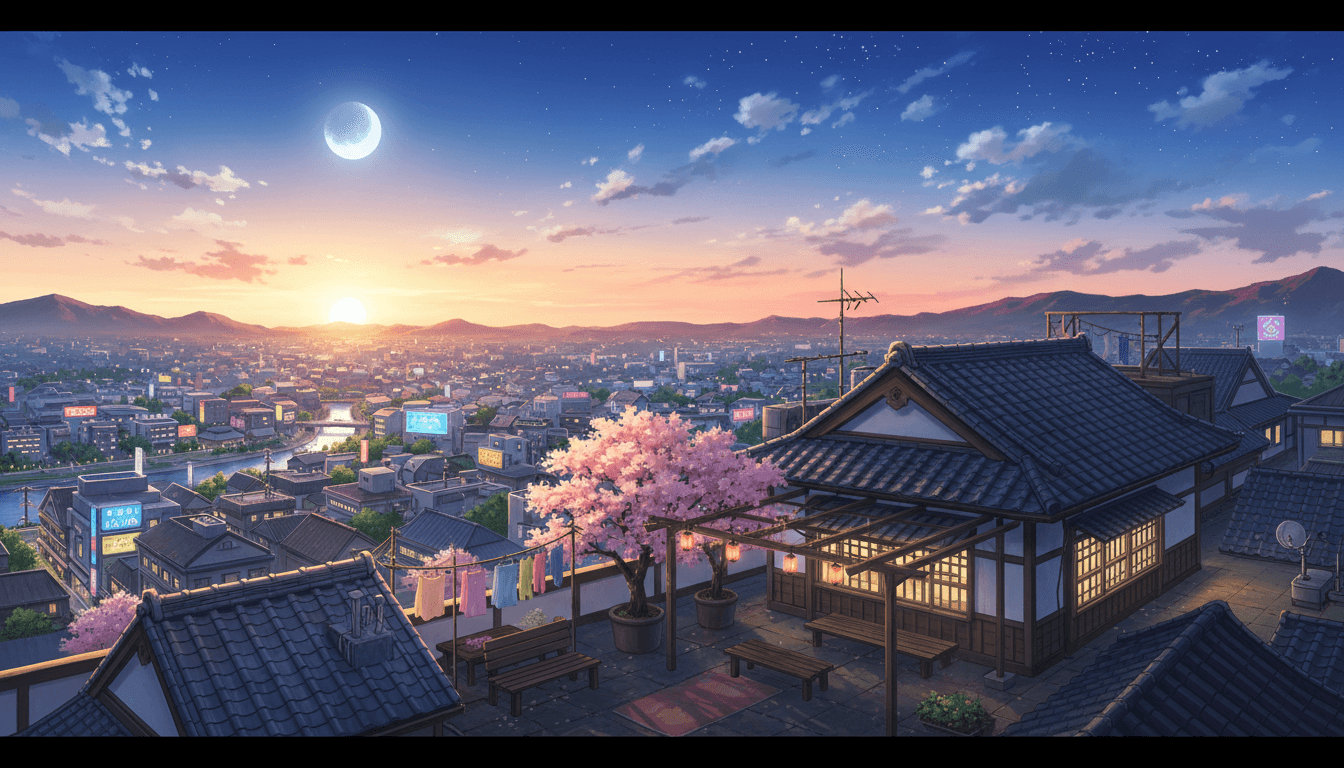
Same architecture, whatever the light
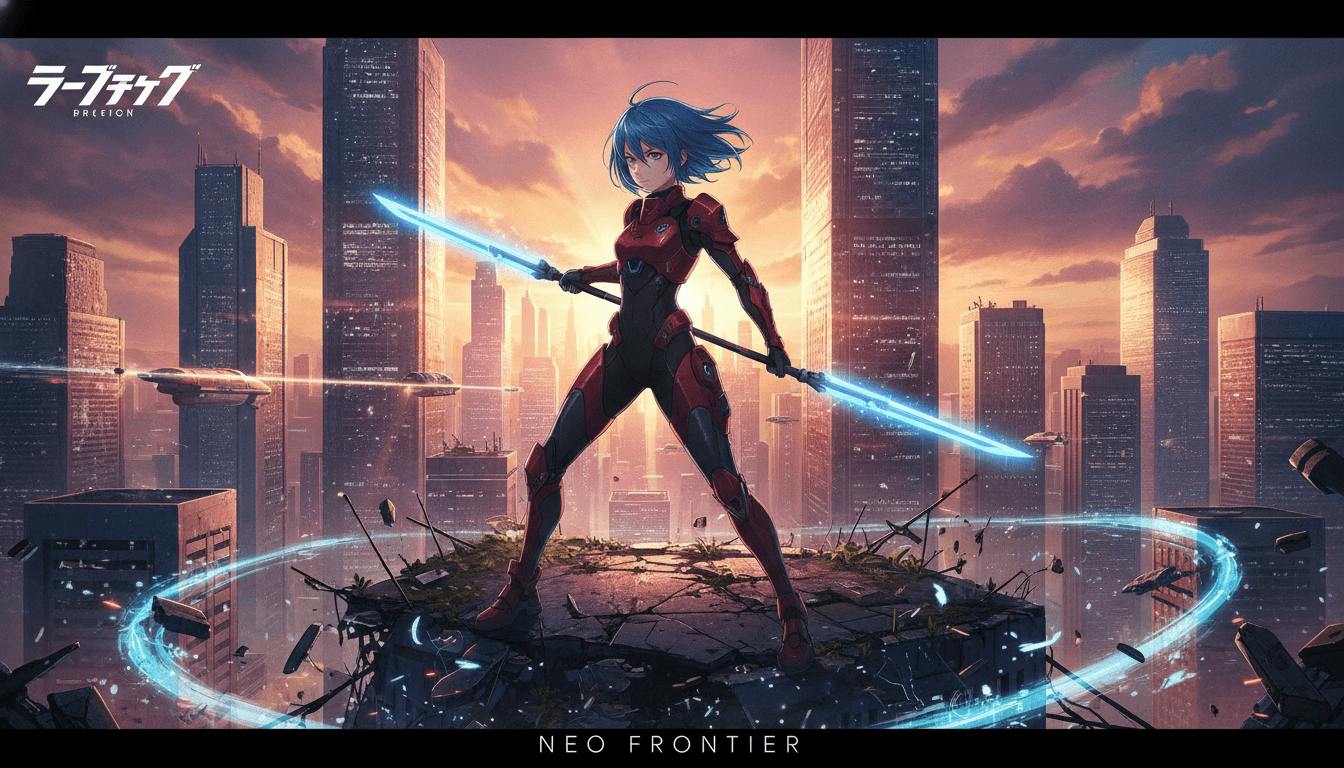
A rooftop your characters meet on at noon and return to at midnight should still be recognizably the same rooftop — same railing, same skyline, same layout — even though the mood of the scene is completely different.
Because C2Anime designs the location as a set rather than generating a fresh background per shot, it can render that rooftop at day, sunset and night while keeping the structure fixed. Only the atmosphere changes.
That is what makes a location feel like a place your characters actually live in, rather than a backdrop that resets every time the camera cuts away and back.
Every setting in your story, kept straight
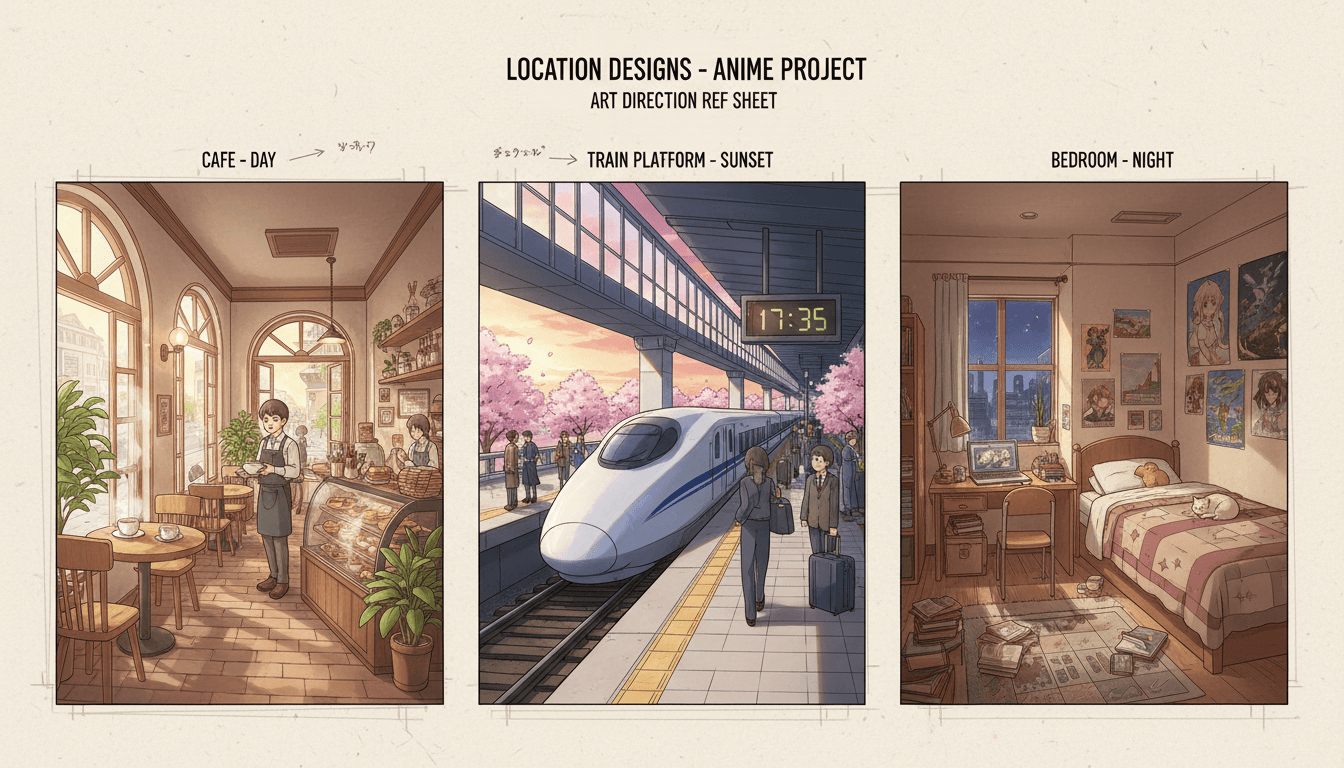
Most stories do not happen in one room. A cafe where two characters first meet, a train platform for a goodbye, a bedroom for a quiet scene — each needs its own anime background design, and each needs to stay itself for as long as the story keeps coming back to it.
C2Anime keeps each named location as its own design, the way an art direction board lays out every set in a production side by side before a single shot is filmed.
The result is a set of locations your story can move between freely, without any of them losing their identity along the way.
What consistent scene design gets you
A location, not a one-off background
Each setting is designed once and kept as a reference, so a room your story revisits still looks like the same room.
Different light, same architecture
A rooftop at sunset and the same rooftop at night keep their layout and structure even as the mood changes completely.
Built for scenes that come back
Recurring locations are common in real storytelling — a home, a school, a hideout. Scene design here is built for exactly that.
A world, not a set of disconnected shots
Consistent locations are part of what makes a video feel like one continuous place instead of a slideshow of unrelated backgrounds.
Who this is for
Creators who need coherent recurring locations. If your story keeps coming back to the same room, hideout or school, scene design in C2Anime is built specifically to keep that place consistent.
Anyone building a series or a longer story. A single clip can get away with a background that only exists once. A series needs its settings to hold up across episodes.
Writers who care about a sense of place. If part of your story's feel comes from its setting, this is where that setting gets designed and kept.
Anime scene design: common questions
- What is anime scene design in C2Anime?
- It is the process of turning a described location — a classroom, a cafe, a rooftop — into a resolved anime background design that C2Anime keeps as a reference, so the same location looks the same every time your story returns to it.
- Why does a recurring location matter for an anime video?
- Stories return to places: a bedroom, a school hallway, a hideout. If the anime background design changes every time the camera cuts back to that room, viewers lose the sense that they are watching one continuous world rather than a series of disconnected backgrounds.
- Can the same location look different at different times of day?
- Yes. C2Anime can render a location at day, sunset or night while keeping its architecture and layout consistent, so the lighting changes but the place is still recognizably itself.
- Do I need to describe a location in architectural detail?
- No. A short description of the setting and what matters about it — cramped, sunny, old, industrial — is enough for C2Anime to design the space. More detail simply gives it more to work with.
- How many different locations can one story use?
- As many as your screenplay needs. C2Anime designs each named location separately and keeps its own reference, so a script with a school, a home and a train station handles all three as distinct, consistent sets.
- Is this only backgrounds, or does it include camera angles?
- Anime scene design covers the location itself — its layout and look — which C2Anime then renders from whatever angle a given shot needs, while keeping the underlying architecture the same.
- Does scene design work with the character and screenplay steps?
- Yes. Locations, characters and the screenplay are all part of the same plan, so a scene places the right cast in the right designed setting rather than treating each element separately.
Give your story a world that holds together
Name your locations. C2Anime designs them and keeps them consistent scene after scene.
Start buildingAnime scene design as reusable sets, not disposable backgrounds
Anime scene design is easy to underestimate because a single background image is simple to generate. The harder problem, and the one that actually matters for a video, is keeping that location consistent every time the story returns to it. C2Anime treats each named setting as a real set: designed once, kept as a reference, and reused whenever a scene calls for it.
This is closer to how anime backgrounds are actually made than generating a fresh image per shot. A production art department designs a classroom, a home or a rooftop once and hands that design to every artist who has to draw it later, so the room never quietly changes shape between episodes. C2Anime's anime scene design works the same way — the architecture stays fixed even as lighting, weather or time of day change around it.
This matters most for stories with more than one location. A screenplay that moves between a school, a cafe and a bedroom needs all three settings to feel distinct from each other and stable within themselves. Anime scene design in C2Anime keeps each location's own identity intact across every scene that uses it.
Whether you are building a single episode or a full series, designing your settings up front — the same way you would design your cast — is what keeps the finished video feeling like one place your characters actually inhabit.