90s anime style video, made from your own story
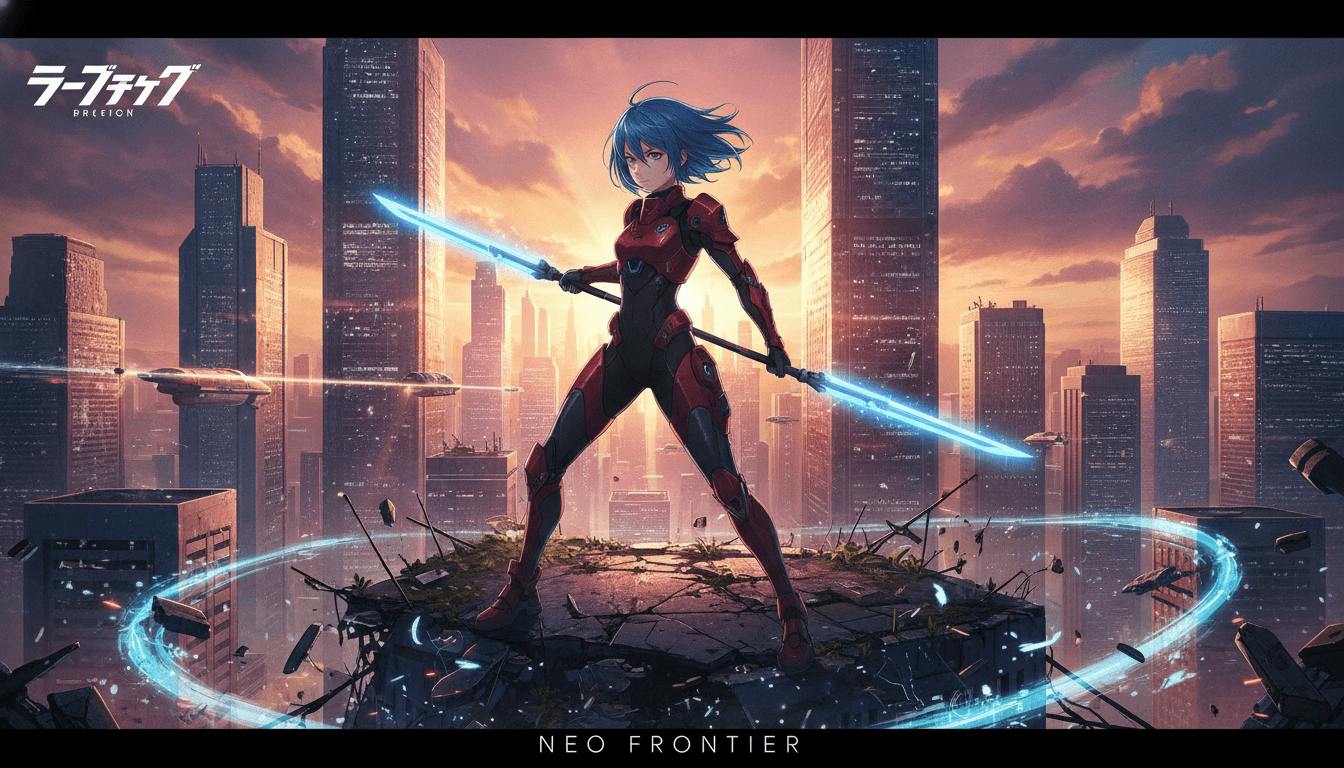
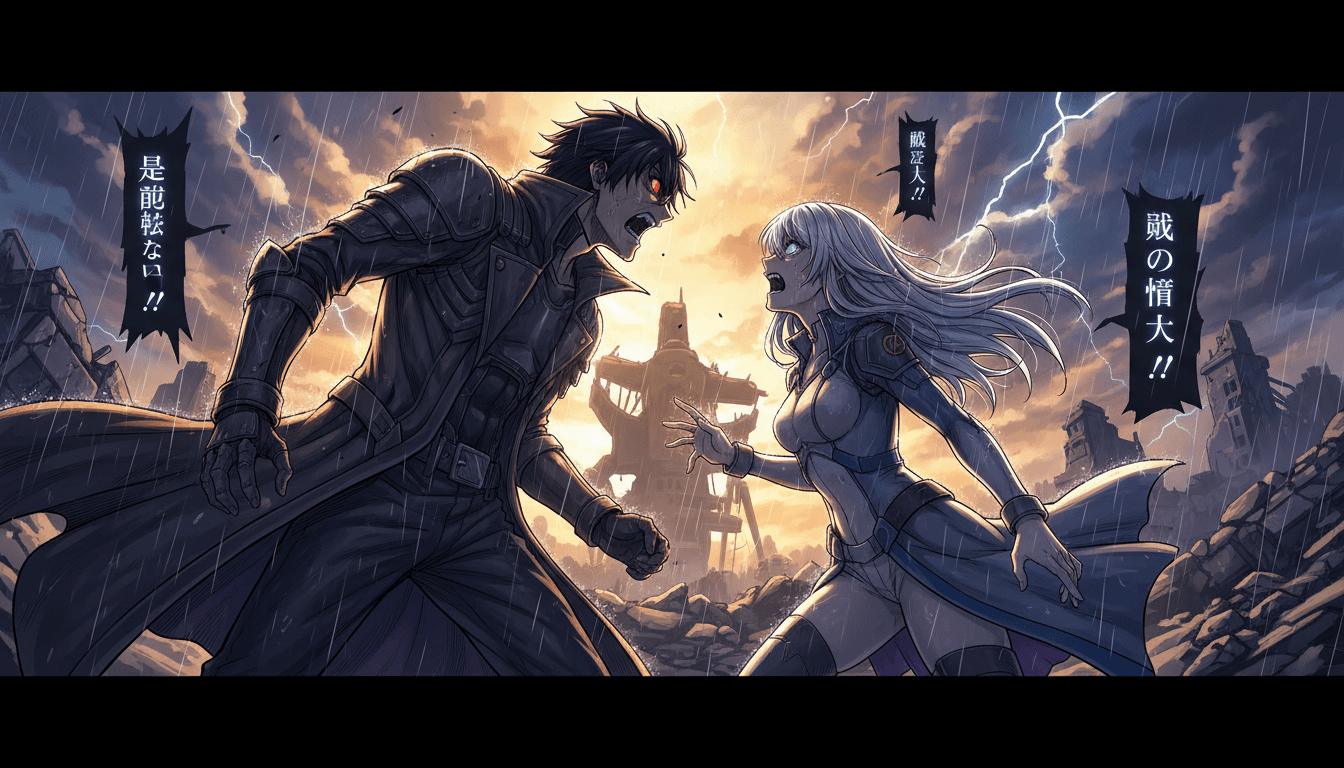
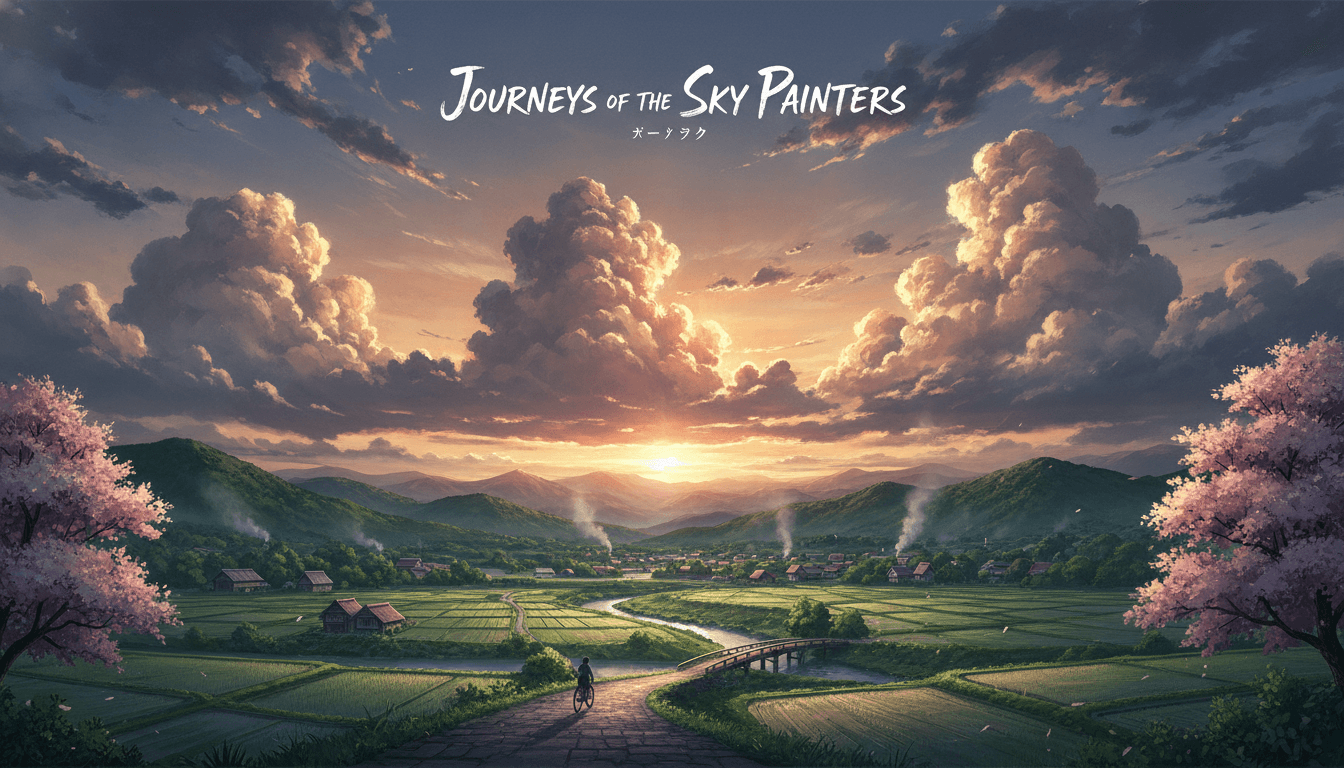
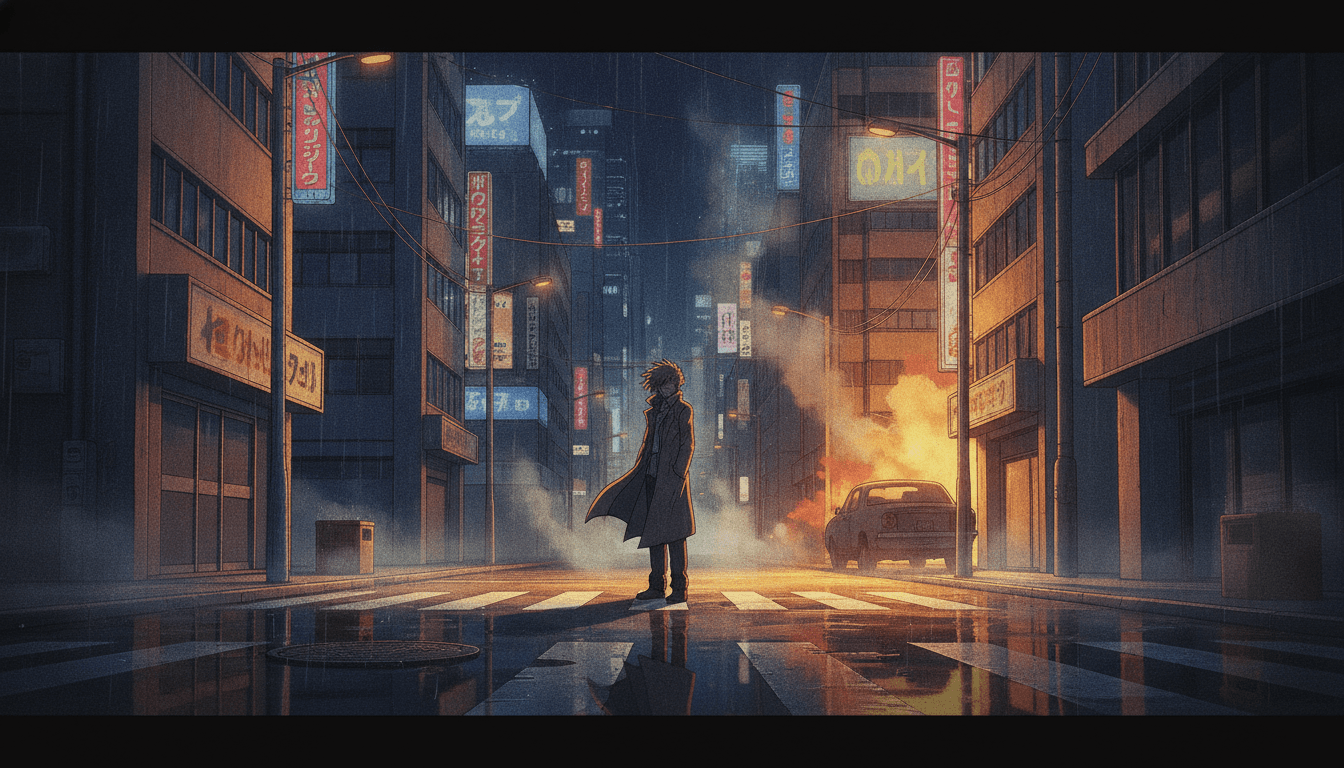
Film grain over warm cel color, a hand-painted city holding still for a beat longer than it needs to. C2Anime takes the story you already wrote and renders it as a 90s anime style video — one cast designed up front, a real screenplay written before anything animates, and voiced scenes where your characters keep the same face from the cold open to the final cut.
How to make a 90s anime style video
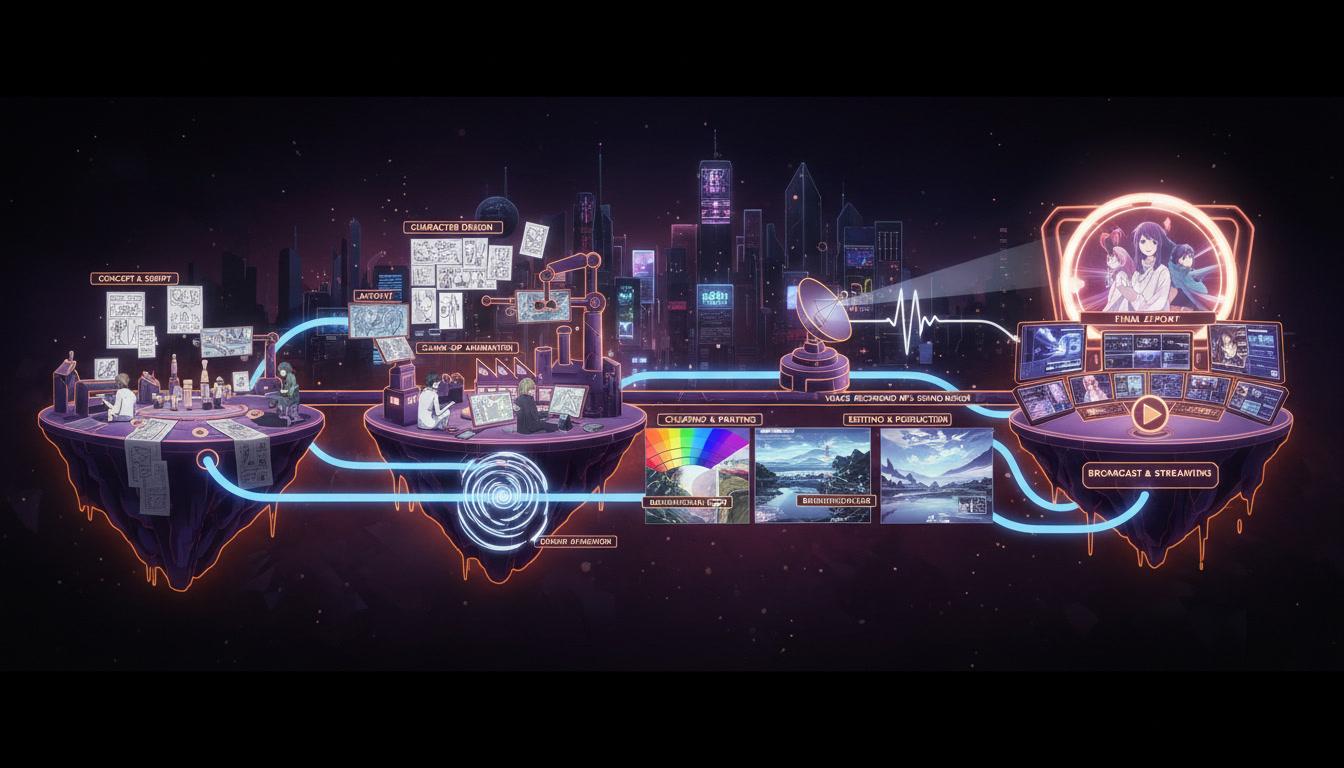
Three stages, in this order. Planning before rendering is what keeps an era-specific look from dissolving halfway through an episode.
Give it the story
Paste a premise, a chapter or a whole arc. This era liked characters who were already tired when the story started, so say what the job is, what the city costs them, and what they are not going to admit.
Choose the retro look
Point the visual direction at cel color, visible grain and hand-painted backgrounds. The director applies that 90s anime style to every scene, not only the opening shot.
Watch the scenes render
The screenplay lands first, then voiced scenes render against a cast designed in advance — so your 90s anime style video holds one face from the cold open to the last cut.
What the 90s anime style look is made of
The era has a specific set of production habits, and naming them makes them easier to ask for. These six choices do most of the work.
Film grain and analog noise
A fine moving grain over the whole frame, with occasional gate weave and a soft halo on bright sources. It is the single fastest way to read as film rather than as a clean digital render.
Limited cel palette
Flat paint areas with two or three tones per surface and a hard terminator between light and shadow. No soft airbrushed gradients — the shadow is a shape with an edge you can trace.
Hand-painted backgrounds
Gouache skies, cluttered shopfronts, rain-stained concrete, cables strung across an alley. Backgrounds were painted once and held, so they carry more detail than the characters moving over them.
Warm, slightly faded color
Amber streetlight, sodium orange on wet asphalt, teal shadows, blacks that sit closer to deep brown than to true black. Everything reads as slightly aged stock.
A slower cut rhythm
Held establishing shots, long pans across a skyline, a beat of nothing before someone speaks. The 90s anime style gives scenes room instead of cutting every second.
VHS and broadcast artifacts
Chroma bleed on saturated reds, a faint scanline texture, slight vertical jitter at a scene change. Used as seasoning on a few shots rather than smeared over the whole episode.
Stories that suit a retro 90s anime style
This visual language was built for working people in crowded cities. Couriers, mechanics, night-shift clerks, a detective with one case too many, a crew taking a job they already know is wrong. The backgrounds carry the weight — a stairwell, a vending machine, a street of cables and signage — and the characters move through a place that clearly existed before they walked into it.
It also suits restraint. Because the cut rhythm is slower, dread and melancholy have somewhere to accumulate: a held shot of an empty corridor does more here than a fast montage would. Quiet science fiction, low-key supernatural stories and plain human drama all stage well, as long as you are willing to let a scene sit for a second before anyone speaks.
What the style does not reward is constant spectacle. If every scene is a fight, the limited palette and painted backgrounds stop being an advantage. Give it one or two set pieces and spend the rest of the runtime on people in rooms deciding things, and the era does what it was good at.
Sample prompts for a 90s anime style video
Useful prompts name the light, the surface and the thing going unsaid — not just who is in the room. Start from one of these and swap in your own cast.
A courier with the wrong package
“A bike courier realizes halfway across the city that the envelope she is carrying is not the one on the docket. Night, sodium streetlight on wet asphalt, hand-painted shopfronts sliding past, heavy film grain, long held pan before the cut to her face.”
The last tenant in the building
“An old man refuses to move out of a block scheduled for demolition, and a junior clerk is sent to talk him into it. Overcast daylight through dusty glass, flat cel shadows across the stairwell, a slow push in as neither of them says what they actually want.”
A late-night radio confession
“A night-shift DJ takes a call from someone who clearly knows him. Amber booth lighting, reel-to-reel decks glowing, chroma bleed on the red recording light, close-up on hands at the fader, grain heavy in the dark corners of frame.”
Two mechanics and a stolen engine
“Partners in a back-alley garage discover the part they just fitted belongs to someone dangerous. Harsh work lamps, oil-dark palette with one hot orange key light, sparks as texture, cuts held long enough for the silence between them to land.”
Why a retro look is the first thing to drift
Generators trained mostly on modern animation pull toward modern animation. Ask shot by shot and you can watch it happen: the grain thins out, the flat cel shadow softens into an airbrushed gradient, the palette gains saturation, and by the third minute you are looking at a clean digital render wearing a bit of noise.
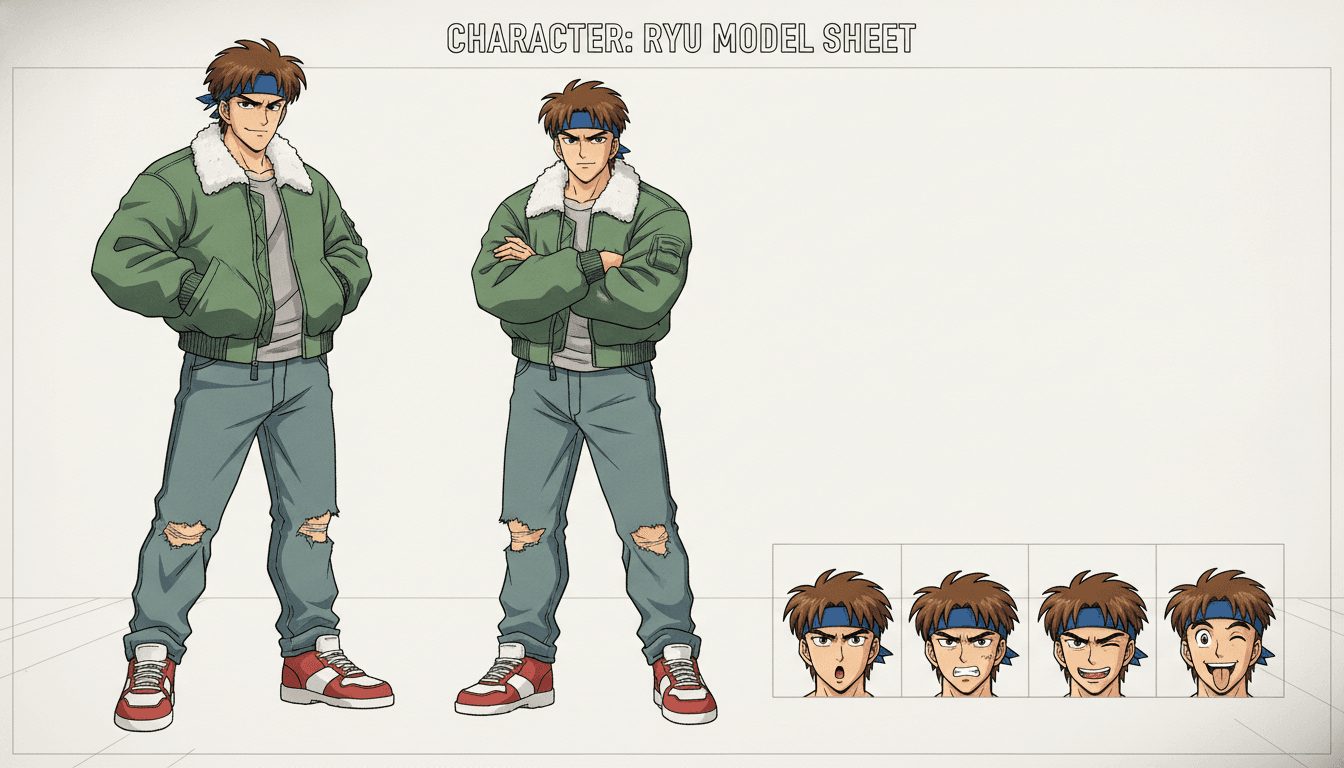
C2Anime fixes those decisions before rendering starts. The limited palette, the hard shadow terminator, the grain level and the background treatment are production rules, applied to every scene rather than re-guessed per shot. The same goes for the cast: each character is designed once, and that model sheet is what later scenes draw from.
Continuity in the writing follows the same logic. Because the screenplay is planned whole, a scene knows which favour was already owed, who lied in the second act and what has not been said yet — so the story reads as one episode instead of a run of good-looking fragments that happen to share a filter.
What C2Anime handles for you
One cast across every scene
C2Anime designs each character once and reuses those model sheets everywhere. The jacket stays the same jacket, the scar stays on the same cheek, and nobody quietly becomes a different person after a cut.
A screenplay before any frame
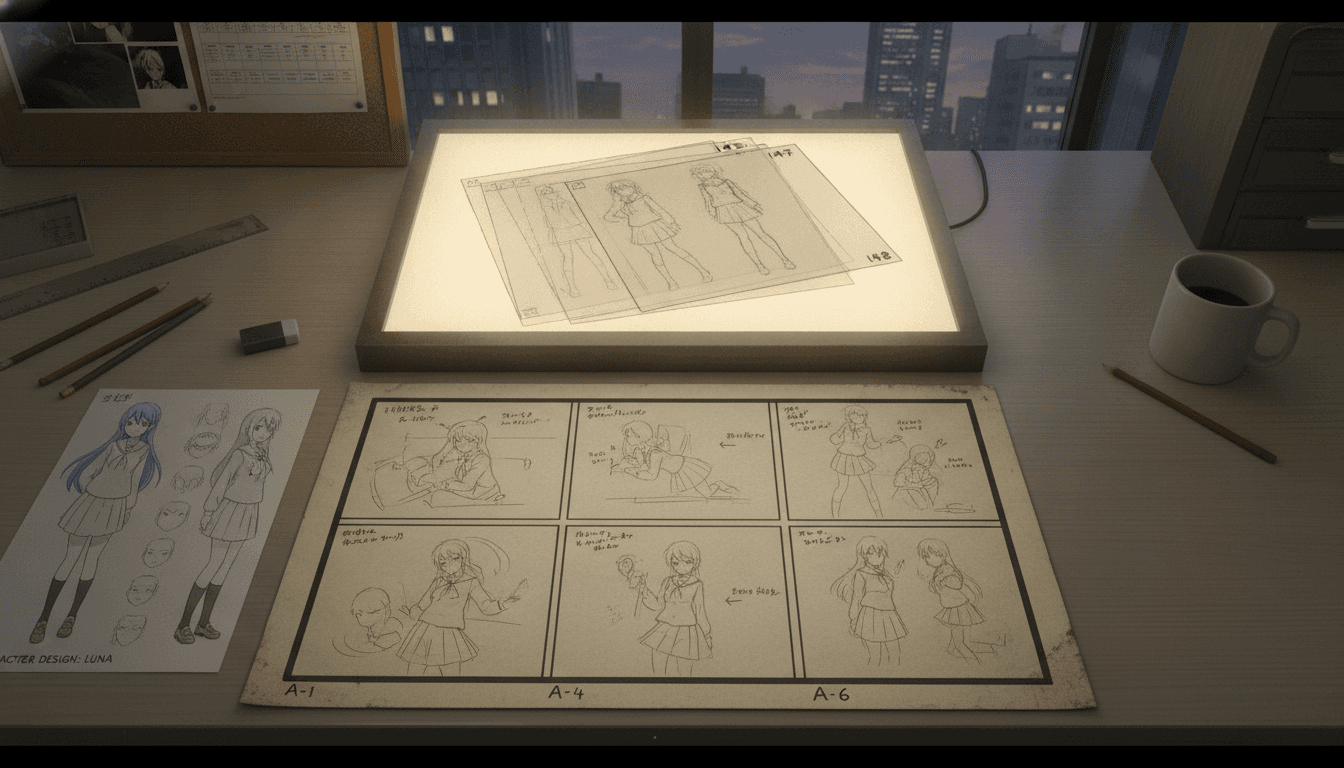
Structure, scene order and dialogue are written up front, so a slow-burn mystery actually builds. You can read and edit the plan before anything renders.
Voiced dialogue, not narration
Characters talk to each other, interrupt each other and go quiet at the wrong moment. Scenes are constructed around speech instead of a voice-over laid across stills.
Era-consistent color and texture
The grain, the limited palette and the heavy shadow blocks are set as production rules, so scene twelve matches scene one instead of drifting toward a glossy modern render.
90s anime style: common questions
- What is a 90s anime style video?
- A 90s anime style video borrows the production look of pre-digital television and OVA animation: cel paint with hard-edged shadows, a limited and slightly faded palette, hand-painted background art, visible film grain, and an editing rhythm that holds shots instead of cutting constantly. C2Anime applies that look to a story you supply and renders it as a voiced anime video with real dialogue, rather than returning a single still or a five-second clip.
- Can I use my own original characters?
- Yes, and that is the intended workflow. Describe your cast in the story you hand over and the AI Film Director designs them in this era-specific visual language, then keeps those designs fixed for the whole runtime. Nothing here is tied to an existing franchise or studio.
- How does the retro look stay consistent across a long scene?
- The grain, palette, shadow treatment and lens behaviour are set as production rules before anything renders, and the cast is designed once in advance. That matters because a retro look is easy to lose: generate each shot independently and the paint gets glossier, the grain drops out and the palette creeps toward modern digital color somewhere around the third minute.
- What kind of story suits a 90s anime style?
- Stories about work, cities and people with histories. Couriers, detectives, mechanics, night-shift staff, a crew doing one more job. The style also suits restrained science fiction and quiet supernatural material, because the slower cut rhythm lets dread accumulate rather than announcing itself.
- Is this the same as a VHS filter?
- No. A filter adds noise on top of a finished modern image. Here the era is part of the production decision: the palette is limited at the design stage, the shadows are painted as shapes, the backgrounds carry the detail, and the staging is slower. Analog artifacts are then used sparingly as texture rather than as the whole effect.
- Can it make a full episode, not just a clip?
- Length is the reason the planning comes first. Because the structure, cast and dialogue exist as an editable screenplay before rendering, scenes connect and the production can run to full scenes and episodes instead of a handful of disconnected shots.
- Do I need animation experience?
- No. Structure, casting, staging and timing are planned for you and shown as a screenplay you can edit before anything renders. What you bring is the story and opinions about how the scenes should feel.
Bring the city. Leave with an episode.
You stay the director. C2Anime handles the cast, the screenplay and the scenes.
Making a 90s anime style video from a story you wrote
Most tools that promise a 90s anime style give you one convincing frame. The grain is right, the sodium light on the asphalt is right, and then it stops — because nothing in the system knows who this person is, what they are carrying or why the alley matters. C2Anime works the other way round. It reads your story first, proposes a structure, designs the cast, writes a screenplay with real dialogue, and only then renders scenes, every one of them against the same plan and the same era rules.
Order matters especially with a period look, because a retro aesthetic is a set of restrictions rather than an effect. Fewer tones per surface. Shadows with edges. Backgrounds carrying the detail instead of the characters. Grain that sits over everything at the same strength. Those restrictions hold only if they are decided once for the production; decided per shot, they relax, and a 90s anime style video quietly turns into a modern render with noise on top somewhere around the third scene.
The same is true of the cast, which is the part competitors handle worst. A recurring protagonist in a bomber jacket has to be the same height, the same face and the same jacket in scene one and scene fourteen. C2Anime designs each character before rendering and reuses those references everywhere they appear, so an audience can follow a crew across an episode without having to re-identify everyone after every cut. Voices stay fixed the same way, and the dialogue is written as dialogue — characters talking to each other, not a narrator talking over stills.
Bring whatever you already have: a premise, a short story, a chapter of a web novel, a finished script. Name the city, the job and the thing that goes wrong, and C2Anime will stage the scenes, hold the cast and the grain, and render a retro anime driven by dialogue rather than narration. Every character is your own original design — nothing on this page is affiliated with any existing anime studio or franchise.