An anime OC generator that actually animates your OC
Most anime OC generator tools hand you a portrait and stop there. Your character ends up in a reference folder with forty other images. C2Anime designs your OC once, locks that design, gives them a voice, and puts them in written scenes they can act out — so the character you have been carrying around finally moves and speaks.
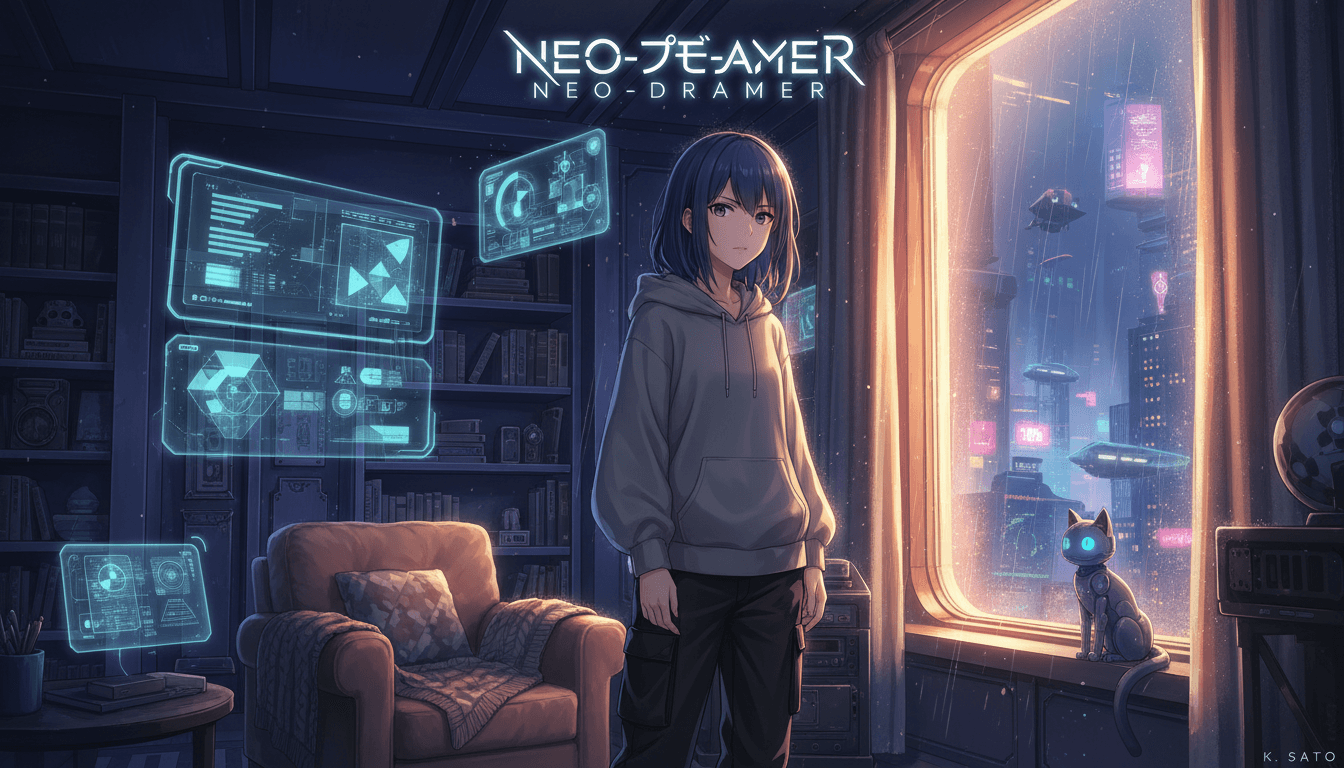
How the anime OC generator works
Three stages. The second one is the stage most tools skip, and it is the reason your OC survives past the first shot.
Describe your OC
Hair, eyes, build, outfit, the one detail nobody else gets right. Write it the way you would describe them to an artist — the generator works from your words, not from a fixed set of sliders.
Lock the design
Your OC is turned into a reference the rest of the production has to obey. That reference is what stops the face and the outfit drifting from one shot to the next.
Put them in a scene
Give them a situation and the scene gets staged, voiced and rendered — your OC acting, speaking and moving instead of standing still in a portrait.
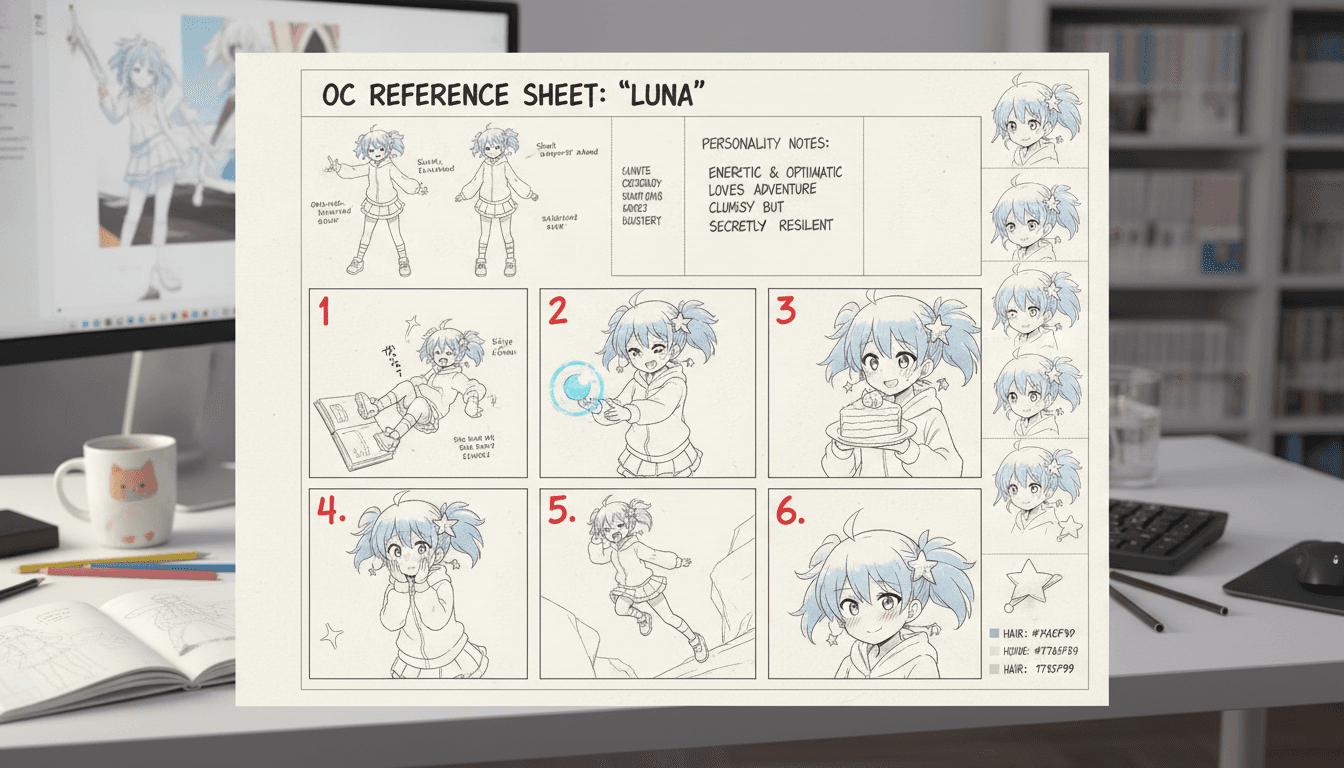
A portrait is not a character
You already know what your OC looks like. You probably know their temper, the thing they refuse to talk about, and how they stand when they are pretending to be fine. None of that fits in a headshot.
What makes a character land is watching them handle something. A conversation they lose. A decision they make badly. That requires a scene, and a scene requires writing, staging and a voice — which is where a normal generator stops and a production tool has to begin.
C2Anime writes the scene before it renders anything. Your OC gets lines, a situation and someone to play against, and the footage comes out of that plan rather than out of a single sentence of prompt.
Why most OC generators lose the face
Generate your OC twice and you get two different people. The jacket gains a zip. The eye colour shifts half a shade. The hair is suddenly shorter. Each image is fine on its own, and together they are useless, because a character is defined by staying the same.
This happens because nothing in a shot-by-shot workflow remembers the previous shot. Every render starts from a blank slate and reinterprets your description from scratch.
C2Anime fixes the design first and treats it as binding. When your OC walks into scene nine, the system is not reinventing them from your words again — it is reusing the reference it already built. That is what makes a second episode possible with the same cast.
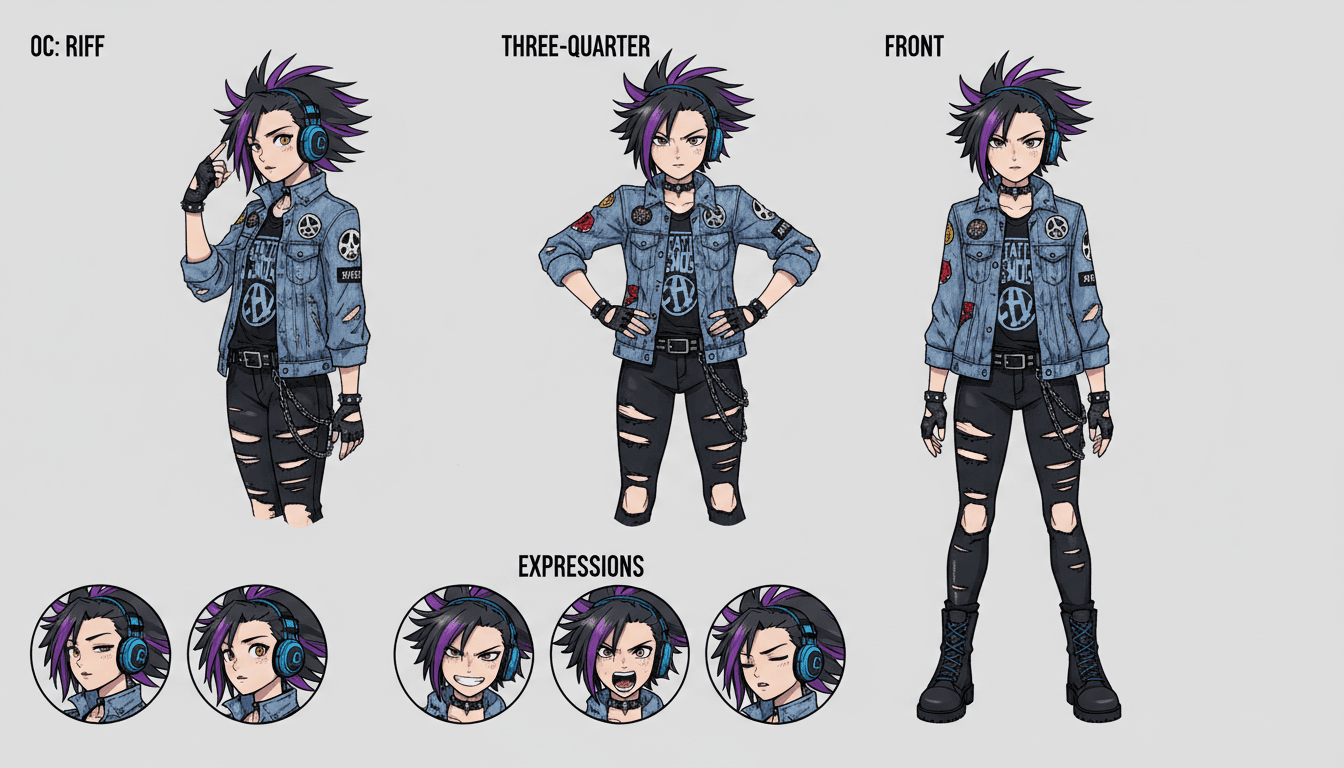
What an anime OC generator should give you
The same face every time
One design, reused across every shot your OC appears in. This is the part most generators get wrong, and it is the part that decides whether the result reads as a character or as a lookalike.
A voice that stays theirs
Your OC speaks. The voice is cast once and held for the whole video, so dialogue sounds like a person rather than a narrator reading captions.
Scenes written before they render
A screenplay comes first — scene headings, action, lines. Your OC gets something to do and someone to do it with, which is what makes them feel real.
Room for a whole cast
Add the rival, the best friend, the mentor. Every character is designed and held the same way, so group scenes hold together instead of falling apart.
Who this is for
OC artists. You have the design solved and a folder full of proof. What you have never had is a way to show them in motion, in a scene, saying the lines you already hear in your head.
Fandom creators. Your OC lives in a world with rules, relationships and history. A single image cannot carry that. A voiced scene between two characters can, and it travels a lot further when you post it.
Writers with a cast. If your characters already exist on the page, this is the step where they get faces, voices and footage — without commissioning an animator for every scene.
Anime OC generator: common questions
- What is an anime OC generator?
- An anime OC generator turns a written description of an original character into an anime design. C2Anime takes that a step further: after the design is fixed, your OC is cast in scenes with dialogue and voice, so you end up with animated footage rather than a single image.
- Can I use an OC I already have?
- Yes. Describe the OC you have been drawing or writing — the hair, the eyes, the outfit, the details that matter to you — and that description becomes the reference the production works from. You are not starting from someone else’s character.
- Will my OC look the same in every shot?
- That is the whole reason to design them once up front. The design is stored as a reference and reused for every scene they appear in, so the face, hair and outfit carry through the video instead of resetting each shot.
- Does my OC get a voice?
- Yes. Characters are voiced and keep the same voice across the video. Scenes are built around dialogue, not narration laid over stills.
- Can I make more than one OC?
- Yes. Design as many characters as your story needs. Each one gets their own locked design and voice, which is what lets them share a scene without blending into each other.
- Do I need to draw anything?
- No drawing is required. The design step works from description alone. If you can explain your character clearly in a paragraph, you have enough to start.
- Is my OC still mine?
- Your character, your story, your video. C2Anime is the production tool, not the author — what you describe and what you write stays yours.
Your OC has been waiting to move
Design them once, then give them a scene worth being in.
Start with your OCUsing an anime OC generator to bring an original character to life
An anime OC generator is usually understood as a way to get a picture of an original character: describe the hair, the eyes and the outfit, and receive a portrait. That is a useful starting point, but it is only the design stage. The character your OC actually is — how they talk, what they want, how they behave when something goes wrong — never appears in a still image. C2Anime treats the design as the beginning of a production rather than the end of one, and carries it through to voiced anime scenes.
The technical difference that matters is consistency. A typical anime OC generator re-reads your description for every image it makes, which means every image is a fresh interpretation. Small differences accumulate: a slightly different jawline, a shorter fringe, a jacket that changes colour between shots. C2Anime builds the character reference once and holds it for the rest of the video, so the same OC can appear in scene one and scene twelve and still be recognisably the same person.
That consistency is what unlocks longer work. A single portrait can introduce a character, but a scene can show who they are, and a series can show them change. Because C2Anime plans the structure and writes a screenplay before rendering, your OC can have a conversation, lose an argument, or share the frame with a rival who is being held to the same fixed design. Group scenes stay coherent for the same reason solo scenes do.
Bring an OC you already have or invent one on the spot — a paragraph of description is enough to start. From there, C2Anime designs the character, casts a voice, writes scenes around them and renders anime with dialogue at its centre rather than narration over stills. If you have been looking for an anime OC generator that does not stop at the portrait, this is the part that comes after.