An anime video generator with voice for every character
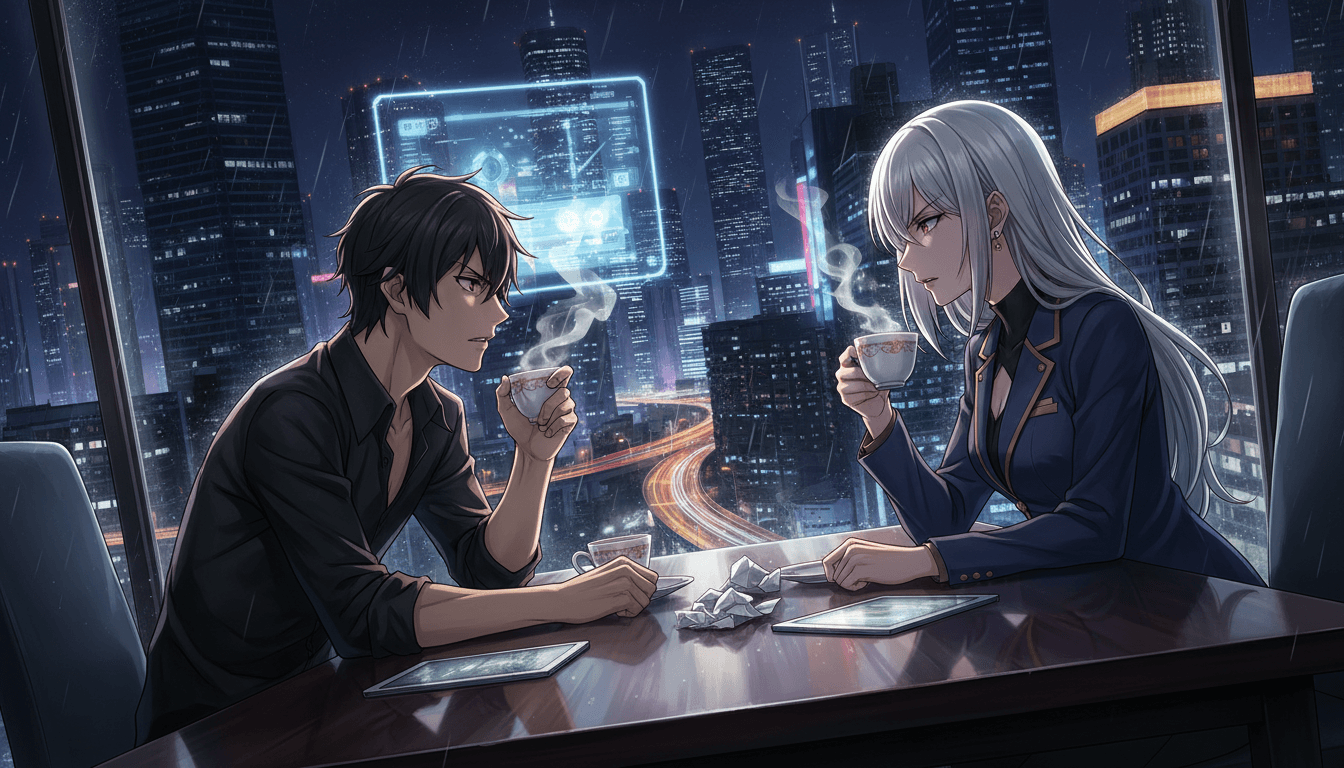
Anime is dialogue. C2Anime is an anime video generator with voice built around that fact: it writes a screenplay, casts a distinct voice for each character, and renders scenes where those characters actually talk to each other — and keeps both the face and the voice the same from the first scene to the last.
How the anime video generator with voice works
Three stages. Casting happens before rendering, which is why the voices hold.
Give it the story
Paste a premise, a script or a chapter. C2Anime reads it for the scenes where people actually talk to each other — those are the scenes an anime is built on.
It casts the voices
Each character in the screenplay gets a voice of their own, chosen to match who they are, and that voice is locked to them for the rest of the production.
It renders voiced scenes
Dialogue, timing and staging are rendered together, so a scene plays as a conversation rather than as a caption sitting under a still image.
Narration is not the same as dialogue
Most AI video output that claims to have sound is really one narrator describing the picture. It tells you a character is furious. It never lets you hear them be furious. The effect is a slideshow with a podcast on top.
Anime works the other way round. Scenes are carried by what people say to each other and how they say it — the pause before an admission, the line delivered too fast, the name said twice. Strip that out and even beautiful frames feel inert.
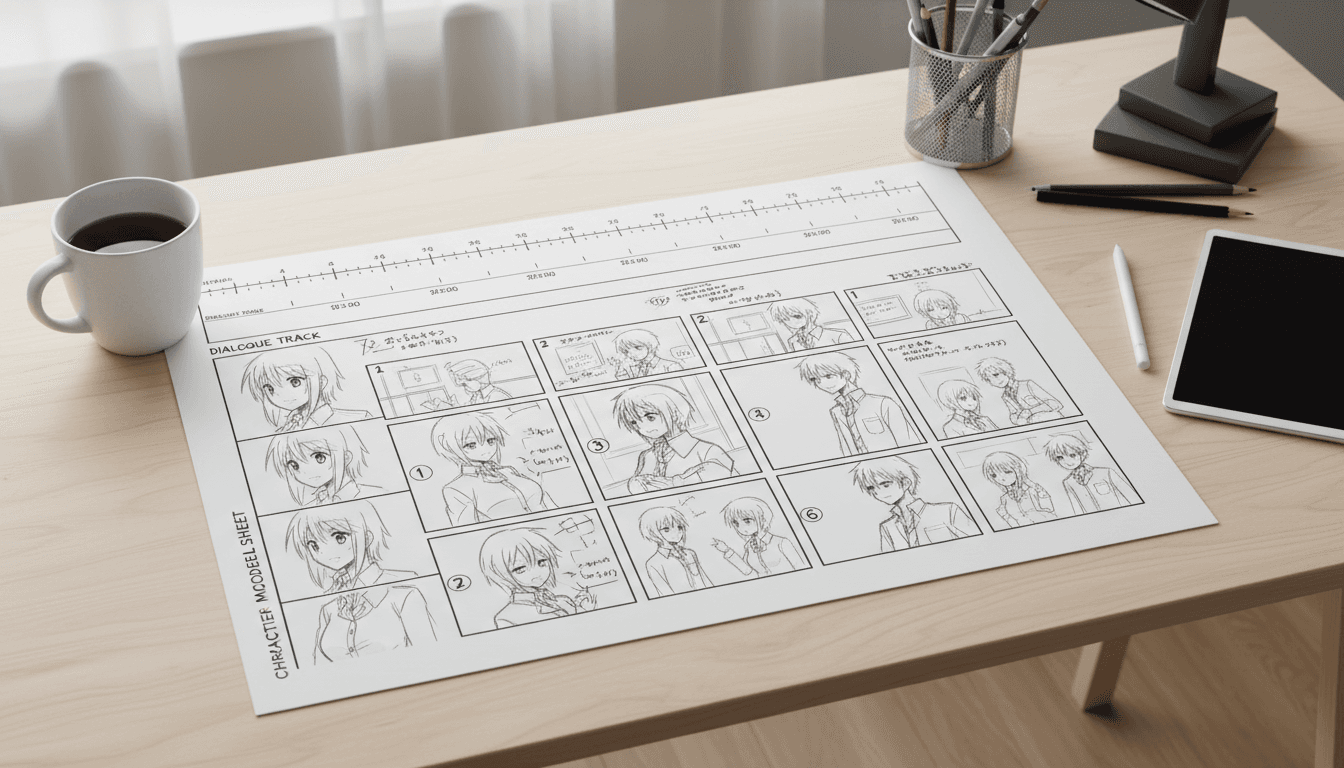
So C2Anime writes the exchange first and stages the shot to serve it. The screenplay decides who speaks, in what order and with what intent, and the render follows the screenplay instead of the other way round.
One voice per character, held to the end
A character is a face and a voice. If either one drifts, the audience stops believing in them. Tools that generate each clip in isolation re-roll both every time, so by scene five the loud one sounds thoughtful and the quiet one has changed hair colour.
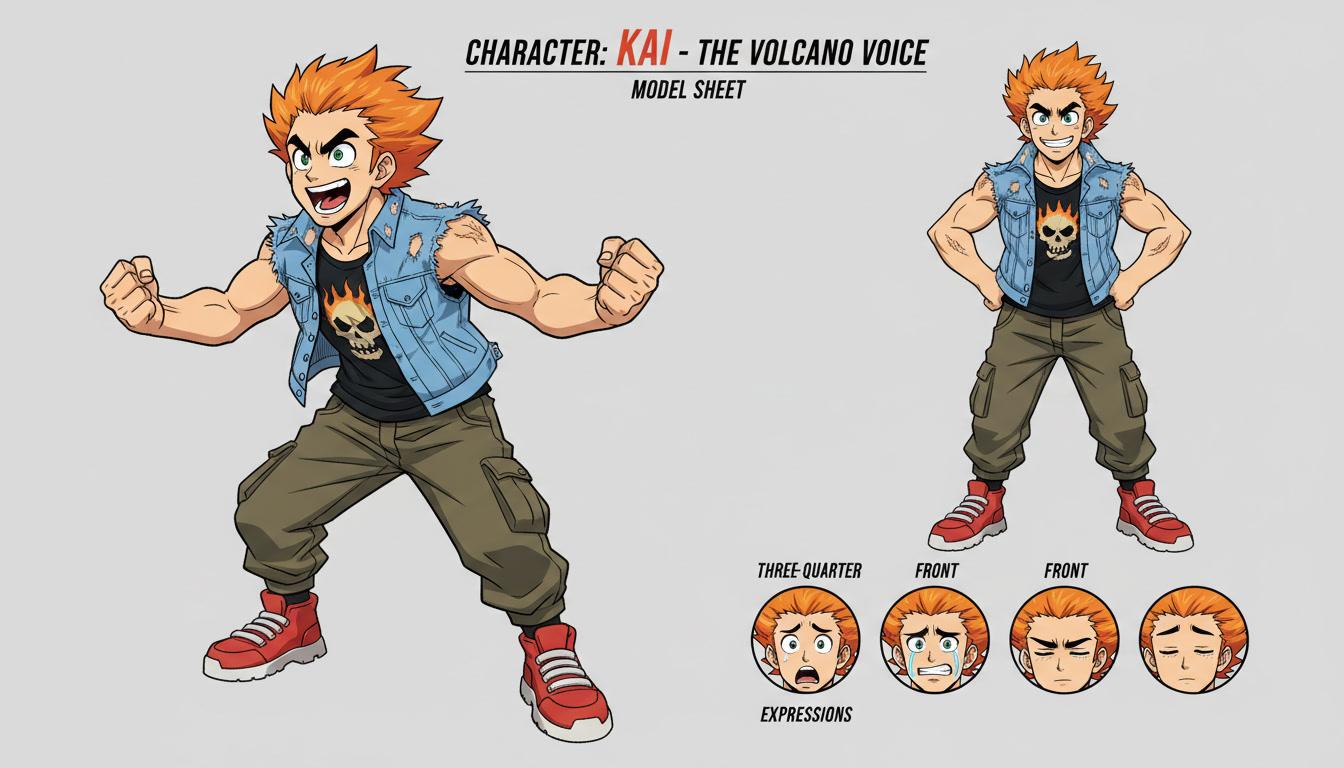
C2Anime defines the cast once, before rendering: design, manner, and voice together as a single reference. When that character speaks in a later scene, the generator is recalling them rather than reinventing them.
That is what makes episodes possible. A recurring cast whose voices you recognise is the difference between a series and a folder of clips.
What the generator handles for you
A voice per character
Not one narrator reading everyone. Each member of the cast speaks in their own voice, which is how a viewer keeps track of who is who.
Voice and face stay together
The same character design and the same voice carry across every scene, so the person you met in scene one is recognisably the person in scene nine.
Dialogue written first
The screenplay comes before the render. You can read the lines, cut the ones that do not land and re-plan before anything is voiced.
Scenes, not soundbites
Exchanges run long enough to have a beginning and an end — an argument that escalates, a confession that lands, a decision someone regrets.
Who needs voices, not captions
Writers adapting their own work. You already wrote the dialogue. Hearing it spoken by the characters you wrote it for is the first time the scene exists outside your head.
Creators building a cast. Audiences follow people. Give each one a voice they keep and viewers will know who walked into frame before anyone says a name.
Anyone who cannot book a booth. Casting voice actors takes budget and scheduling most independent projects never get. Generated voices remove that gate without removing the performances.
Voiced anime video: common questions
- What is an anime video generator with voice?
- It is a tool that produces anime video where the characters speak, rather than silent clips you have to dub yourself. C2Anime writes the dialogue as part of a screenplay, assigns a voice to each character, and renders the scene with that dialogue already in it.
- Is this voice over or real character dialogue?
- Character dialogue. A voice over is one person describing what is happening on screen. C2Anime builds scenes around characters talking to each other, each in their own voice, which is what makes the result read as anime instead of as an illustrated audiobook.
- Does each character keep the same voice across the video?
- Yes. The voice is part of the character definition, alongside their design. Once a character is cast, every line they speak for the rest of the production uses that voice.
- Can I use an anime video generator with voice for a full episode?
- That is what it is built for. Because the screenplay and the cast are planned before rendering starts, dialogue can run across many scenes and set things up that pay off later in the episode.
- What language is the dialogue in?
- Write your story in the language you want the characters to speak, and the screenplay and voices follow it. The dialogue the model writes comes from your source material, so the tone stays yours.
- Can I edit the lines before they are voiced?
- Yes. The screenplay is visible before anything renders. Change a line, cut a beat, or re-plan a whole scene, then render once you are happy with what the characters say.
- Do I need to record anything myself?
- No recording, no microphone, no voice actors to book. You supply the story and review the screenplay; the generator handles casting and performance.
Give your characters something to say
Bring the story. C2Anime casts it, voices it and shoots it.
Start your animeMaking voiced anime with an anime video generator with voice
An anime video generator with voice does something a silent clip tool cannot: it produces scenes that play. Dialogue is not a layer added at the end of an anime production — it is the spine of it. C2Anime plans a screenplay from your story, assigns a voice to every speaking character, and renders the scene with that performance already in place, so what comes back is watchable rather than a set of frames waiting on a dub.
The part that usually breaks is consistency. Generate one clip at a time and nothing in the system remembers who the character was a minute ago, so the design shifts and the voice shifts with it. By locking design and voice together into a single character reference before rendering begins, C2Anime keeps your cast recognisable across an entire video — the same look, the same delivery, scene after scene.
That matters most at length. A short clip can survive a wobble; an episode cannot, and a series built on a recurring cast certainly cannot. If you want an argument in scene two to be paid off by a line in scene eleven, the whole runtime has to be written before it is shot. A generator that starts from a screenplay can do that. One that starts from a prompt per shot cannot.
Bring whatever you already have — a premise, a script, a chapter of a novel, a finished short story. C2Anime turns it into an anime video with voiced dialogue, a consistent cast and scenes that connect to each other. No microphone, no voice actors to schedule, no dubbing pass afterwards. Just the story, spoken by the people you wrote it for.