Sketch to anime: the drawing in your notebook, animated
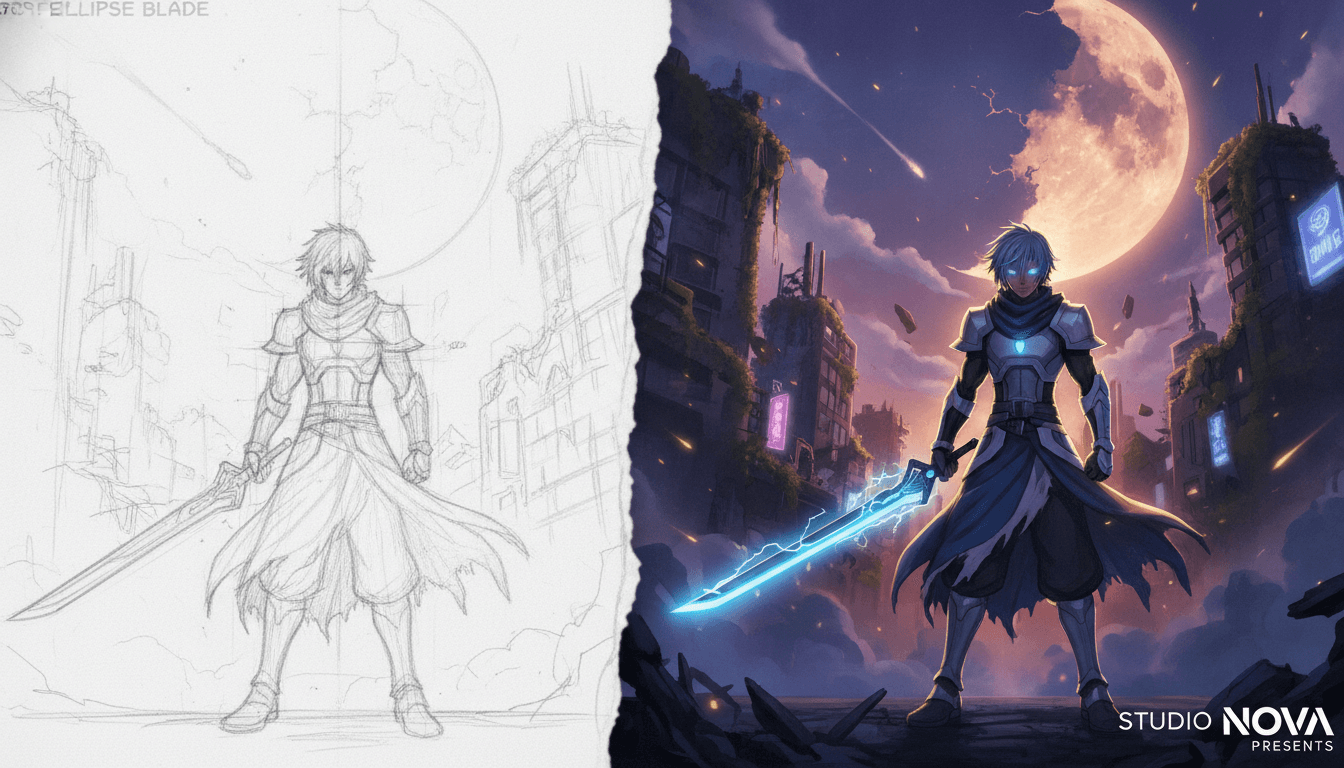
C2Anime takes sketch to anime the whole way. Upload a rough drawing and it resolves your lines into a proper character design, writes a screenplay for that character, and renders voiced anime scenes with the same design in every shot. No inking, no colouring, no re-rolling the face until it matches.
How sketch to anime works
Three stages. The middle one is the stage most tools skip, and it is the reason the character survives the rest of the video.
Upload the sketch
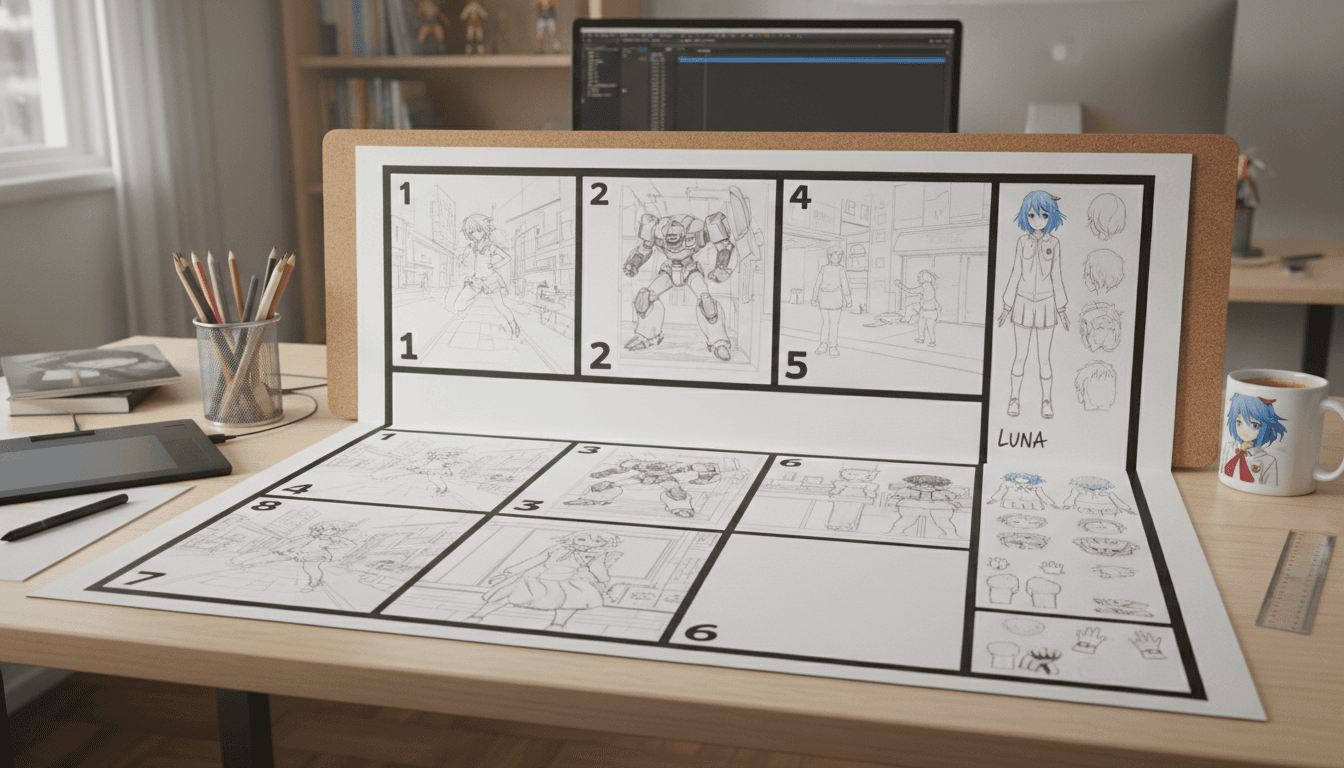
A pencil drawing, a tablet doodle, a thumbnail on the back of an envelope. It does not need to be clean and it does not need to be coloured.
It becomes a design
C2Anime reads the sketch as intent — the silhouette, the hair, the outfit, the expression — and resolves it into a finished character design it can hold onto.
The design gets a story
That design is cast in a screenplay and rendered as voiced anime scenes. The character you drew is the character on screen, shot after shot.
A sketch is a design brief, not a frame
Most tools that accept a drawing treat it as frame one and push a camera at it. The image wobbles for four seconds and stops. Your sketch has been used up, and you have nothing that could become a scene.
C2Anime reads the drawing differently. It asks what the drawing establishes — this character's proportions, this haircut, this coat with this collar — and turns those answers into a design it can re-render from any angle. The sketch stops being a single picture and becomes a rule the production follows.
That difference is what lets one drawing support a whole video. Scene two can put the character in a different pose, in a different room, mid-sentence, and it is still the character you drew.
From rough lines to a cast that holds
Ask anyone who has tried to animate their own drawings with AI where it falls apart, and the answer is always the same: the character stops being the character. The nose changes. The fringe gets longer. A jacket picks up a zip it never had. Viewers notice instantly, even if they cannot name what changed.
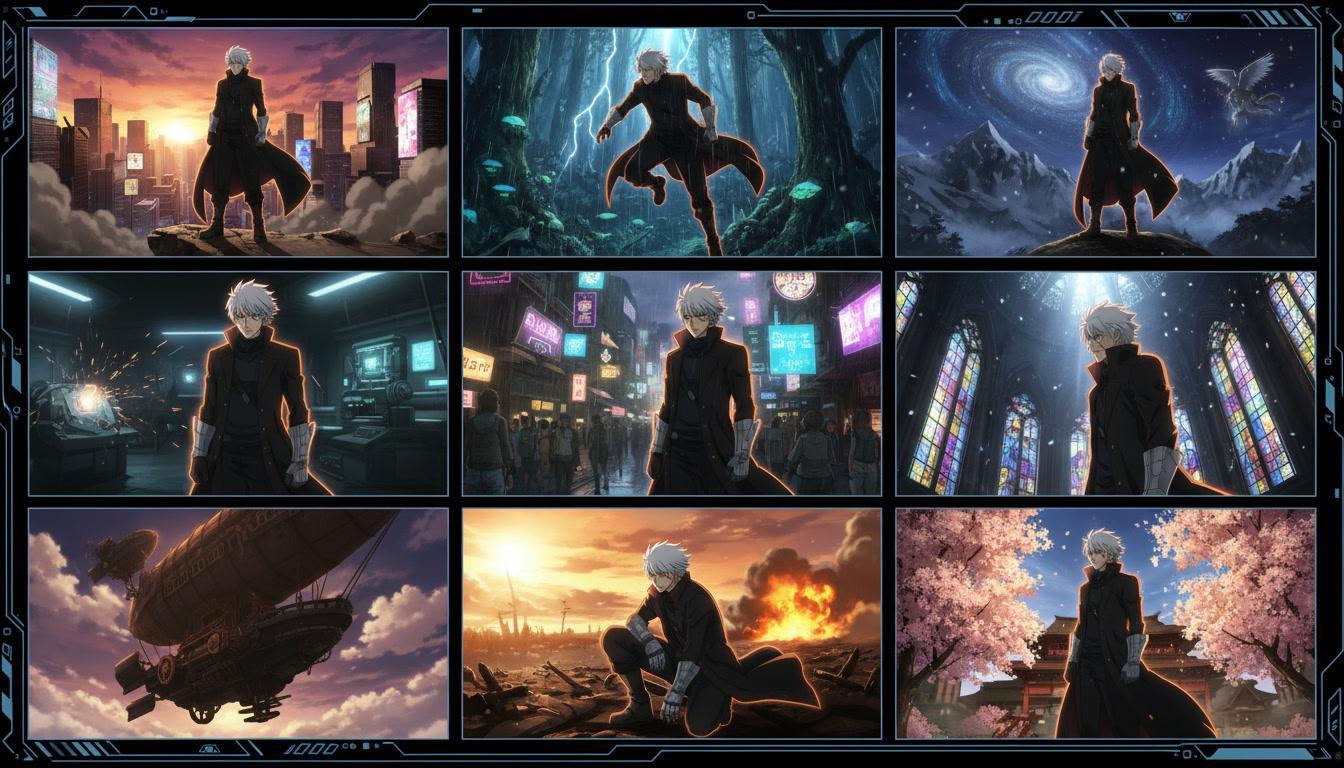
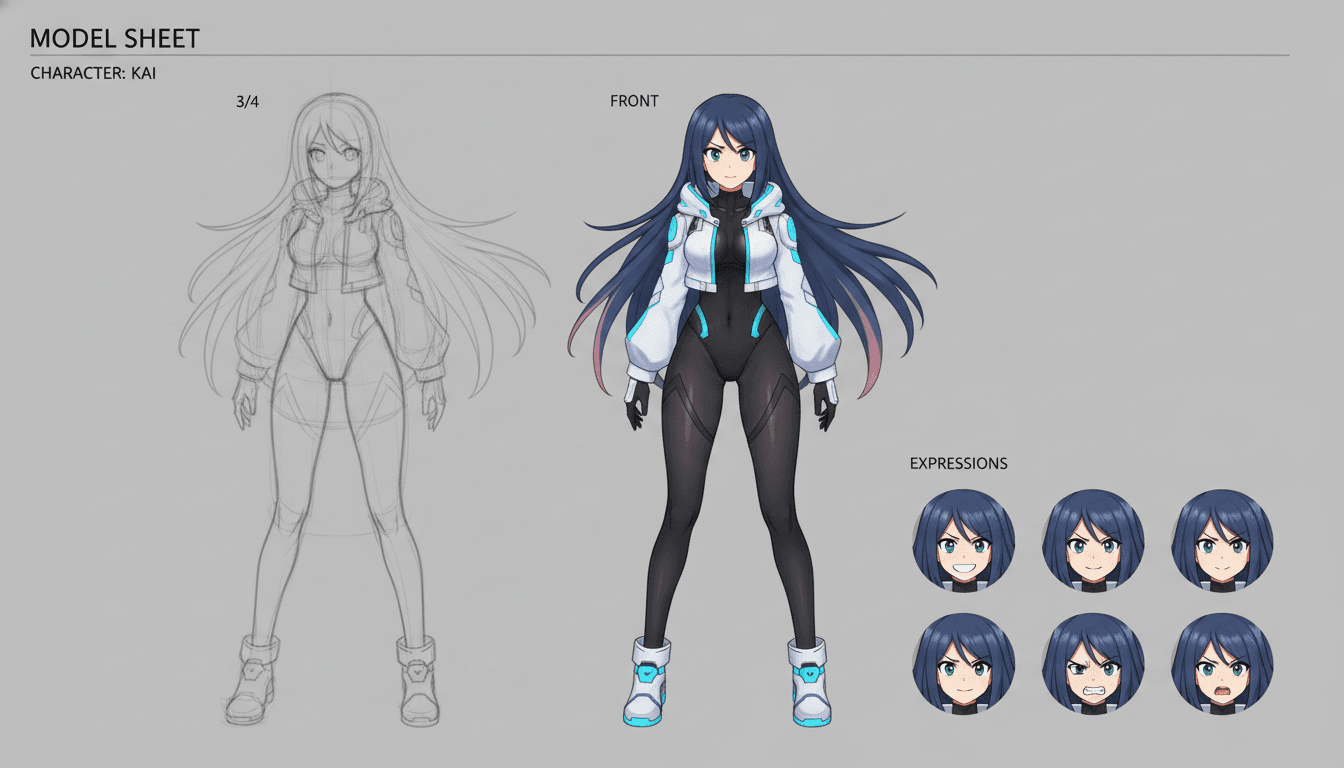
C2Anime resolves your sketch into a design once, up front, and then treats that design as fixed. When the character appears in scene nine, nothing is being reinvented — the same reference is being reused. Draw two characters and you have a cast; both of them stay on model in the shots they share.
It also means the drawing is reusable. The same design can carry into the next video, and the one after that, which is how a series becomes possible instead of a folder of one-offs.
What sketch to anime handles for you
Your sketch becomes a fixed reference
The design pulled from your drawing is stored as the character reference for the whole production, so the face you drew does not drift between scenes.
A screenplay, not a single shot
Going from sketch to anime means deciding what the character does. C2Anime writes scene headings, action and dialogue first, then renders against that plan.
The character speaks
Each character in the cast gets a voice and keeps it, so scenes are built on dialogue instead of narration over a slowly drifting still.
Rough input, finished output
You are not asked to ink, colour or turn the drawing yourself. The line work you have is enough to establish who the character is.
Who sketch to anime is for
Artists with a sketchbook full of characters. You have designed dozens of people nobody has ever seen move. The gap between a good drawing and a moving scene has always been a studio. This closes it with an upload.
Storyboard artists. Thumbnails are meant to be read as sequence, not as finished frames. Feed the boards in and watch the sequence play with voices attached, then change the board and watch it again.
Writers who can only sort of draw. A lopsided sketch still carries more information about a character than a paragraph of description does. Draw badly on purpose; the design step is what cleans it up.
Anyone testing a design. Seeing a character talk is the fastest way to find out whether the design works. Turn the sketch into a scene before you commit weeks to it.
Sketch to anime: common questions
- How does sketch to anime work?
- You upload a drawing and C2Anime interprets it as a character design rather than as a frame to animate directly. It reads the silhouette, hair, costume and face, resolves those into a clean anime design, and stores that design as a reference. From there the character is cast in a screenplay and rendered into scenes with the same design every time they appear.
- Does my sketch need to be finished or coloured?
- No. Rough graphite, a single line pass, an unclosed outline — all of it works. The drawing is there to communicate who the character is, not to be the final artwork. If your sketch leaves something ambiguous, such as eye colour or the back of an outfit, you can say so in text and C2Anime will fill it in consistently.
- Will the character still look like my drawing?
- That is the whole point of running sketch to anime rather than describing the character in words. The design is derived from your lines, so proportions, hairstyle and costume carry over. It will look cleaner than your sketch, because it has to be renderable at production quality, but it stays recognisably yours.
- Can I upload more than one sketch?
- Yes. Multiple drawings of the same character — a front view, a profile, an expression scribble — give the design more to work from and usually produce a closer match. Sketches of different characters become different members of the cast.
- Do I get a still image or an actual video?
- A video. C2Anime is not a colouring tool. The design taken from your sketch is used to render voiced anime scenes with dialogue, staging and cuts, long enough to tell a complete short rather than loop for a few seconds.
- What if I sketch backgrounds and props instead of characters?
- Environment and prop sketches work as references too. A drawn location becomes part of the world the scenes are staged in, which helps the background hold still while the characters move through it.
- Can I change the design after it is generated?
- Yes. The design and the screenplay are both reviewable before the scenes render, and you can re-render individual scenes rather than rebuilding the whole video.
You already drew the hard part
Upload the sketch. C2Anime handles the design, the screenplay and the scenes.
Animate your sketchGoing from sketch to anime video
Sketch to anime is a two-problem job, and most tools only solve the second half. The first problem is interpretation: a rough drawing is full of gaps, and something has to decide what the unclear lines mean before anything can be rendered. The second is continuity: once the design exists, every subsequent shot has to agree with it. C2Anime handles both by resolving your sketch into a stored character design and then rendering the whole video against that design rather than against a fresh prompt each time.
This is why a sketch to anime workflow is worth more than a drawing-to-clip filter. A filter gives you your own picture back with motion smeared over it. What you usually want is your character acting — walking into a room, arguing with someone, reacting to news — which requires a screenplay, staging and voices. C2Anime writes the screenplay first, so the sketch you uploaded ends up in scenes that connect to each other instead of in a four-second loop.
Rough input is genuinely fine. Uncoloured graphite, an unfinished outline, a thumbnail scrawled during a meeting: the design step exists precisely so you do not have to produce clean art. Multiple sketches of the same character help, and sketches of different characters simply become different members of the cast, each with their own design and their own voice. Environment and prop drawings work the same way, anchoring the world the scenes are staged in.
The result is a finished anime video rather than an illustration: voiced dialogue, cuts between scenes, and a cast that stays on model from the first shot to the last. If you have a sketchbook of characters who have never moved, sketch to anime is the shortest path between that sketchbook and something you can actually watch. Upload a drawing and see what it becomes.