An AutoWeeb alternative that directs the whole anime
If you are hunting for an AutoWeeb alternative, you probably like the character work and want the part after it to hold together. C2Anime is built for that half: hand over a story and an AI Film Director plans the acts, designs the cast, writes a screenplay with real dialogue, and renders voiced scenes against that plan — instead of leaving you to storyboard, animate and chain the panels yourself.
How C2Anime works, end to end
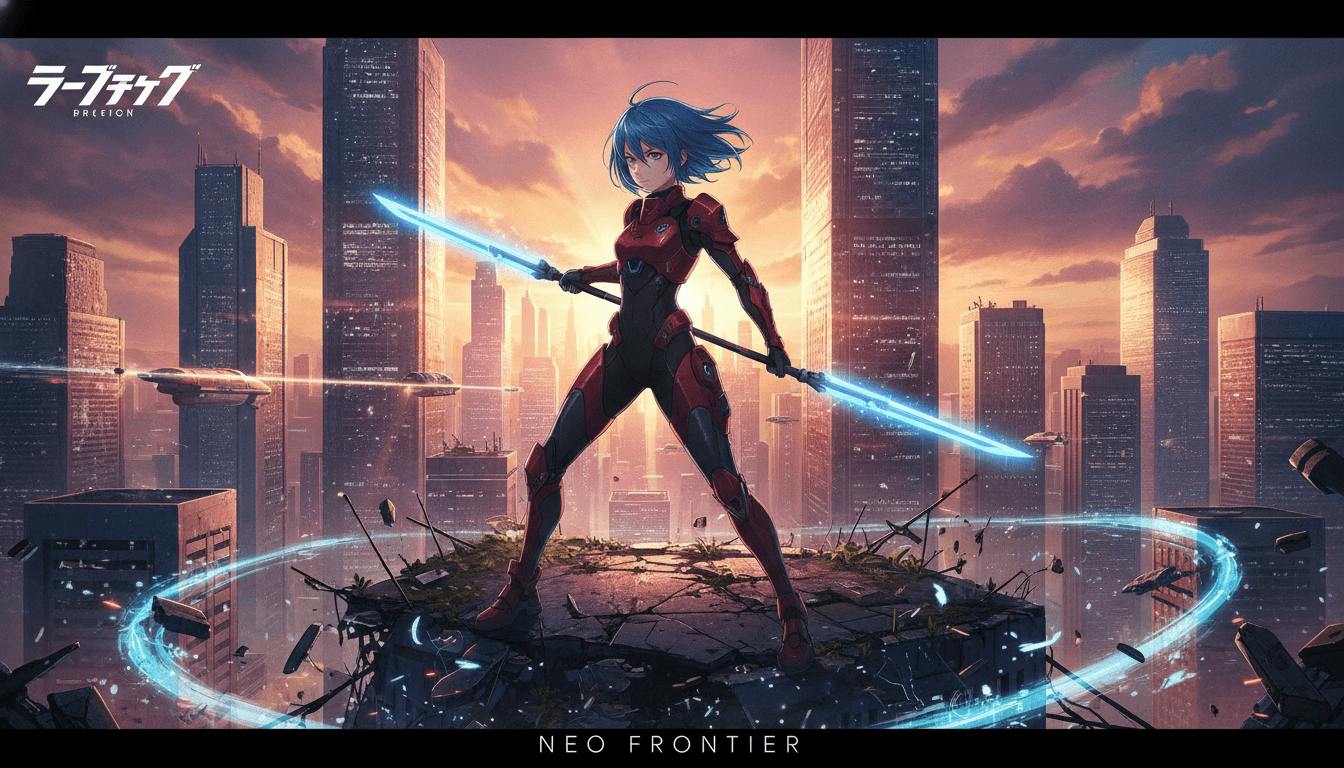
Three stages, in this order. The order is the reason the finished video holds together instead of drifting.
Hand over the story
A premise, a finished script, or the chapter you have been rewriting for a year. C2Anime reads it for structure first — which beats carry weight, who owns them, where a scene has to turn.
Read the plan before it shoots
You get an act breakdown, a scene list, a cast with locked designs, and a screenplay with real dialogue. Cut a scene or rewrite a line while nothing has rendered yet.
Let the director shoot it
Every scene is staged, voiced and rendered against that plan and against the same character references, so the boy in scene nine is the boy from scene one.
AutoWeeb alternative comparison, side by side
Everything in the right-hand column is taken from AutoWeeb's own site as it reads today. Tools change; check it yourself before you decide.
| C2Anime | AutoWeeb, per its own site | |
|---|---|---|
| What it is | One directed pipeline: a story goes in, a finished anime video comes out | “The top AI anime video generator” — a set of tools for characters, scripts, storyboards, filters and video |
| How you drive it | You hand over source material and review a written production plan | Four stages you run yourself: build the cast, plan the season arc, storyboard episode by episode, animate and chain |
| What comes first | A screenplay with scene headings, action and spoken dialogue, editable before a frame exists | A scene-by-scene storyboard with shot descriptions, generated from your story idea |
| Keeping characters on model | One cast designed once and reused as a fixed reference in every scene | Reference sheets “fixing their face, outfit, and art style so they look identical in every episode” |
| How the runtime is assembled | Scenes are staged against the plan, then stitched into one continuous piece | “Animate storyboard panels into video clips and chain them into episode sequences” |
| Sound | Characters are cast with voices and keep them; scenes are built around dialogue | “Audio Generation” is listed as a feature on every plan |
| Scope | Anime from stories, and nothing else | Also anime filters in the style of popular shows, photo-to-anime and concept art |
| Pricing shape | Credit subscriptions and one-time packs; video billed per generated second | Credit subscriptions listed at $19, $49 and $99 a month, plus one-time credit packs |
These are two different bets. AutoWeeb's own site leads with breadth — character sheets, story generation, storyboards, style filters in the mould of popular shows, photo-to-anime, and clips animated with Seedance 2, each one a tool you operate. C2Anime leads with depth in a single medium: one directed pipeline, a screenplay you sign off on, and a cast that survives the whole runtime. Pick the bet that matches what you are actually making.
Panels you chain versus scenes that are directed
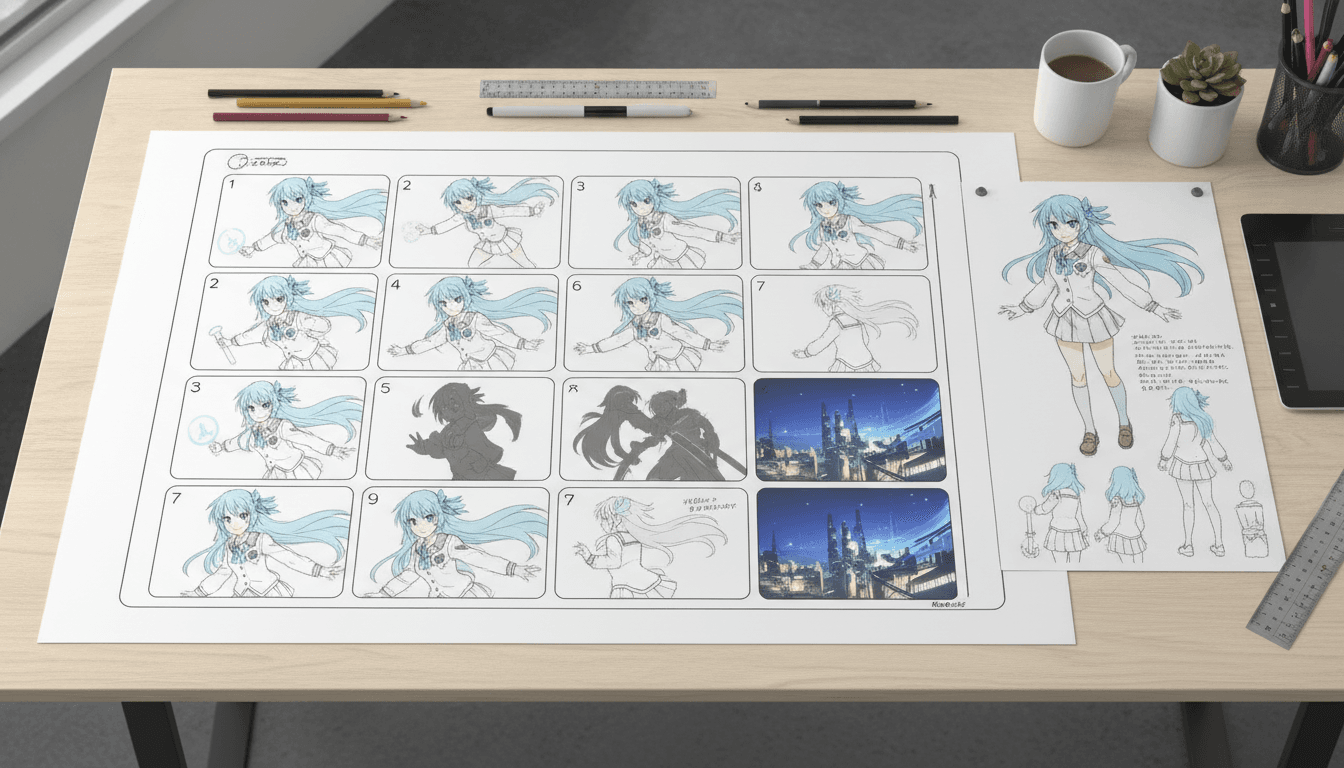
A panel-first workflow is genuinely good at what it does. You generate a storyboard, animate each panel, then chain the clips into a sequence. Every panel gets your attention, and for a short action beat that is exactly the right amount of control.
The strain shows up at length. Nothing in a chain of panels is responsible for the whole. A line of setup in panel three has no way of knowing it needs a payoff in panel forty. Pacing is whatever the sum of the clips happens to be, and fixing it means regenerating panels and re-chaining.
C2Anime moves those decisions before the render. The director works out act structure, scene order and who carries each beat, writes it as a screenplay, and only then stages and shoots. You spend your credits on scenes that already earn their place.
The cast is the part that usually breaks
Ask anyone who has tried to make anime with AI what fails first and they will say the characters. Faces drift. Hair changes length. An outfit gains a detail in one shot and loses it in the next. Viewers notice immediately, even when they cannot say what is wrong.
Locking reference sheets is the right instinct, and AutoWeeb says it does this too. The difference is where the reference lives. In C2Anime the cast is owned by the production rather than by you: the director holds the designs, knows which character is in which scene, and applies the same reference automatically every time that character appears.
That is what makes a series possible rather than just a single good video — the same cast can carry across episodes without you re-attaching a sheet to every panel.
What C2Anime handles for you
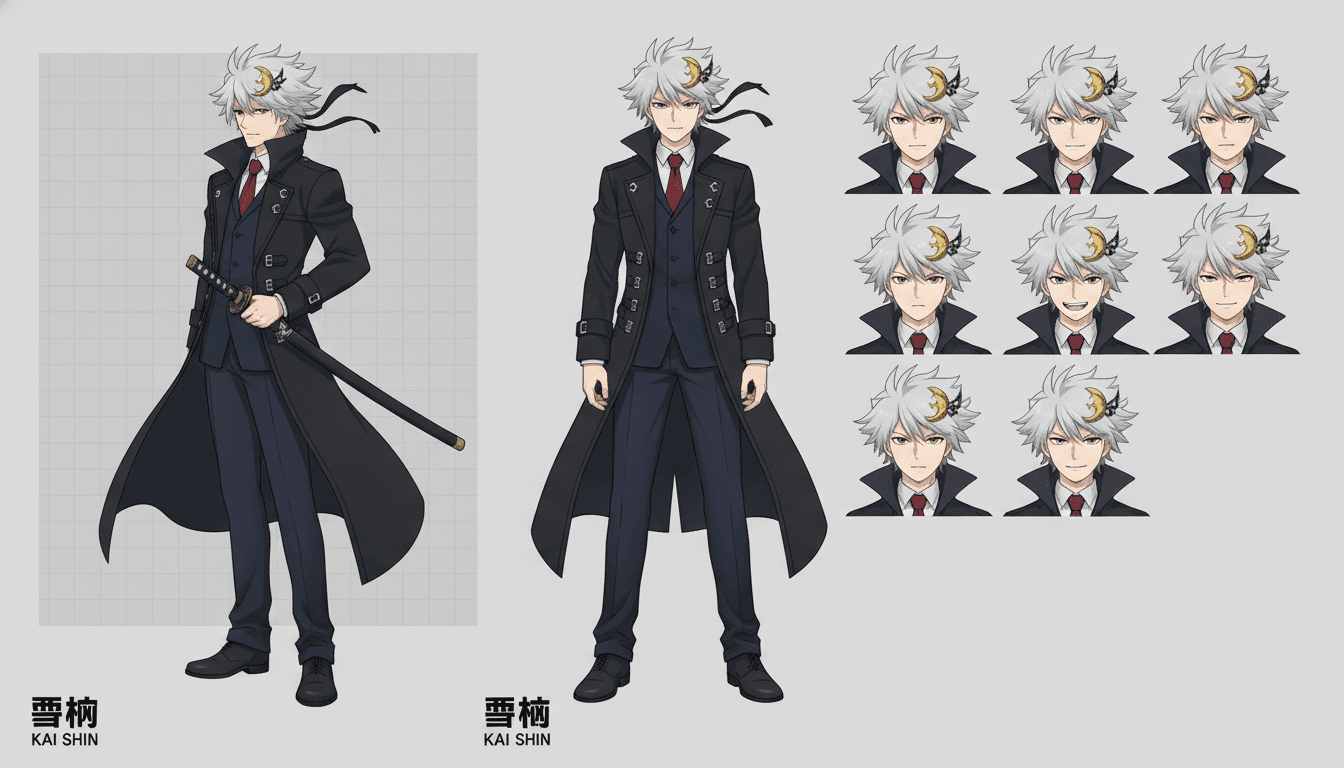
One cast, every scene
Characters are designed up front and treated as fixed references for the rest of the production. Scene twelve reuses the design from scene one rather than reinventing it.
A screenplay, not a shot list
Before anything renders you get scene headings, action lines and dialogue. You can read the whole thing, change it, and re-plan — which is cheaper than re-rendering.
Characters that speak
Every character gets a voice and keeps it across the runtime. Scenes are built around what people say to each other rather than narration laid over motion.
Scenes that connect
Because the whole runtime is planned before rendering starts, an early scene can set something up and a later scene can pay it off.
What moving over actually looks like
Bring the story, not the project. There is no import step, and you do not need one. Paste the script, premise or chapter you were working from. Character descriptions you already wrote are useful input — the director uses them when it designs the cast.
Read the plan first. The biggest change in habit is that you review a written screenplay before anything renders. It feels slower for about ten minutes and then it stops feeling slow, because the notes you would normally give after seeing a bad clip you now give before paying for it.
Expect a different unit of work. You stop thinking in panels and start thinking in scenes. Re-rendering a scene is the equivalent of regenerating a panel, and the rest of the production stays intact when you do it.
Keep both if it suits you. Nothing stops you using a filter or a photo-to-anime tool elsewhere for stills and coming to C2Anime when you want the story told as a video. The two workflows do not conflict.
AutoWeeb alternative: common questions
- What is the best AutoWeeb alternative for story-driven anime?
- It depends on what you are making. If you want a panel-by-panel toolkit with anime filters and photo-to-anime conversion alongside video, AutoWeeb covers that ground. If you want to hand over a finished story and get back a planned, voiced anime with one cast held steady across the runtime, C2Anime is the AutoWeeb alternative built for that specific job.
- How is C2Anime different from AutoWeeb?
- AutoWeeb, per its own site, gives you four stages you run yourself: build a cast, plan the arc, storyboard episode by episode, then animate panels and chain them into sequences. C2Anime runs those decisions as one directed pipeline. An AI Film Director reads your source material, writes a screenplay with dialogue, casts the characters and renders the scenes against that plan.
- Do my characters stay consistent?
- Yes — that is the part C2Anime is built around. Character designs are generated once and reused as references for every scene the character appears in, so the same face, hair and outfit carry through the video and across episodes.
- Can I import work I already made in AutoWeeb?
- There is no direct import, but you do not need one. C2Anime works from source material rather than from another tool’s project file. Bring the script, the character descriptions or the story you wrote, and the director will plan the production from that.
- Does C2Anime generate voices as well as picture?
- Yes. Characters are cast with voices and keep them, and scenes are written and rendered around spoken dialogue rather than a voiceover added on top.
- What can I give it as input?
- A one-line idea, a detailed premise, a screenplay, a chapter of a novel, or a finished short story. The longer and more specific the input, the more faithful the adaptation.
- How do I get access?
- C2Anime is in invite-gated Early Access with paid credit tiers. You can see what the pipeline produces on the explore page and check current plans on the pricing page before you commit.
Bring a story. Leave with an anime.
The director handles the production. You stay the one with opinions.
Choosing an AutoWeeb alternative for story-driven anime
Most people searching for an AutoWeeb alternative are not unhappy with anime generators in general. They have made characters they like, they have storyboarded a few scenes, and they have hit the wall that every panel-by-panel pipeline eventually hits: the finished thing does not feel like an episode. C2Anime is a different shape of tool for that exact moment — an AI Film Director that takes responsibility for the whole production rather than handing you a row of generators to operate.
The mechanism is unglamorous and it is the whole point. Structure is decided before rendering. The cast is designed once and treated as fixed for the rest of the runtime. A screenplay with scene headings, action and dialogue is written and shown to you while it is still cheap to change. Only then does anything get staged, voiced and shot. Continuity stops being something you police panel by panel and becomes a property of the plan.
This matters most for long work. A thirty-second beat survives a little drift. An episode does not, and a series definitely does not. If your ambition is a recurring cast, a world people come back to, or a faithful adaptation of a novel you have already written, the production has to be planned as a whole — which is the job C2Anime is built to do and the reason an AutoWeeb alternative is worth evaluating at all.
C2Anime works from whatever you already have: a premise, a screenplay, a chapter, a finished short story. It stages the scenes, casts and holds the voices, and renders anime with dialogue at its centre rather than narration over motion. It is in invite-gated Early Access with paid credit tiers, so start with the explore page to see what the pipeline produces, then bring the story you want directed.