A Komiko alternative for people who still want to make something
Komiko has told its users its journey is ending and pointed them at WorldOS. If you came to Komiko to build original characters and tell stories with them, you are not really looking for somewhere to play — you are looking for a Komiko alternative that still makes things. That is what C2Anime does: hand over your story and your cast, and an AI Film Director plans the acts, locks the character designs, writes a screenplay with real dialogue and renders it as voiced anime.
What Komiko actually announced
Worth being precise about, because a lot of the advice floating around is guesswork. As of this writing, komiko.app carries a banner reading: “Komiko’s journey is coming to an end, but your stories can live on. Continue your adventures on WorldOS.”
Its pricing page says new sign-ups are closed — “KomikoAI is not accepting new web subscriptions at the moment” — while existing subscribers can still manage what they have, and one-time Zap Packs remain purchasable. The site does not publish a shutdown date or an export deadline, which is the part we would most want it to publish. Treat everything here as a snapshot and check the site yourself.
The practical reading: nothing new is being built for you there, and the exit the product names is WorldOS. So the honest question is not which tool is better. It is what you were using Komiko for.
Where WorldOS fits, and where it does not
WorldOS, per its own site, is a sandbox for interactive AI worlds: you create a world and characters, then play in them, spending turns, with community worlds to browse and a membership that grants Zaps. If Komiko was where you roleplayed with characters you loved, that is a real continuation and you should take it.
It is not, however, a production tool. Nothing on its site describes exporting a finished, watchable piece of anime, and it does not mention importing Komiko accounts, characters or comics. If what you got out of Komiko was artefacts — pages, characters, a story someone else could sit and watch — then the thing you actually need is somewhere to keep making those. That is the gap this page is about.
How C2Anime works, end to end
Three stages, in this order. The order is the reason the finished video holds together instead of drifting.
Bring the story and the cast
Paste the premise, the script or the chapter, plus the character descriptions you already wrote. C2Anime reads it for structure first — which beats carry weight and who owns them.
Read the plan before it shoots
You get an act breakdown, a scene list, a cast with locked designs and a screenplay with real dialogue. Cut a scene or rewrite a line while nothing has rendered yet.
Let the director shoot it
Every scene is staged, voiced and rendered against that plan and against the same character references, so the girl in scene nine is the girl from scene one.
Komiko alternative comparison, side by side
Everything in the right-hand column is taken from Komiko's own site as it reads today, while it is still up. That column will stop being accurate at some point — check it yourself before you decide.
| C2Anime | Komiko, per its own site | |
|---|---|---|
| Current status | Invite-gated Early Access with paid credit tiers, actively developed | “Komiko’s journey is coming to an end, but your stories can live on. Continue your adventures on WorldOS.” |
| Can you sign up today | Yes, through Early Access | “KomikoAI is not accepting new web subscriptions at the moment” |
| What it makes | A finished anime video: planned, voiced, scene after scene | Anime art, original characters, comics on a canvas, effects and short animations |
| Where it points you next | Nowhere — this is the product | WorldOS, which its own site describes as interactive AI worlds you play in |
| How you drive it | You hand over source material and review a written production plan | You operate individual generators — art, OC maker, effects, comic panels, animation |
| Keeping characters on model | One cast designed once and reused as a fixed reference in every scene | An OC Maker and character-sheet effects you apply per generation |
| Sound | Characters are cast with voices and keep them; scenes are built around dialogue | Not advertised as part of the comic or animation flow |
| Credits | Credit subscriptions and one-time packs; video billed per generated second | A “Zaps” balance, with one-time Zap Packs still purchasable while subscriptions are closed |
These were never the same product, and the comparison is only useful in one direction. Komiko was a wide bench of generators — art, an OC maker, effects, a comic canvas, short animations — that you operated one at a time. C2Anime is one directed pipeline aimed at a single output: an anime you can watch from beginning to end. What carries over is your writing and your cast.
Panels you assemble versus scenes that are directed
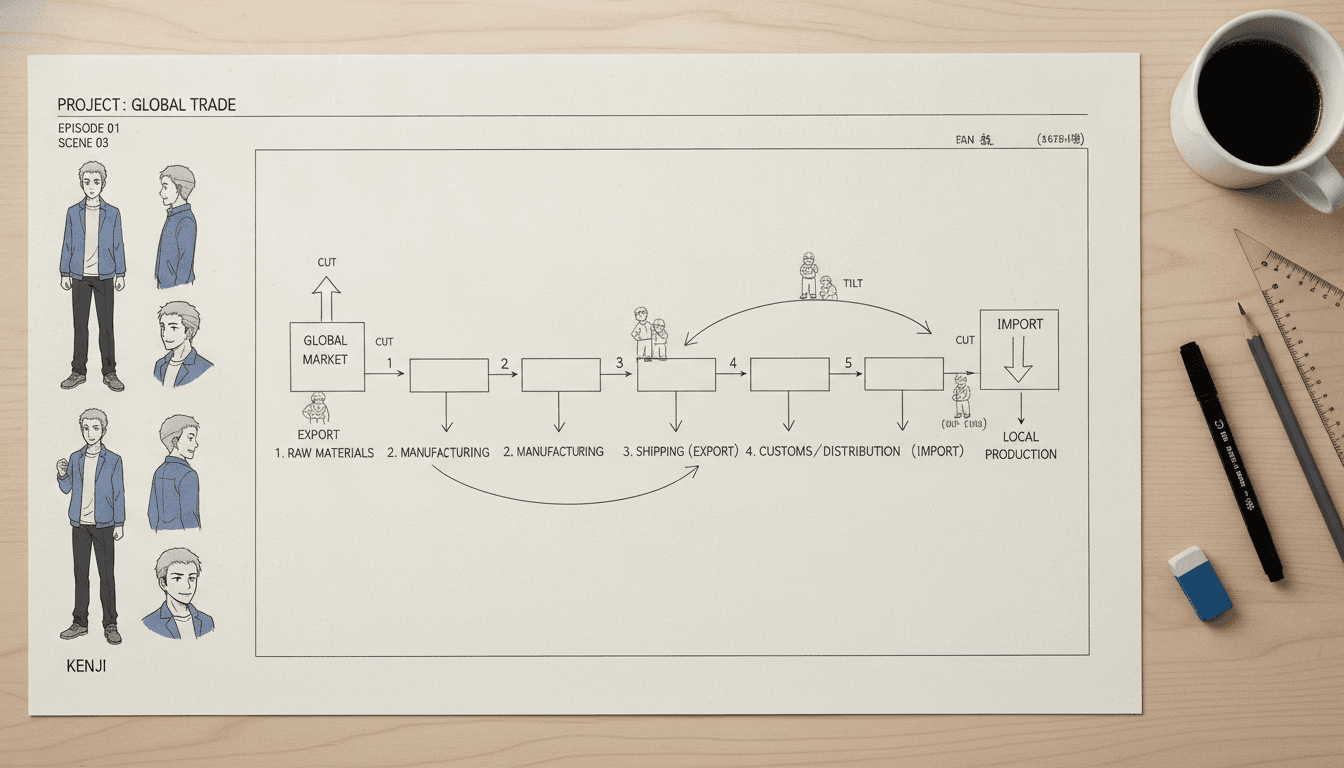
A canvas full of panels is a good way to work when you already know the shape of the thing. You generate an image, place it, write the caption, move on. Every panel gets your full attention.
The strain shows up at length. Nothing in a stack of panels is responsible for the whole. A line of setup on page three has no way of knowing it needs a payoff on page forty, and pacing is whatever the sum of the panels happens to be. Fixing it means regenerating and re-placing, one panel at a time.
C2Anime moves those decisions before the render. The director works out act structure, scene order and who carries each beat, writes it as a screenplay, and only then stages and shoots. You spend your credits on scenes that already earn their place.
Your OCs are the thing worth moving
Ask anyone who has tried to make anime with AI what fails first and they will say the characters. Faces drift. Hair changes length. An outfit gains a detail in one shot and loses it in the next. Viewers notice immediately, even when they cannot say what is wrong.
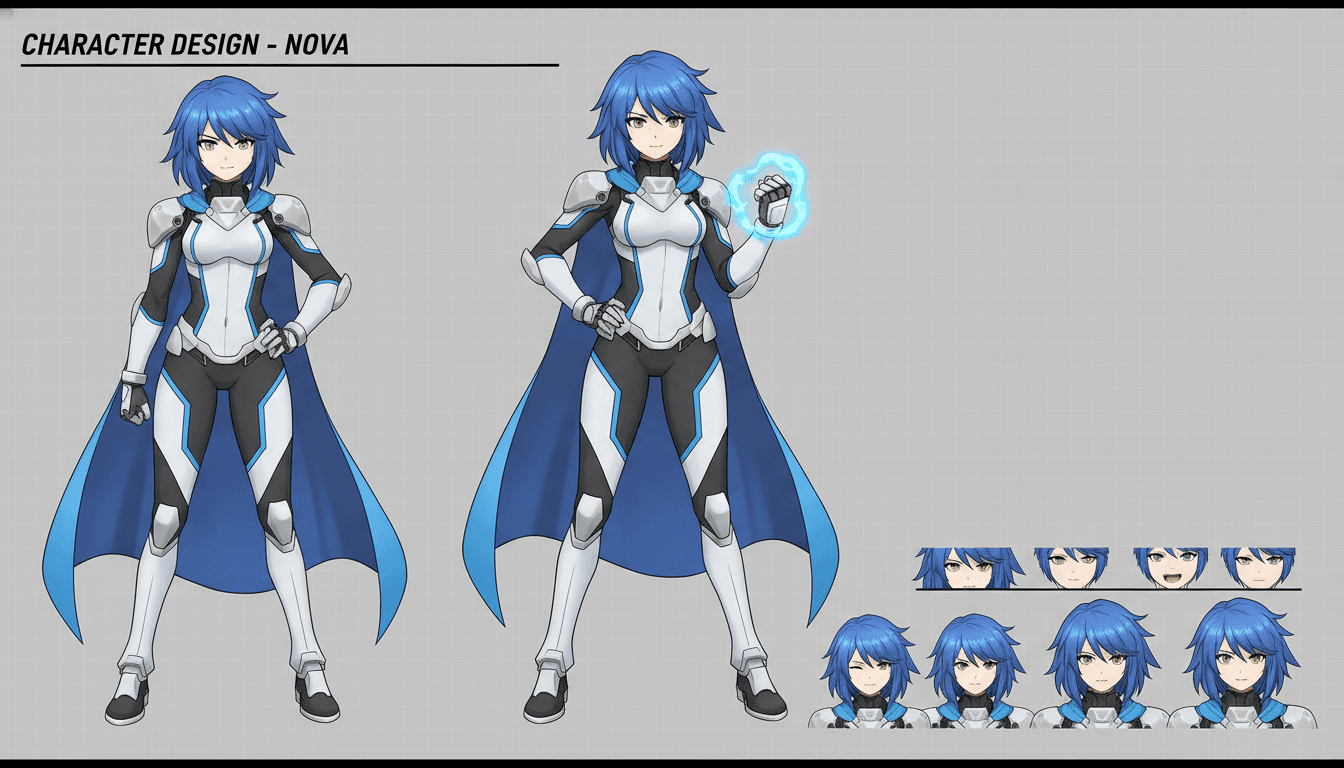
Making a character sheet per generation is the right instinct, and it is roughly what an OC maker gives you. The difference is where the reference lives. In C2Anime the cast is owned by the production rather than by you: the director holds the designs, knows which character is in which scene, and applies the same reference automatically every time that character appears.
That is what makes a series possible rather than just a single good image — the same cast can carry across episodes without you re-attaching a sheet to every generation.
What C2Anime handles for you
One cast, every scene
Your characters are designed up front and treated as fixed references for the rest of the production. Scene twelve reuses the design from scene one rather than reinventing it.
A screenplay, not a panel grid
Before anything renders you get scene headings, action lines and dialogue. You can read the whole thing, change it, and re-plan — which is cheaper than re-rendering.
Characters that speak
Every character gets a voice and keeps it across the runtime. Scenes are built around what people say to each other rather than captions on a page.
Scenes that connect
Because the whole runtime is planned before rendering starts, an early scene can set something up and a later scene can pay it off.
Migrating off Komiko: what to do this week
Get your work out while it is up. No export deadline has been published, which is a reason to move sooner rather than later. Download the pages and art you care about, and — more importantly — copy out the text: character names, appearance and personality notes, world details, dialogue, anything you wrote.
Check your billing. Komiko's FAQ says you can cancel at any time and keep access to the end of the current billing period, and that partial months are not refunded. If you are still subscribed, decide deliberately rather than letting it renew into a product that is winding down.
Bring the story, not the project file. There is no import step and you do not need one. Paste the script, premise or chapter you were working from, along with your character descriptions. The director uses those descriptions when it designs the cast.
Expect a different unit of work. You stop thinking in panels and start thinking in scenes. You also start reviewing a written screenplay before anything renders — which feels slower for about ten minutes, then stops feeling slow, because the notes you used to give after seeing a bad result you now give before paying for one.
Split your habits if it suits you. If you want to keep roleplaying with your characters, WorldOS is where Komiko is sending you and nothing stops you using it. Come here when you want the story told as a video someone else can sit and watch.
Komiko alternative: common questions
- Is Komiko shutting down?
- Komiko’s own site currently carries a notice reading “Komiko’s journey is coming to an end, but your stories can live on. Continue your adventures on WorldOS.” Its pricing page adds that “KomikoAI is not accepting new web subscriptions at the moment.” We have not seen a specific shutdown date published, so check komiko.app directly for the current wording before you rely on any timeline.
- What is the best Komiko alternative now that it is winding down?
- It depends which half of Komiko you used. If you were there for interactive characters and roleplay, WorldOS — the destination Komiko names — is the closest continuation. If you were there to make things, and you want your characters and stories to become anime you can watch, C2Anime is the Komiko alternative built for that job: a director plans the structure, designs the cast, writes the screenplay and renders voiced scenes.
- Can I import my Komiko characters and comics?
- There is no direct import, and you do not need one. C2Anime works from source material rather than another tool’s project file. Export or copy your character descriptions, story text and reference art while Komiko is still up, then paste them in. Written descriptions of your cast are genuinely useful input — the director uses them when it designs the characters.
- What should I save before Komiko goes offline?
- Download the finished art and pages you care about, and copy out the text: character names, appearance and personality descriptions, world notes and any story or dialogue you wrote. The images are nice to keep, but the writing is what actually transfers to a new tool.
- Will my characters stay consistent in C2Anime?
- Yes — that is the part C2Anime is built around. Character designs are generated once and reused as references for every scene that character appears in, so the same face, hair and outfit carry through the video and across episodes.
- Is WorldOS a replacement for making anime?
- Not for making it. WorldOS describes itself as a place to create and play in interactive AI worlds with AI-driven characters. That is a different activity from producing a video you can watch end to end or publish. If your goal is a finished anime, you need a production tool rather than a world to play in.
- How do I get access?
- C2Anime is in invite-gated Early Access with paid credit tiers. You can see what the pipeline produces on the explore page and check current plans on the pricing page before you commit.
Your characters do not have to retire with the tool.
Bring the cast and the story. The director handles the production.
Choosing a Komiko alternative when a tool winds down
Searching for a Komiko alternative right now is a different exercise from normal tool shopping. You are not switching because something annoyed you. You are switching because the product told you to, and because the destination it named — an interactive worlds sandbox — answers only half of what you were doing there. The half it does not answer is making things: finished work, with your characters in it, that somebody else can watch.
C2Anime is aimed squarely at that half. An AI Film Director reads your source material, proposes an act structure, designs a cast and holds those designs fixed, writes a screenplay with scene headings, action and dialogue, and only then stages and renders voiced scenes against that plan. Continuity stops being something you police panel by panel and becomes a property of the plan itself. That is the mechanism, and it is the whole reason the output feels like an episode rather than a folder of images.
The practical migration is smaller than it sounds, because the valuable thing you built in Komiko was never the file format. It was the writing: who your characters are, what they sound like, what happens to them. Copy that out, paste it in, and the production gets planned around it. If you already have a novel chapter, a short story or a script, so much the better — the longer and more specific the input, the more faithful the adaptation.
A last note on honesty, since this is a page about a competitor. Komiko built things people clearly loved, and this page describes only what its own site says today, quoted directly, on a date when that site is still online. C2Anime is in invite-gated Early Access with paid credit tiers, so it is not a free drop-in replacement and we are not going to pretend otherwise. If you want to see what the pipeline actually produces before committing, the explore page is the place to look, and the pricing page lists the current plans. Then bring a story, and leave with an anime.