An AI anime screenplay, written before anything renders
Most AI video tools skip straight from a prompt to a clip. C2Anime's AI anime screenplay engine writes a real screenplay first — scene headings, action and dialogue — so the video that follows has a structure, not just a string of generated shots.
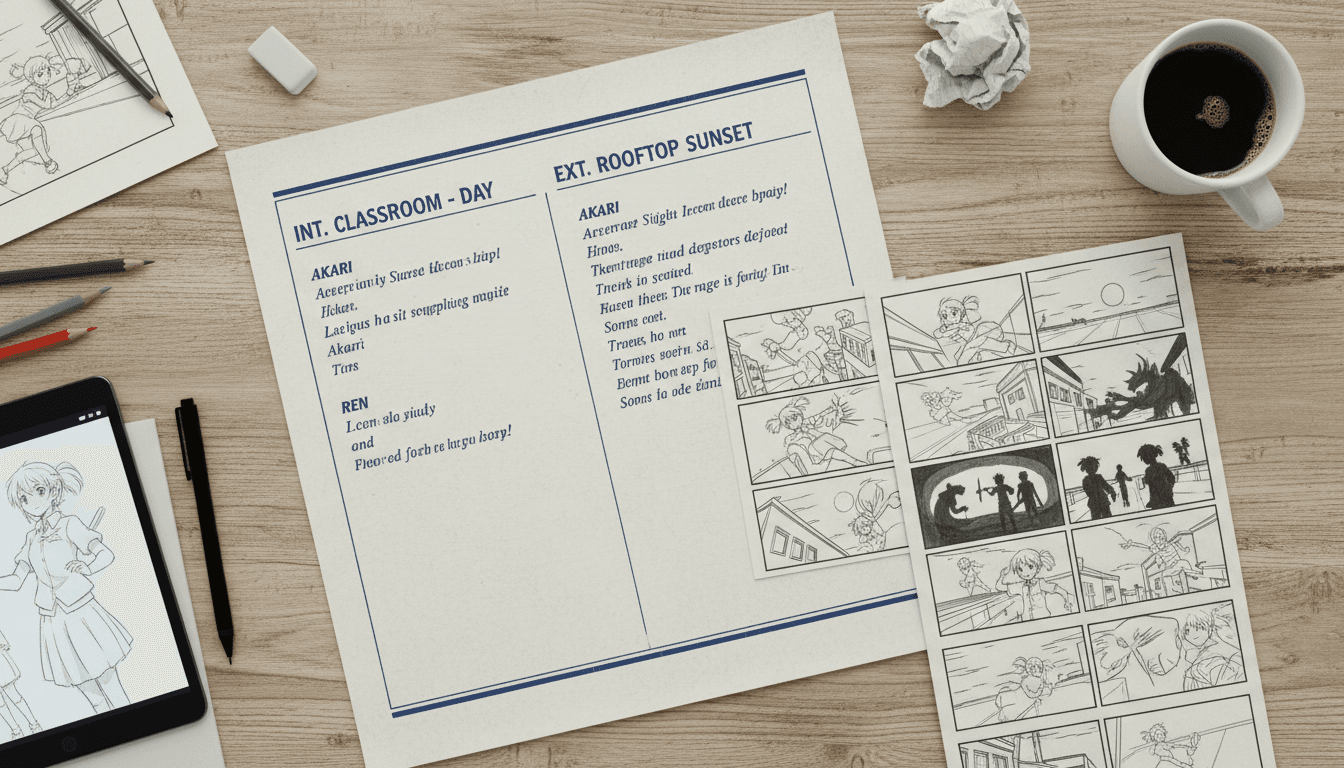
How the AI anime screenplay writer works
The script comes first. Everything else is built from it.
Hand over your story
A premise, a full script or a chapter of a novel. C2Anime reads it for scenes, characters and the shape of the plot.
It writes a real screenplay
Scene headings, action lines and dialogue, laid out the way a screenplay actually works — not a caption for a single generated clip.
Rendering follows the script
Every scene that gets rendered comes from that screenplay, so the video says what the script says and nothing gets improvised on the fly.
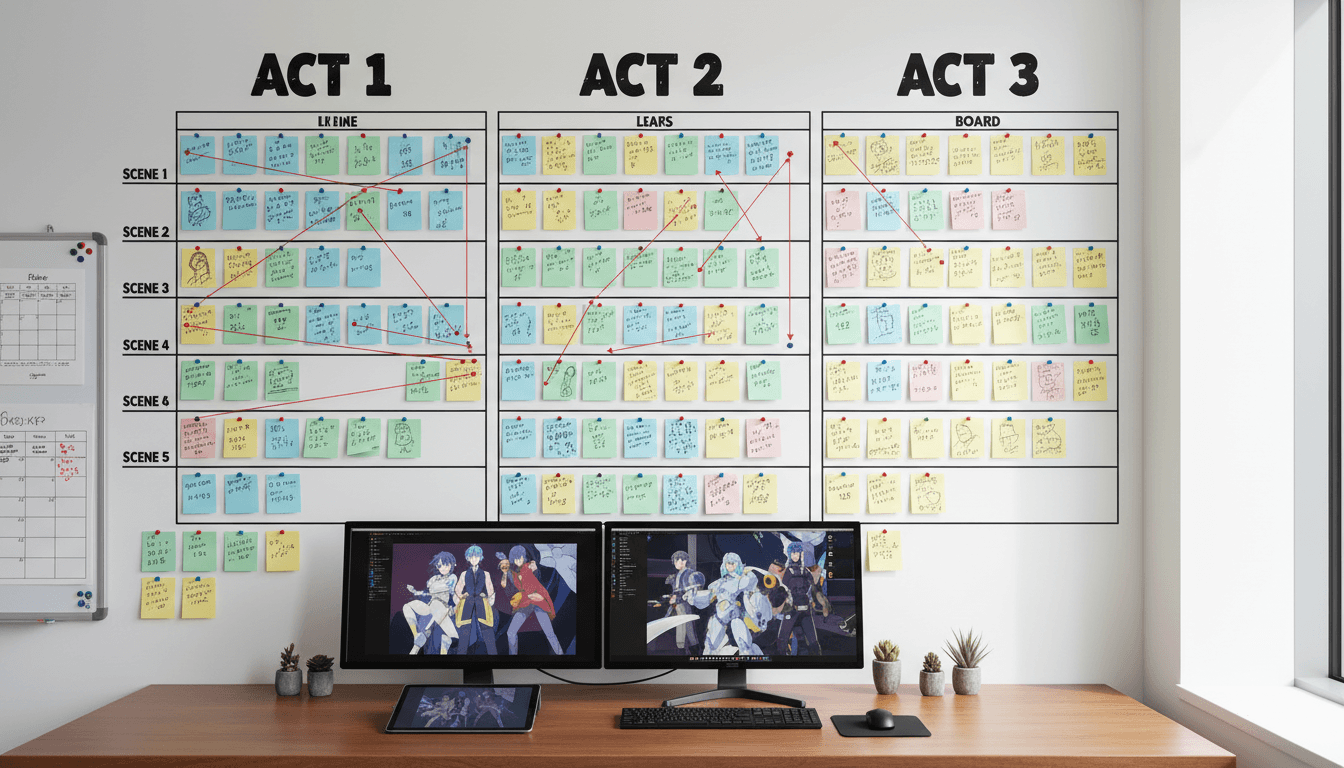
Structure decided before a single scene renders
A screenplay is a plan, not just a transcript. Before C2Anime writes a line of dialogue, it breaks your story into acts and scenes and decides what happens in each one — the same beat board work a writers' room does with index cards on a wall.
That structure is what makes an AI anime screenplay useful instead of just decorative. A scene list with a clear order means the rendering stage always knows what came before and what has to come next.
It also means you get to see the shape of your story — the acts, the scene count, the pacing — before committing to render a single second of video.
Written for characters to speak, not narrate
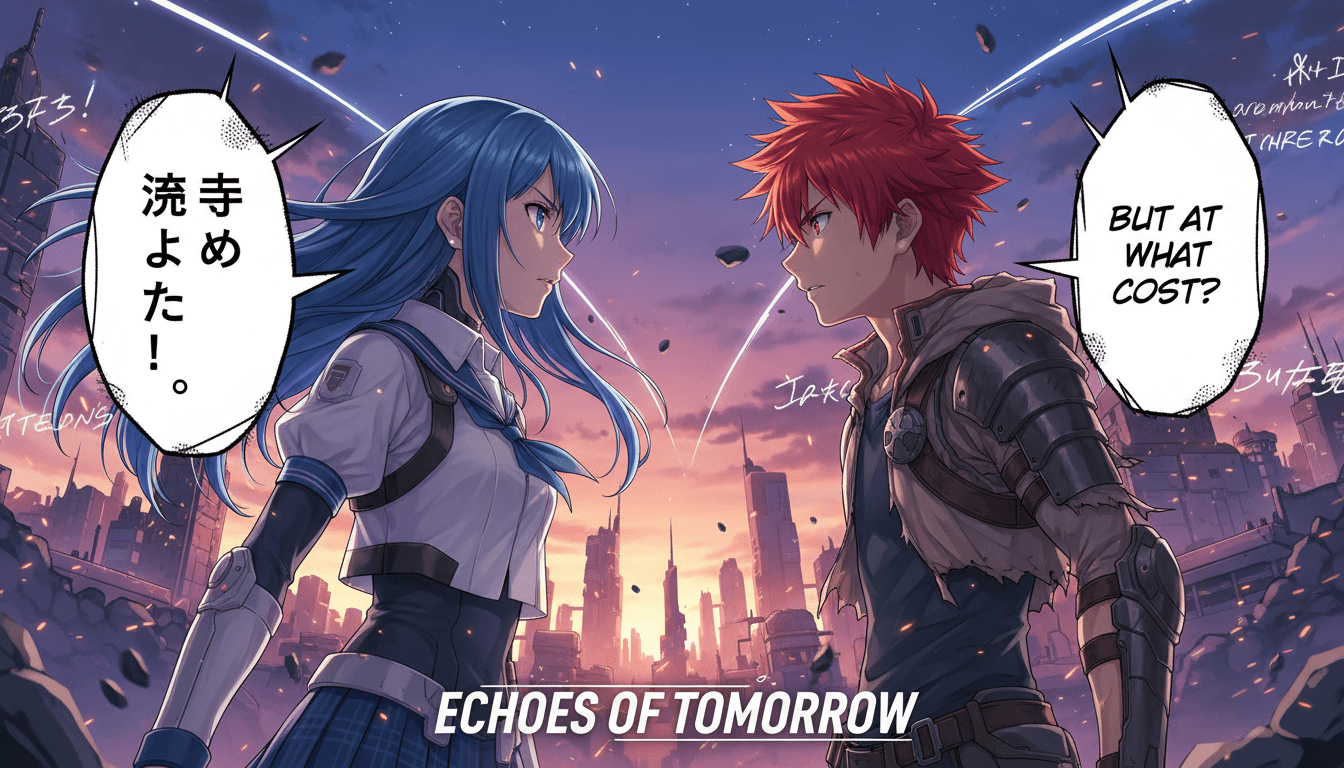
A screenplay writer's job is dialogue — what one character says, how another responds, what stays unsaid. C2Anime's AI anime screenplay engine writes that dialogue as part of the script, not as a caption bolted on after a clip is generated.
That is a meaningfully different output than narration read over stills. Two characters actually talking to each other, with lines written for the moment they're in, is what makes a scene feel scripted rather than described.
When that dialogue reaches the rendering stage, it drives voiced performances for each character, not a single narrator's voice over the top of the video.
What writing the screenplay first gets you
Structure before a single frame
Act breaks and scene order are decided in the screenplay stage, so the story has a shape before rendering starts, not after.
Real dialogue, not narration
Characters speak to each other with written lines, the way a script calls for it, instead of a voiceover reading over generic footage.
A script you can read and edit
The screenplay is visible before anything renders, so you can change a line, cut a scene or reorder a beat while it still costs nothing to change.
Scenes that pay off earlier scenes
Because the whole screenplay exists up front, a later scene can reference or resolve something a scene before it set up.
Who this is for
Writers who want a real script under the video. If you think in scenes and dialogue rather than single prompts, this is the stage built for you to work in.
Anyone adapting an existing story. A novel chapter or an outline gets read for its scenes and turned into a screenplay that follows your beats instead of inventing new ones.
Creators who want to edit before rendering. Because the screenplay is visible up front, you can fix a line or cut a scene while it still costs nothing to change.
AI anime screenplay: common questions
- What does an AI anime screenplay actually contain?
- Scene headings, action description and character dialogue — the same components a human-written screenplay has. C2Anime writes this before any scene is rendered, and every rendered scene is a version of that script.
- How is this different from an AI screenplay writer that just outputs prose?
- C2Anime's screenplay stage exists to be rendered, not just read. It is structured into scenes and dialogue specifically so that structure can drive the video that gets produced from it, not to stand alone as a short story.
- Can I edit the screenplay before it renders?
- Yes. The screenplay is visible before rendering, so you can rewrite a line, cut a scene or change the order of events while changes are still cheap, rather than after scenes have already been generated.
- What can I give the AI anime screenplay writer as input?
- A one-line premise, a detailed outline, an existing script, or a chapter of a novel. The more specific the source material, the more the screenplay reflects the story you already have in mind.
- Does the screenplay include dialogue or just scene descriptions?
- Both. C2Anime writes actual lines for characters to speak, because the finished video is built around voiced dialogue between characters rather than narration over stills.
- Why does writing a screenplay first matter for the final video?
- Rendering scene by scene from prompts alone produces disconnected clips, because nothing tracks what happened earlier. Writing the screenplay first means every scene is generated against a plan that already knows what came before and what comes next.
- Can the screenplay span multiple scenes or a full episode?
- Yes. The screenplay stage is built to cover a full story with multiple scenes and act breaks, not a single isolated shot, which is what lets the rendered video hold together as one continuous piece.
Bring your story. Get a real screenplay.
Read it, edit it, then watch C2Anime render it scene by scene.
Start writingWhy an AI anime screenplay comes before rendering, not after
An AI anime screenplay is what separates a directed video from a string of generated clips. Rendering scene by scene from individual prompts has no memory of what happened before and no plan for what happens next, so the result plays like a montage. Writing the screenplay first — scene headings, action, dialogue — gives the rendering stage a plan to follow instead of a blank slate every time.
C2Anime's AI anime screenplay writer works the way a script actually works: it breaks the story into acts and scenes, decides what happens in each one, and writes dialogue for the characters in that scene rather than narration describing them from outside. That is also what makes voiced, character-driven dialogue possible in the final video, instead of a single narrator's voice reading over generic footage.
This matters most for anything longer than a single clip. A short can survive without a screenplay because there is nothing for a later scene to pay off. An episode or a series cannot — a scene that references an earlier setup only works if a real script tracked that setup in the first place. That is the job the AI anime screenplay stage does before a single frame renders.
The screenplay is also yours to read and edit before rendering begins, whether you started from a one-line premise, a finished script, or a chapter you have already written. Bring the story — C2Anime writes the script, and the video follows it.