How to turn a novel into an anime
Learning how to turn a novel into an anime is mostly learning what to leave out. A book can afford a hundred pages of interiority; an episode cannot. This guide covers the decisions that matter — what to cut, what to keep, how to regroup chapters into episodes, and how to keep one cast on model from the first scene to the last.
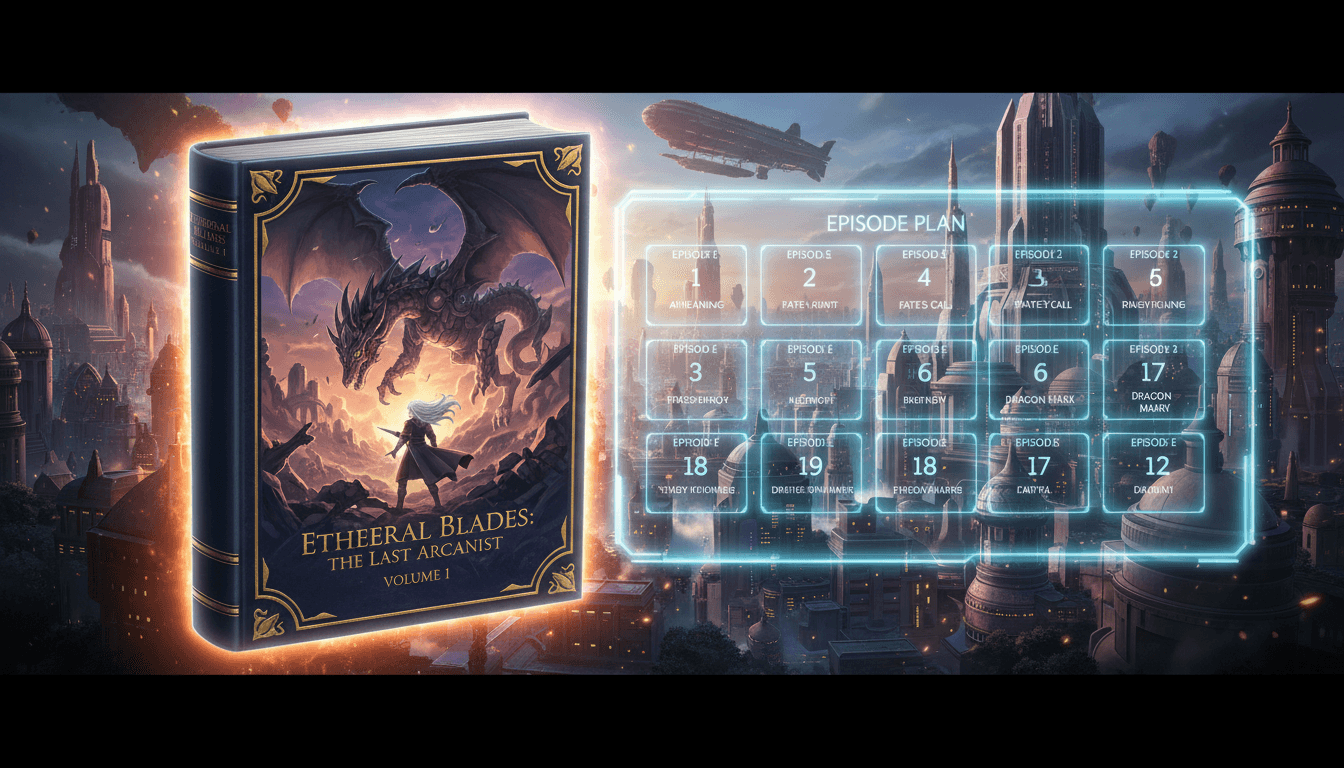
The short version of a novel adaptation
Three decisions carry most of the weight. Get these right and the rest of the production is execution.
Decide what the story is
A novel carries subplots an episode cannot. Find the spine — the one want and the one obstacle — and adapt that.
Group chapters into episodes
Chapters are reading units, not viewing units. Regroup them into blocks that each end on a turn.
Lock the cast, then render
Design every recurring character once and reuse those references, so episode four still looks like episode one.
How to turn a novel into an anime in six steps
The order matters more than any individual step. Each one removes decisions the next one would otherwise have to guess at.
- 1
Re-read the novel as a director, not as its author
The first pass has nothing to do with tools. Read your own book with a pen and mark only two things: moments where something visibly changes, and moments where two characters talk and come out different. Those are scenes. Everything else — backstory, reflection, world notes, the paragraph you are proudest of — is material, not scene.
Writers adapting their own work almost always protect the wrong pages. The chapter that took three months to get right is often the one that plays as two people standing in a room. Mark honestly now and you will not have to cut under pressure later.
- 2
Pick the runtime before you pick the scenes
A 300-page novel will not fit in eight minutes, and pretending otherwise produces an adaptation that sprints. Decide up front what you are making: a single short that covers the first act, a six-episode arc that covers the whole book, or a proof-of-concept episode built from the strongest sequence.
Then do the arithmetic. A scene that plays on screen runs roughly one to three minutes. Multiply by how many scenes you can afford and you have a hard budget. Every later decision about what to cut becomes easy once that number exists, because it stops being taste and starts being maths.
- 3
Cut interiority, keep the turns
Prose lives inside heads. Anime lives on faces and in dialogue. The single biggest job when you adapt a novel to anime is converting thought into something visible: a line of dialogue, a glance held a beat too long, an object a character keeps touching. If a passage cannot become one of those three, it usually goes.
What never gets cut is a turn — a moment after which the story cannot go back. A refusal, a confession, a death, a door that locks. String the turns together and you have the spine of the adaptation. Subplots survive only if they feed a turn.
- 4
Build a cast sheet straight out of the prose
Go through the manuscript and pull every physical detail you ever wrote for each recurring character: age, build, hair, eyes, the outfit they wear most, and one detail that belongs to nobody else. Novels are inconsistent about this — you will find a character whose eye colour changed in chapter nine. Decide now, write it down once, and treat that entry as canon.
This sheet is the most valuable document in the production. Character consistency is where AI adaptations fall apart, and the fix is upstream: design each character once, from your own text, and point every scene back at that design instead of describing them again from scratch.
- 5
Regroup chapters into episodes
Chapter breaks exist so a reader can put the book down. Episode breaks exist so a viewer cannot. They are rarely in the same place. Lay your surviving scenes in order, then draw episode boundaries so each block opens on a question and closes on a turn that makes the next block feel necessary.
In practice this means chapters get merged, split and occasionally reordered. Three quiet chapters may collapse into one episode opening. A long chapter with two turns in it may become the back half of one episode and the front of the next. Judge each boundary by one test: would you keep watching?
- 6
Write the screenplay, then render scene by scene
Before anything is generated, turn each block into a screenplay: scene heading, who is present, what they say, what the camera is looking at. Write the dialogue properly. Adaptations that skip this step end up as narration over pretty footage, which is the surest sign a novel was fed to a tool rather than adapted.
Then render in order, one scene at a time, with the cast sheet attached to every scene those characters appear in. Hold the visual rules constant across the whole run — one art style, one lighting language, one palette. Watch the episode end to end before fixing anything, then re-render only the scenes that missed.
What to cut and what to keep
Adaptation is subtraction. When a passage is hard to call, this table settles most arguments.
- A chapter of internal monologue
- Cut it, or give one line of it to a character who can say it out loud.
- A long flashback
- Keep the image, drop the frame. One short cutaway usually beats a whole sequence.
- A minor character with one good scene
- Keep the scene, fold the character into someone the audience already knows.
- Worldbuilding exposition
- Cut the explanation, keep the evidence. Show the ruined station, not the essay about it.
- A turn — a confession, a refusal, a death
- Always keep. These are the load-bearing walls of the adaptation.
- A subplot that never touches the main want
- Cut it for now. It is the first thing a second season can restore.
Why the cast decides whether the adaptation works
Ask anyone who has tried to adapt a novel to anime with AI what broke first and the answer is always the characters. A face shifts between scenes. Hair gets longer. The coat described in chapter two turns into a different coat by episode three. Readers who know your book notice instantly, because they have been picturing that character for hundreds of pages.
The fix is structural rather than cosmetic. Design each character once, from the details already in your prose, and treat that design as a fixed reference every scene points back at. Nothing gets re-described, so nothing drifts.
This is also what makes more than one episode possible. A single short can survive a little inconsistency. An adaptation that runs across a whole arc cannot — the audience is being asked to recognise the same people, week after week.
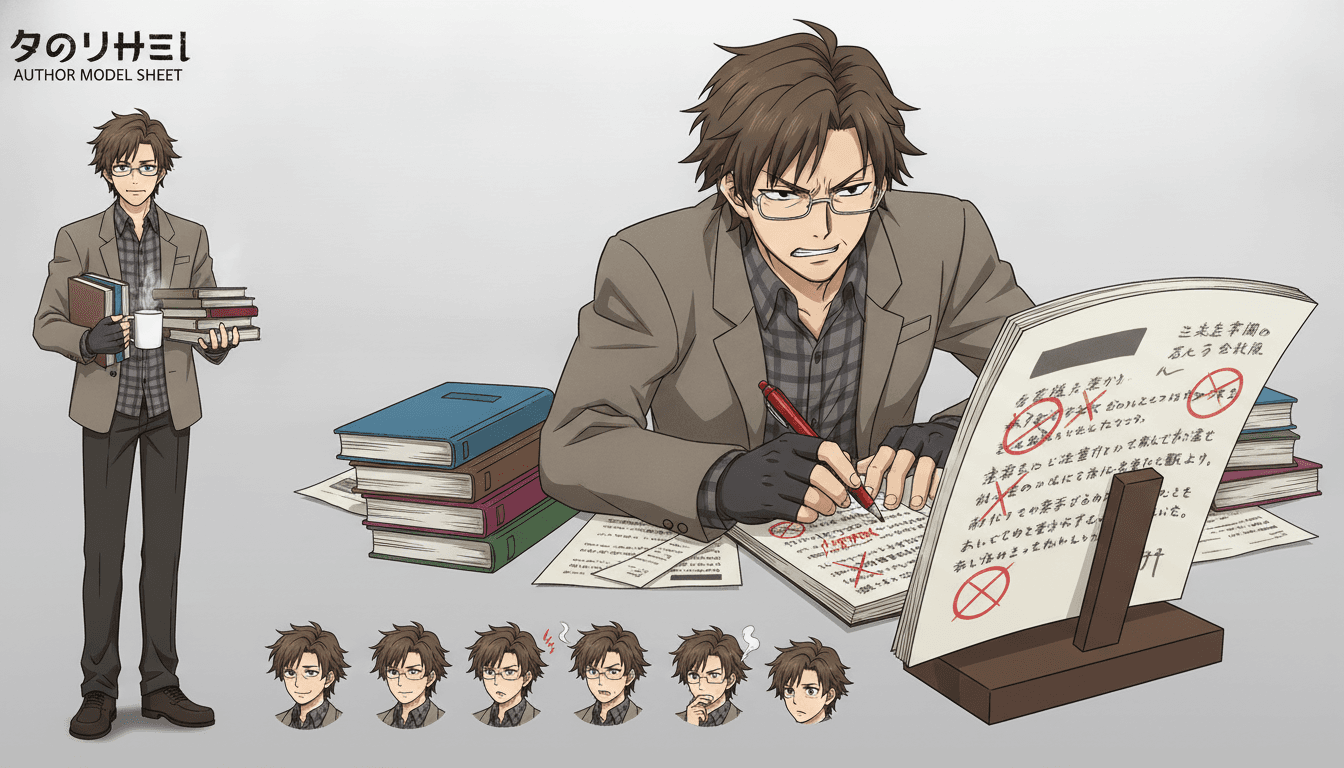
How to turn a novel into an anime with C2Anime
The steps above are the craft. These are the parts C2Anime takes off your desk once you have made the decisions.
One cast across every episode
Characters are designed once from your manuscript and reused in every scene they appear in, so faces, hair and outfits hold across the whole adaptation.
A screenplay you can read first
The structure and dialogue are written and shown to you before rendering starts, so you can argue with the adaptation while changes are still free.
Characters who speak
Scenes are built around voiced dialogue rather than narration, which is what makes an adaptation feel like anime instead of an audiobook with pictures.
Episode-length scenes
Long enough for a chapter block to actually play out — setup, turn and consequence — instead of a handful of disconnected clips.
Novel adaptation questions writers ask
- How to turn a novel into an anime if the book is very long?
- Do not adapt the whole book at once. Pick the first act or the strongest arc, make that as a set of episodes, and treat it as season one. Every long-running anime adaptation in existence works this way. Trying to compress 300 pages into one video guarantees the result feels rushed.
- How many chapters should one episode cover?
- There is no fixed ratio — it depends entirely on how many turns your chapters contain. Two to four chapters per episode is common, but a single dense chapter can carry an episode on its own and five quiet ones can share half of one. Count turns, not chapters.
- What should I cut first when I adapt a novel to anime?
- Internal monologue that cannot be converted into dialogue or action, followed by subplots that never touch the main want, followed by worldbuilding that explains rather than shows. Keep every turn. If a cut makes a later scene stop making sense, you cut a turn by mistake.
- Do I need a screenplay, or can I use the novel text directly?
- You can start from the prose, but a screenplay pass is what makes the difference between an adaptation and a slideshow. The screenplay decides who is on screen, what they say and what the camera sees — none of which the novel states, because prose never had to.
- How do I keep characters looking the same across episodes?
- Design them once and never re-describe them. Build a cast sheet from your manuscript, generate a reference for each character, and attach those references to every scene. Drift happens when each scene invents the character again from a fresh description.
- Can C2Anime handle dialogue-heavy novels?
- Yes, and those adapt the most cleanly. Dialogue is already screen-ready material — it tells you who is present, what they want and where the pressure is. Novels that are mostly interior are the harder case, because you have to invent the visible equivalent of a thought.
- Do I keep the rights to my adaptation?
- Your novel is yours and so is what you make from it. C2Anime is a production tool: you bring the source material, direct the adaptation and keep the result.
You already wrote the hard part
Bring the manuscript. Watch your cast walk through it.
Start your adaptationHow to turn a novel into an anime without losing the book
Every writer who asks how to turn a novel into an anime is really asking two questions at once: what survives the translation, and what makes the result still feel like theirs. The answer to the first is structural — turns survive, interiority mostly does not, and subplots survive only when they feed a turn. The answer to the second is the cast. Readers do not remember your chapter breaks. They remember the people, and an adaptation that keeps those people recognisable is one that keeps the book.
The practical work of a novel adaptation is regrouping. Chapters were written as reading units, with breaks placed where a reader could reasonably stop. Episodes are the opposite: they end where stopping feels intolerable. So the scenes that survive your cut get laid out in order and re-divided, each block opening on a question and closing on a change. Merging three chapters into one episode opening or splitting a long chapter across two episodes is normal, not a sign you adapted badly.
Then there is the screenplay. Prose never had to say who is on screen, what the camera looks at, or what a character says out loud instead of thinking. A screenplay pass makes all of that explicit, and it is the cheapest place to discover that a scene does not work — cutting a scene in a script costs a keystroke, while cutting it after rendering costs the render. C2Anime writes that screenplay from your source material and shows it to you before anything is generated, so the adaptation is argued over while changes are still free.
C2Anime is built for exactly this job: you hand over a novel, a chapter or an arc, it plans the structure, designs a consistent cast from your own descriptions, writes voiced dialogue and renders scene after scene against that plan. It is currently invite-gated Early Access with paid credit tiers. If you have a finished book and have spent years imagining what it would look like animated, this is the part where you find out.