Novel to anime, one chapter at a time
C2Anime adapts a novel to anime the way a studio would: it reads your chapter, decides which scenes carry it, designs the cast once, writes a screenplay with real dialogue, and renders voiced scenes. Chapter two uses the same characters as chapter one — that is the whole point.
How novel to anime adaptation works
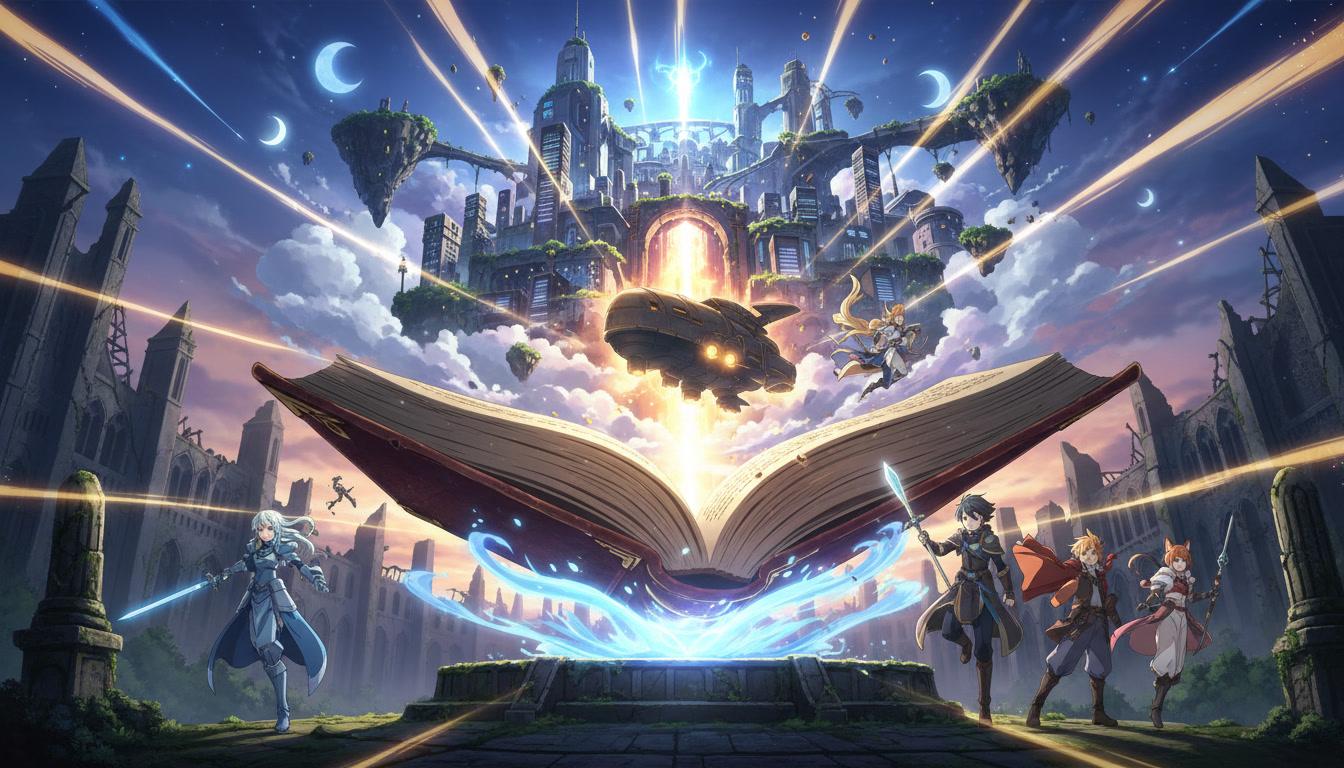
Three stages per chapter. Doing them in this order is why the finished episodes hold together.
Paste the chapter
Drop in prose straight from your manuscript. No prompt formatting, no shot list — the text you wrote is the input.
Review the adaptation plan
The scenes get pulled out of the prose, ordered, and turned into a screenplay with real dialogue. You read it before anything renders.
Watch the chapter play
Scenes are staged, voiced and rendered against the cast designed for your novel, so chapter twelve still looks like chapter one.
Chapters map onto episodes
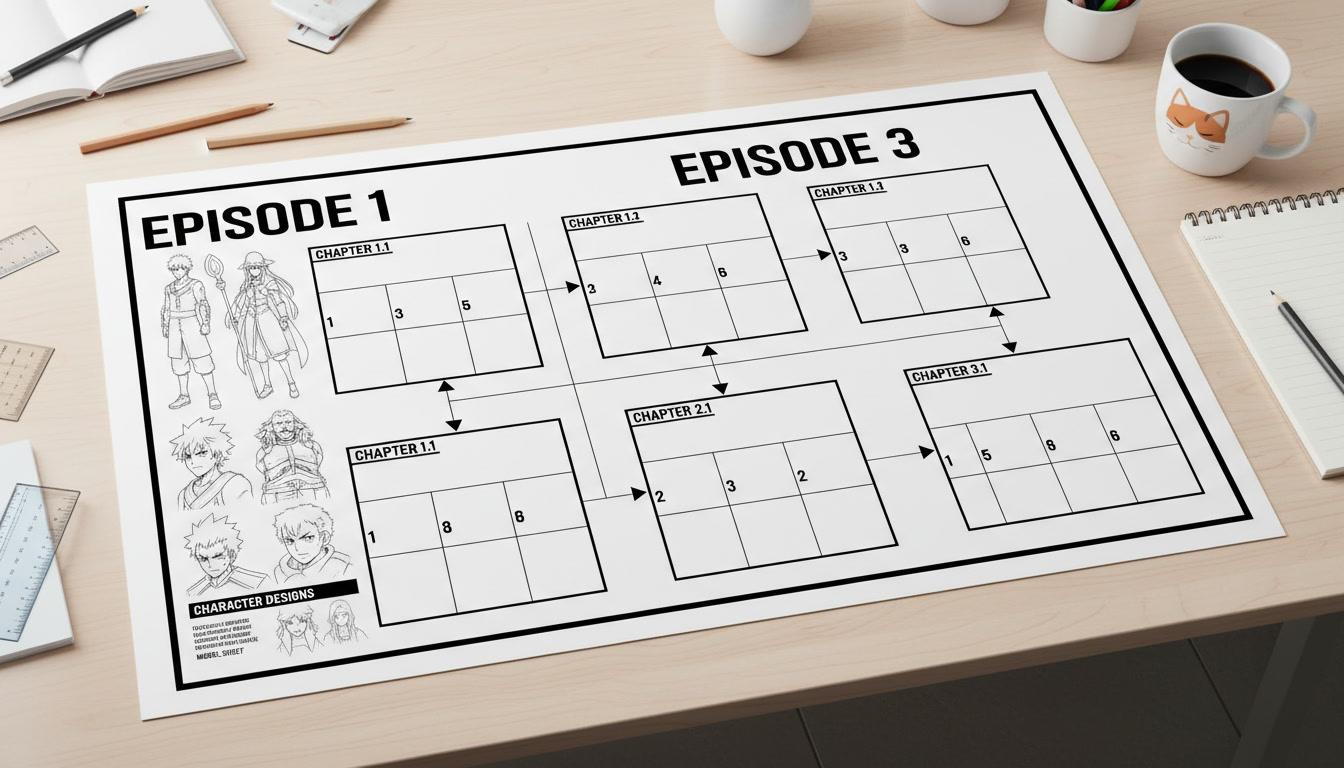
Novelists already write in the right shape. A chapter opens on a situation, turns on something, and leaves the reader somewhere new. That is an episode. Trying to squash three hundred pages into a single video throws that structure away and produces a trailer, not an adaptation.
So C2Anime works chapter by chapter. Each chapter becomes its own planned production with a scene list, a screenplay and a render pass. Chapters accumulate into a series the same way they accumulate into a novel.
Long chapters can be split at a natural scene break. Short ones can be grouped. What does not change is that every chapter draws from the same cast and the same world rules.
Your cast, designed once
Ask anyone who has tried a novel to anime adaptation with AI what breaks first and the answer is always the characters. The protagonist's hair changes length between scenes. A scar moves sides. The costume described in chapter one is gone by chapter three. Readers who know your book notice instantly.
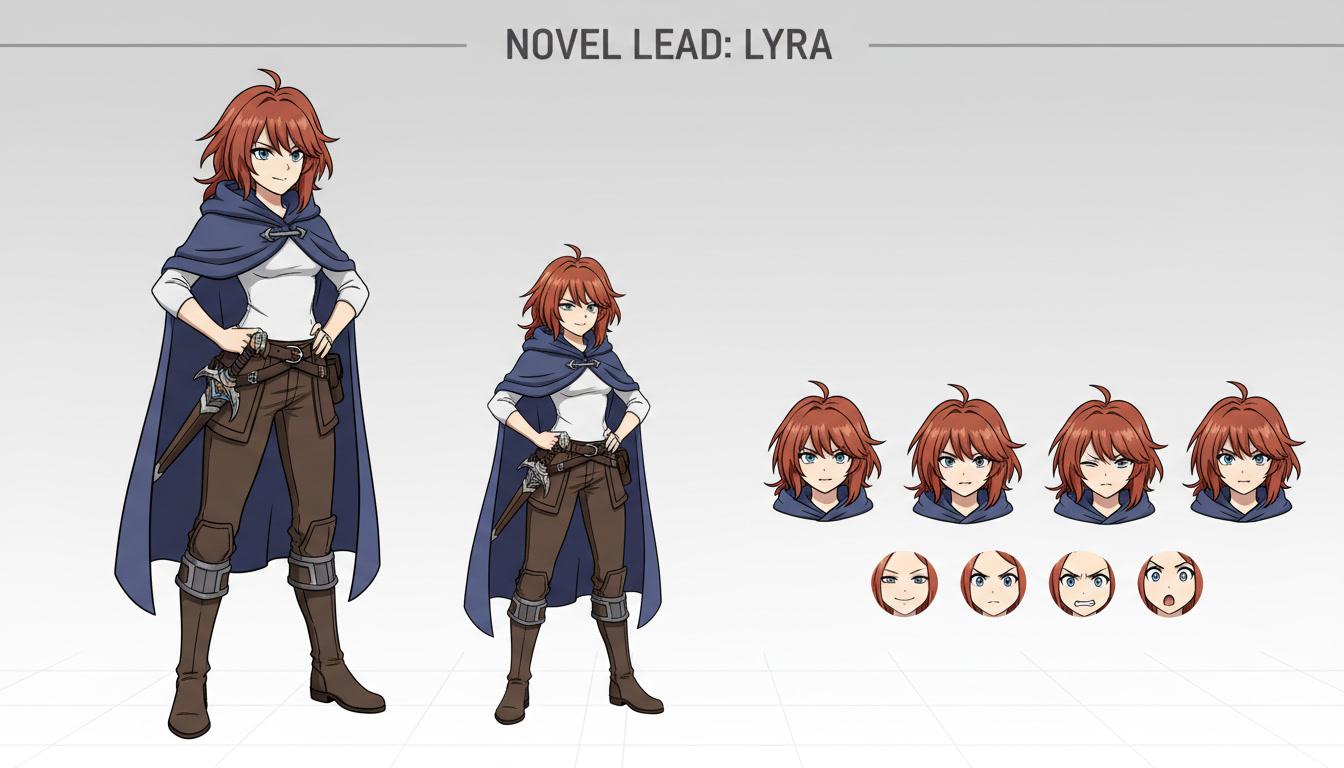
C2Anime designs each character from your description once, then treats that design as a fixed reference for every scene they appear in. Nothing is reinvented per shot, so nothing drifts per shot.
For a novel this matters more than for a standalone video. An adaptation is a long game — dozens of scenes across many chapters — and continuity is the thing that makes it read as one work instead of a folder of clips.
What the novel to anime workflow handles
One cast across the whole novel
Your protagonist is designed once and reused everywhere. The face, hair and costume that show up in the first chapter are the ones that show up in the last.
Prose becomes a screenplay
Interior monologue becomes something a character can play. Description becomes staging. Buried dialogue gets pulled out and given to the right voice.
Characters speak their lines
Each character holds a voice across chapters, so a long adaptation sounds like a cast rather than a single narrator reading a book aloud.
Built for chapter-by-chapter length
Scenes connect, so a setup in an early chapter can pay off later. This is an episode workflow, not a five-second clip generator.
The hard part of adapting prose
Interior monologue. Novels live inside people's heads. Screens cannot go there directly. The adaptation looks for what the thought does — a decision, a hesitation, a look held a beat too long — and stages that instead.
Description that is not action. Three paragraphs about a room are worldbuilding, not a scene. They become the background and the lighting, not a shot of their own.
Dialogue buried in prose. Lines your characters say get pulled out, assigned and voiced, which is usually where a chapter suddenly starts feeling like anime.
Pace. A chapter that reads in fifteen minutes does not play in fifteen minutes. The scene list is where that gets decided, and you see it before rendering starts.
Novel to anime: common questions
- How do I turn a novel into anime?
- Work chapter by chapter rather than trying to compress a whole book into one video. Paste a chapter into C2Anime, let it design the cast and propose a scene structure, review the screenplay it writes, then render. Each subsequent chapter reuses the same character designs, which is what makes the finished novel to anime adaptation feel like one series.
- Will the characters look the same across chapters?
- Yes — that is the reason to use a novel to anime workflow instead of prompting shots individually. Characters are designed once and stored as fixed references, then reused for every scene and every chapter they appear in.
- How much of a novel fits into one video?
- A chapter is the natural unit. Chapters already have their own arc, which maps cleanly onto an episode. Very long chapters can be split at a scene break; very short ones can be combined.
- Does it follow my plot or invent its own?
- It adapts what you wrote. The scene list comes out of your prose, and the dialogue is drawn from what your characters actually say. Where a novel describes something internally that has to be shown on screen, the plan makes that choice visible so you can change it.
- What about first-person or heavy interior narration?
- Interior narration is the hardest part of any novel adaptation. C2Anime turns it into playable material where it can — an expression, a reaction, a line delivered aloud — and keeps narration only where it genuinely belongs.
- Can I edit the adaptation before it renders?
- Yes. The structure and the screenplay are both editable, and individual scenes can be re-rendered without rebuilding the whole chapter.
- Do I need animation or storyboarding experience?
- No. Staging, casting, timing and rendering are handled for you. What you need is the manuscript and a view on how it should feel.
You already wrote it. Now watch it move.
Start with one chapter and see your cast on screen.
Start your adaptationTurning a novel into anime with AI
A novel to anime adaptation is a different job from generating a video clip. The source material already has structure, a cast, a voice and a plot that pays things off across hundreds of pages. The work is not inventing something — it is deciding what to show, who says what on screen, and how a chapter's worth of prose becomes a sequence of staged scenes. C2Anime does that planning first: it reads the chapter, proposes a scene list, designs the characters, and writes a screenplay you can read and edit before a single frame is rendered.
The reason authors want a novel to anime AI workflow rather than a prompt-per-shot tool comes down to continuity. Your readers know what your protagonist looks like. If the character changes between scene two and scene nine, the adaptation stops being yours. Because character designs are built once and reused as fixed references, C2Anime keeps the same cast on model across every scene and every chapter — which is also what makes a multi-episode series possible rather than a set of unrelated videos.
Chapter by chapter is the practical way to turn a novel into anime. Each chapter already carries its own arc, so it maps onto an episode without forcing you to compress the book. You can adapt a single chapter to see how your world looks animated, or work through a whole volume in order, and the cast, world and visual rules carry forward automatically from one chapter to the next.
Whether you are adapting a finished manuscript, a serialised web novel or a light novel in progress, the input is the prose you already wrote. C2Anime handles staging, casting, voices and rendering, and builds scenes around spoken dialogue rather than narration laid over stills. Bring a chapter and start the novel to anime adaptation you have been picturing since you wrote it.