An anime character voice generator that casts your whole cast
Most tools hand you one voice and a text box. C2Anime's anime character voice generator works the way a casting director does: it reads who is in your story, gives each character a voice that suits them, and then keeps that voice theirs for the rest of the production. Scene nine sounds like scene one.
How the anime character voice generator works
Casting happens once, before the scenes render. That order is what keeps a character's voice stable later on.
It reads your cast
The characters come out of your story, not out of a form. Whoever speaks in the screenplay is someone who needs a voice.
It casts each one
A casting pass matches every character to a voice from the catalogue — likely gender, age band and personality, in the language your story is written in.
It locks the voice in
The choice is saved onto the character, so the same person sounds the same in scene one, scene nine and the next episode.
Why a voice has to stay the same
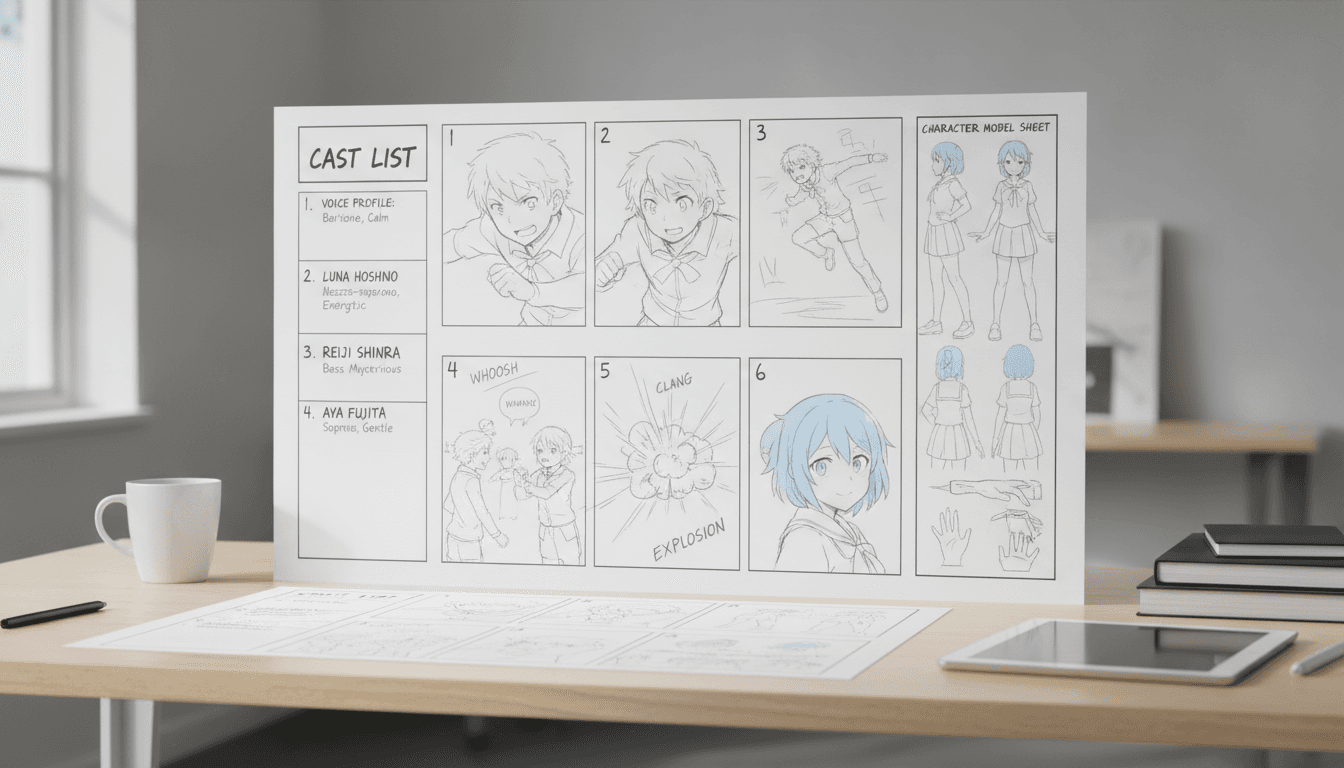
Generate speech line by line and you get a subtle, corrosive problem. The protagonist is a little deeper in this shot than the last. A side character drifts a semitone every time they open their mouth. Nothing is obviously broken, but the cast stops feeling like people and starts feeling like a text-to-speech queue.
Viewers identify characters by voice almost as fast as by face. A voice that wanders undoes that recognition, and it undoes it quietly enough that you may not catch it until the whole thing is assembled.
C2Anime treats a voice the way it treats a character design: as something decided once and then held. The assignment lives on the character record, not in the prompt for a single shot, so every line that character speaks for the rest of the production is spoken in the same voice.
What the anime character voice generator gives each character
Two things, and the second is the one most tools skip. The first is a voice from the catalogue — a specific timbre chosen to fit that character rather than a default applied to everyone.
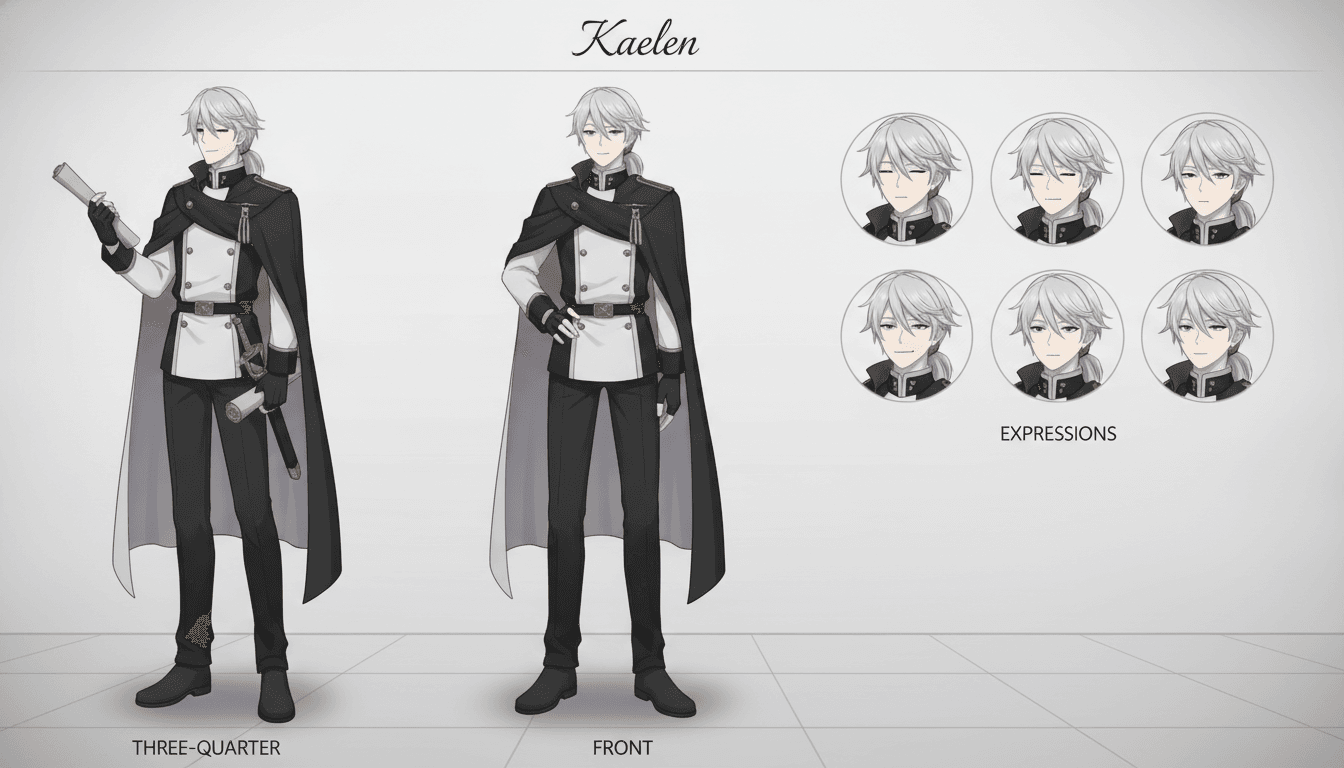
The second is a written voice profile: a short descriptor covering gender, age band, pitch, timbre and articulation, stored on the character's own profile. It reads something like male voice, young adult, low pitch, dark timbre, slightly raspy, neutral articulation. That descriptor is reused every time the character speaks, which is why they stay recognisable even across separate sessions.
Casting also reads the character sheets rather than guessing from a name, so a character the story describes as a young woman is not handed a baritone because the name looked ambiguous.
Built for dialogue, not narration
The point of casting a voice per character is that scenes can be conversations. Here is what that involves.
A voice per character, not one narrator
The narrator is cast separately from the cast. Each speaking character gets their own voice, and their dialogue is voiced with it.
A written voice profile
Alongside the voice itself, each character gets a descriptor — gender, age band, pitch, timbre, articulation — stored on their profile and reused every time they speak.
English, Mandarin and Japanese
The catalogue covers all three, and casting prefers voices that natively match the language your story is written in.
Nicknames do not break it
If your story calls the same character by two names, casting recognises them as one person and gives both names the same voice instead of flipping between two.
Audition before you commit
Narrator voices come with pre-generated samples you can play in the picker, so you hear the voice before it is attached to your video.
Overridable
Casting is a starting point, not a verdict. Change a voice on a character and the new choice carries forward from then on.
Voices in English, Mandarin and Japanese
The catalogue spans roughly fifty voices across the three languages, split between male and female timbres and ranging from calm and measured to bright and excitable. It is a fixed, vetted list rather than an open text field, which is deliberate: every entry is a real provider voice that has been checked to actually render, so nothing in the picker silently falls back to something else mid-production.
Your story's language is detected from the text itself, and casting then prefers voices native to that language. This is the difference between a Japanese line delivered by a Japanese voice and the same line pushed through an English one — the second is intelligible and immediately wrong.
If you write in Mandarin, you are not getting an afterthought. Mandarin is the best-covered language in the catalogue, with a wide spread of native timbres to cast from.
Who uses an anime character voice generator
OC creators. You already know how your original character sounds in your head. Casting is the first time that has a chance of matching — and once it is set, your OC keeps that voice through every video you make with them.
Audio drama makers. A dialogue-driven story needs a cast that can be told apart with your eyes closed. One voice reading every part is the thing that makes audio drama unlistenable, and it is exactly what per-character casting avoids.
Writers adapting their own work. If your novel has a recurring cast, they need recurring voices. Persisted assignments mean chapter twelve can sound like chapter one even though you rendered them months apart.
Anime character voice generator: common questions
- What is an anime character voice generator?
- It is the part of the pipeline that decides how each character sounds and then speaks their lines. A real one is not a single text-to-speech box: it works from your cast list, assigns a distinct voice to each character, and keeps that assignment attached to the character so every line they deliver across the video uses the same voice.
- Does each character get a different voice?
- Yes. The narrator is cast separately, and every speaking character in the screenplay is matched to their own voice. The casting pass takes each character’s likely gender, age and personality from the story and picks accordingly, so a gruff veteran and a nervous first-year do not come out sounding identical.
- Will a character sound the same in later scenes?
- That is the whole point of casting rather than generating ad hoc. The voice choice and a written voice profile are saved onto the character record, so the same character sounds the same across shots, across chapters and across separate sessions — not just within one render.
- What languages does the anime character voice generator support?
- English, Mandarin and Japanese. The language of your story is detected from the text, and casting prefers voices that natively match it, which matters more than it sounds — a voice stretched outside its native language is the first thing that reads as artificial.
- Can I hear a voice before using it?
- Narrator voices ship with pre-generated samples you can play in the voice picker. Pick the one that fits your story’s tone, and the rest of the cast is matched around it.
- Can I change a voice I do not like?
- Yes. Casting gives you a working cast immediately rather than making you audition fifty voices first, but nothing is frozen. Reassign a character’s voice and that becomes their voice from then on.
- Do I need to record anything myself?
- No. There is nothing to record and no microphone involved. You bring the story and the dialogue; the voice casting supplies the performances.
Give every character a voice of their own
Bring the story. The cast will be speaking by the end of it.
Start your animeCasting voices with an anime character voice generator
An anime character voice generator earns its name by handling a cast, not a line. Plenty of tools will read a sentence aloud in an anime-ish voice; far fewer will keep track of which of your six characters is speaking and make sure each of them sounds like themselves every time. C2Anime approaches it as casting: your screenplay produces a cast list, each name on that list is matched to a voice from a vetted catalogue, and the match is written onto the character so it survives the rest of the production.
The reason this matters is continuity, the same reason character design consistency matters. Anime depends on recognition — viewers learn a face and a voice together, then rely on both to follow a scene with three people in it. When a voice drifts between shots, that recognition quietly breaks, dialogue stops landing as performance, and what should feel like a conversation starts feeling like captions being read out. An anime character voice generator that persists its assignments avoids the problem by never re-deciding something it already decided.
Per-character voices also change what you can write. Narration over stills is the fallback for tools that only have one voice available; once every character has their own, scenes can be built around dialogue, interruptions and argument. That is how most anime actually works, and it is why C2Anime casts the narrator separately from the cast rather than letting one voice stand in for everybody.
C2Anime's anime character voice generator supports English, Mandarin and Japanese, picks voices that natively match the language you wrote in, keeps a written voice profile on every character, and lets you override any casting decision it makes. Bring a story with people in it and they will have voices by the time it renders.