Text to anime video, from your own writing
Paste text, get anime. C2Anime turns text to anime video by reading your writing the way a director reads a draft — finding the scenes, casting the characters, writing the screenplay — and then rendering it as voiced anime instead of a caption-shaped clip.
How text to anime video works
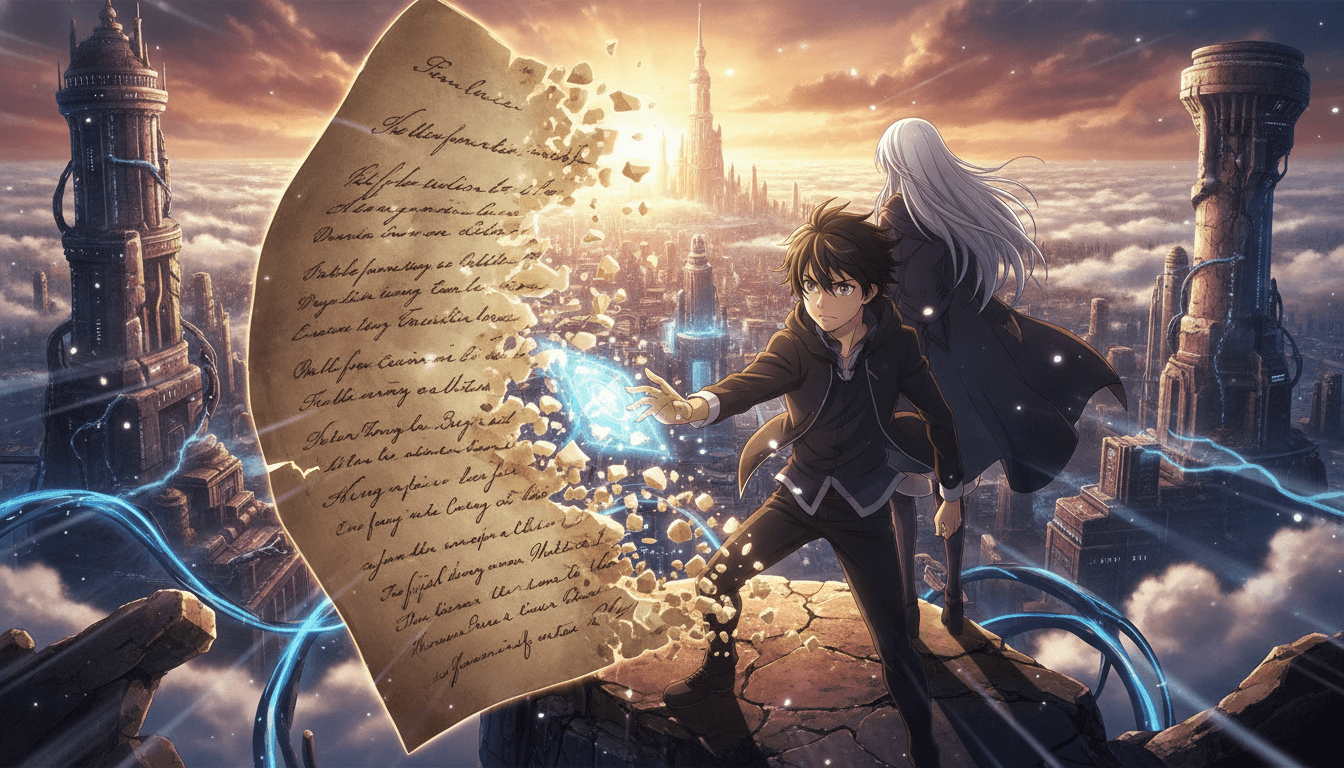
Three stages, in this order. The order is why the finished video holds together.
Paste the text
A premise, a scene, a short story or a whole chapter. Plain prose is fine — you do not have to format it or turn it into prompts first.
It becomes a screenplay
C2Anime reads the text for structure: who is in it, what they want, where each scene turns. That reading becomes a screenplay with scene headings and real dialogue.
The screenplay becomes anime
Each scene is cast, staged, voiced and rendered against the same character designs, so the video plays as one piece rather than a reel of clips.
Why text to anime video needs a screenplay first
A prompt box treats your writing as a description of one picture. It takes the nouns, renders something that matches them, and throws the rest away. Everything that made the text worth adapting — who wants what, what is being withheld, which line lands at the end — never makes it into the video.
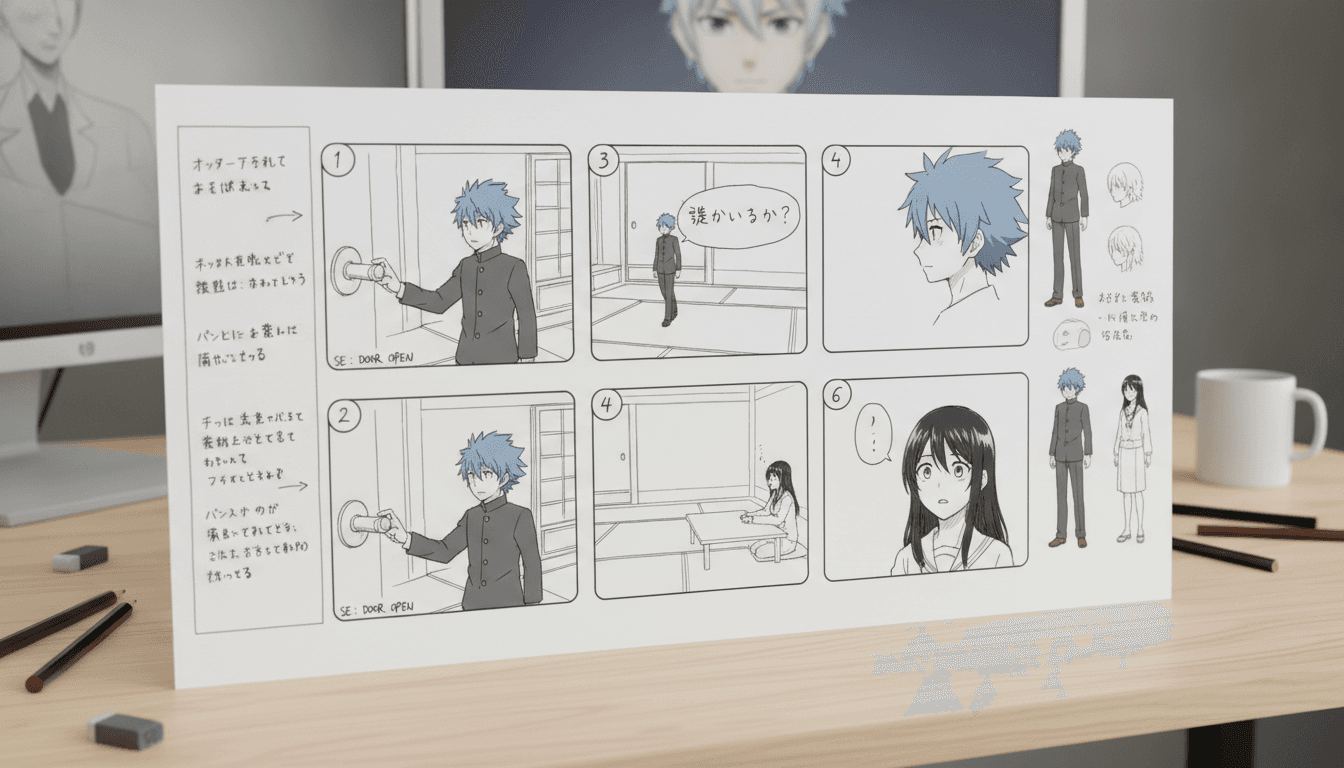
Turning your text into a screenplay first keeps that material. The screenplay says which scenes exist, who is in each one and what they say out loud. Rendering then has something to be faithful to, which is the difference between an adaptation and a loosely related animation.
It is also the stage where you still have control. You can read the screenplay, cut a scene, sharpen a line of dialogue or change how a character is described, all before any rendering time is spent.
Text describes a character once. Anime shows them fifty times.
This is the gap that breaks most attempts. Your text says “a tall girl with cropped black hair and a school jacket” one time, in chapter one. The video has to honour that line in every shot she appears in, from every angle, in every lighting setup.
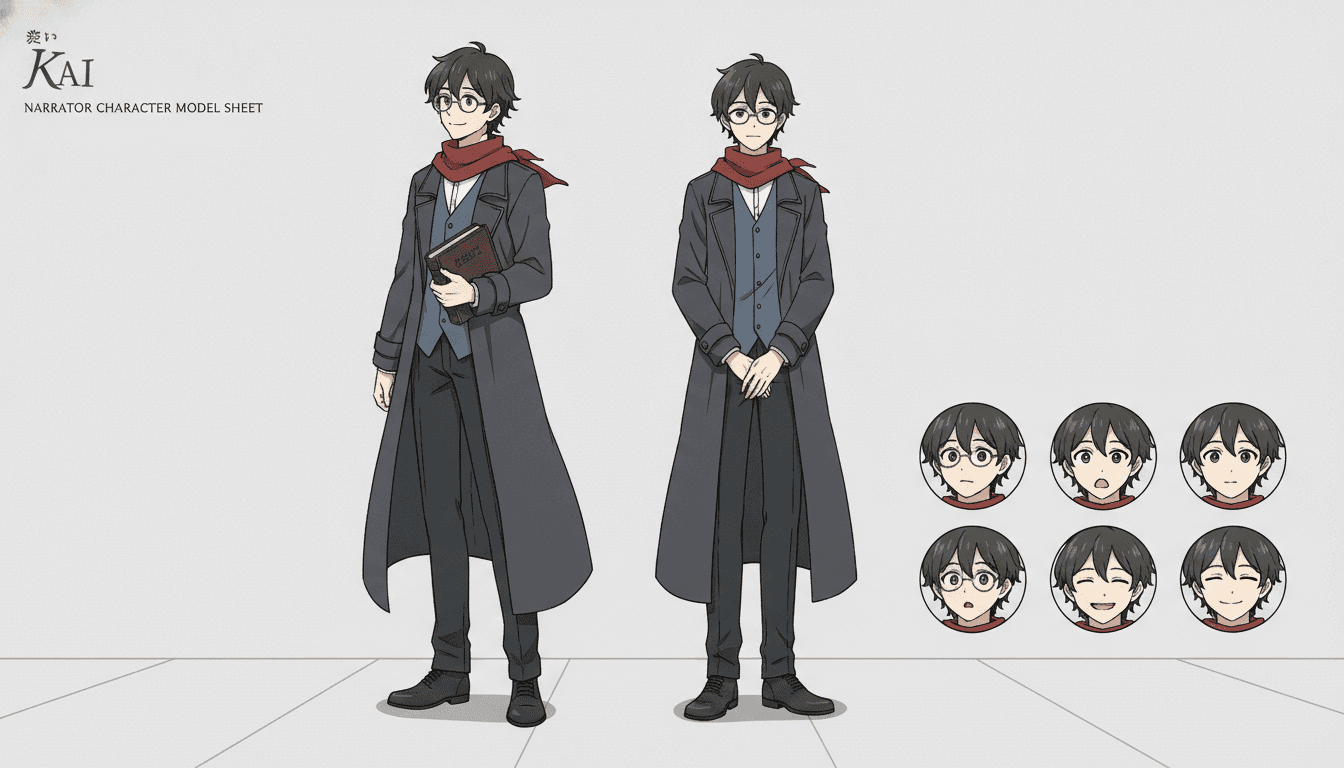
C2Anime resolves each character in your text into a fixed design — a model sheet the production keeps referring back to — before rendering begins. When she walks into a later scene, the system is reusing that design rather than re-imagining her from the sentence.
Readers forgive a lot, but viewers notice a changed face instantly, even when they cannot name what is wrong. Holding the cast steady is what makes the result read as anime instead of as output.
What C2Anime handles once you paste the text
Your cast stays your cast
Characters are designed once from your text and reused in every scene they appear in. The same face, hair and outfit carry from the first shot to the last.
Structure before pixels
The act breaks and scene list are worked out before rendering starts, so scene six can pay off something scene two set up.
Dialogue you can hear
Lines from your text are spoken by characters who keep their voices, instead of a narrator reading over still frames.
Long text welcome
Paste a full chapter rather than a caption. The more the text says about your characters and setting, the more faithful the adaptation.
Who uses text to anime video
Writers with a finished draft. The story already exists and has never been seen moving. Paste the chapter and the adaptation follows your beats instead of inventing new ones.
Hobbyists with a premise. A paragraph is enough to start. The structure gets built out from what you wrote, and you edit it from there rather than staring at an empty prompt box.
Content creators who write daily. If you already produce scripts, threads or short fiction, text to anime video is a way to put that writing on screen with a cast your audience starts to recognise.
Text to anime video: common questions
- How does text to anime video actually work?
- You paste text and C2Anime reads it as source material rather than as a prompt. It works out the scene structure, designs the characters it finds in the writing, drafts a screenplay with dialogue, and then renders each scene as anime with voices. The text drives the whole production, not just the look of one shot.
- What kind of text works best?
- Anything with characters and a change in it. A premise paragraph works, a short story works, a chapter of a novel works best of all. Text that names its characters, says where scenes happen and includes dialogue gives the strongest result.
- Is text to anime video different from a text to video model?
- Yes. A text to video model renders one prompt into one clip and remembers nothing afterwards. Text to anime video on C2Anime plans the whole piece first, holds a fixed cast, and renders every scene against that plan, which is what keeps a long video coherent.
- Will the characters look the same in every scene?
- That is the part C2Anime is built around. Character designs are locked in before rendering and reused for every appearance, so your protagonist does not change face between scenes.
- Can I edit what it decides?
- Yes. The structure and the screenplay are visible before anything renders, so you can rewrite dialogue, cut a scene or change a character description and re-plan. You can also re-render a single scene without redoing the whole video.
- How long can the finished video be?
- Long enough for a complete short with a beginning, middle and end. How long depends on how many scenes your text needs — a one-paragraph premise makes a short piece, a chapter makes a much longer one.
- Do I need to write prompts or know animation?
- No. Write in normal prose. The direction, staging, casting and timing are handled for you, and your job stays the story.
You already wrote it. Now watch it.
Paste the text and C2Anime takes it from draft to finished scene.
Start your animeTurning text to anime video with C2Anime
Text to anime video means starting from writing rather than from a shot description. C2Anime reads what you paste as source material: it identifies the characters, works out how the piece breaks into scenes, drafts a screenplay with spoken dialogue, and renders that screenplay as anime. Because the writing is treated as a story and not as a caption, the finished video carries the things prose carries — intent, conflict, a line that lands at the end of a scene.
The reason this produces something watchable is continuity. A workflow that generates each shot from a fresh prompt has no memory: the cast drifts, the setting shifts, and scenes stop adding up. C2Anime fixes the character designs before rendering and plans the runtime as a whole, so the same faces, outfits and voices carry through the piece and a later scene can resolve an earlier one.
What you paste can be as small as a premise or as large as a chapter. Longer text generally makes a better anime, because it gives the production more to be faithful to — named characters, described places, actual dialogue. Short prompts still work, they just leave more of the decisions to the system. Either way the screenplay is visible and editable before rendering, so nothing is committed behind your back.
C2Anime is a video product: voiced scenes with characters who speak, not narration over stills and not illustrations. If you have writing sitting in a document and you have wanted to see it animated, text to anime video is the shortest route from that document to a finished anime scene. Bring the text — C2Anime will direct it.