Turn a case script into a true crime anime video
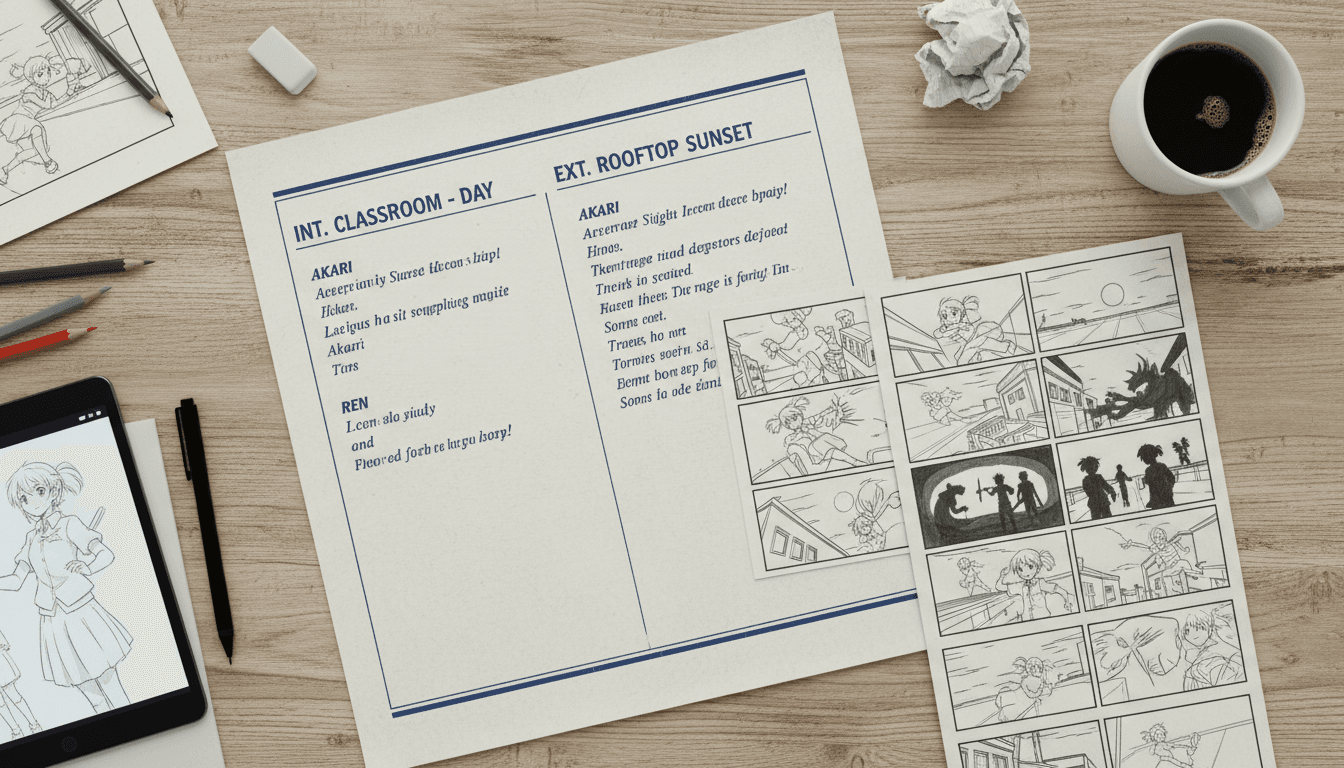
Paste your write-up and C2Anime turns it into scene-by-scene anime clips — the same detective, the same suspect, the same streets in every shot — ready to drop into your edit. It is the fast way to build a faceless true crime channel without re-casting a face halfway through the story.
How to make a true crime anime video
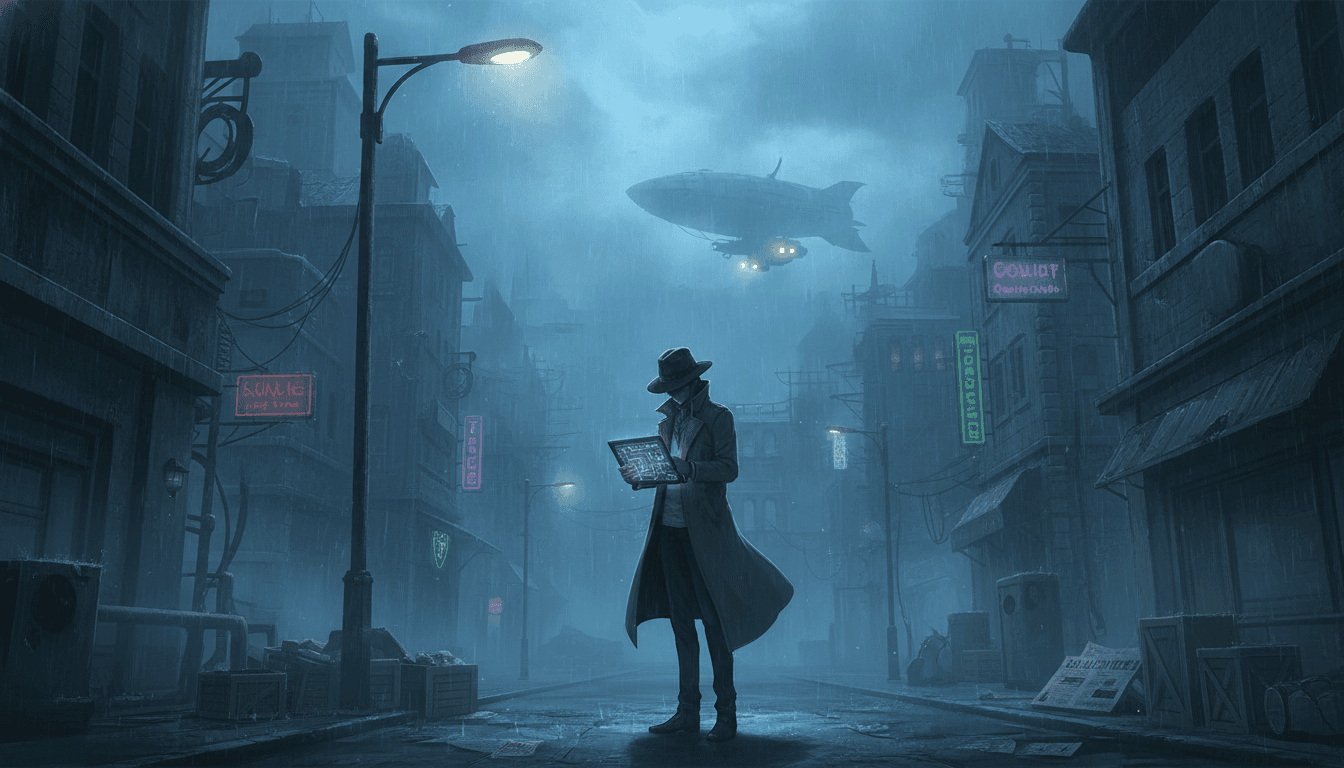
Three stages, in this order. The order is why the clips cut together into one coherent case instead of a pile of shots.
Paste your case script
Drop in your true-crime write-up — the timeline, the people, the turning points. C2Anime reads it the way a director reads coverage, finding the beats that carry the story.
It plans the scenes
The AI Film Director breaks the case into a scene list, casts the figures in it and writes a screenplay before anything renders. You approve the plan.
It renders your clips
Each beat comes back as a voiced anime clip with the same cast and locations, ready to drop straight into your edit timeline.
Why stock footage and stills hold you back
Most true-crime channels are built on the same tired toolkit: slow pans over a handful of stock photos, a map zoom, a blurred mugshot, a voiceover doing all the work. It is cheap, but it looks like everyone else, and it gives viewers nothing new to watch while they listen.
The obvious fix — generating each shot with an AI image or video tool — breaks in a predictable way. The detective's face changes between clips. The apartment is a different apartment in scene five than it was in scene two. Nothing in the tool remembers what the last shot looked like, so the case never feels like one continuous place with one continuous cast.
A true crime anime video only works if the people and the places stay recognisable from the opening hook to the verdict. That is a continuity problem, and continuity is exactly what C2Anime is built to hold.
A cast and a map that stay fixed
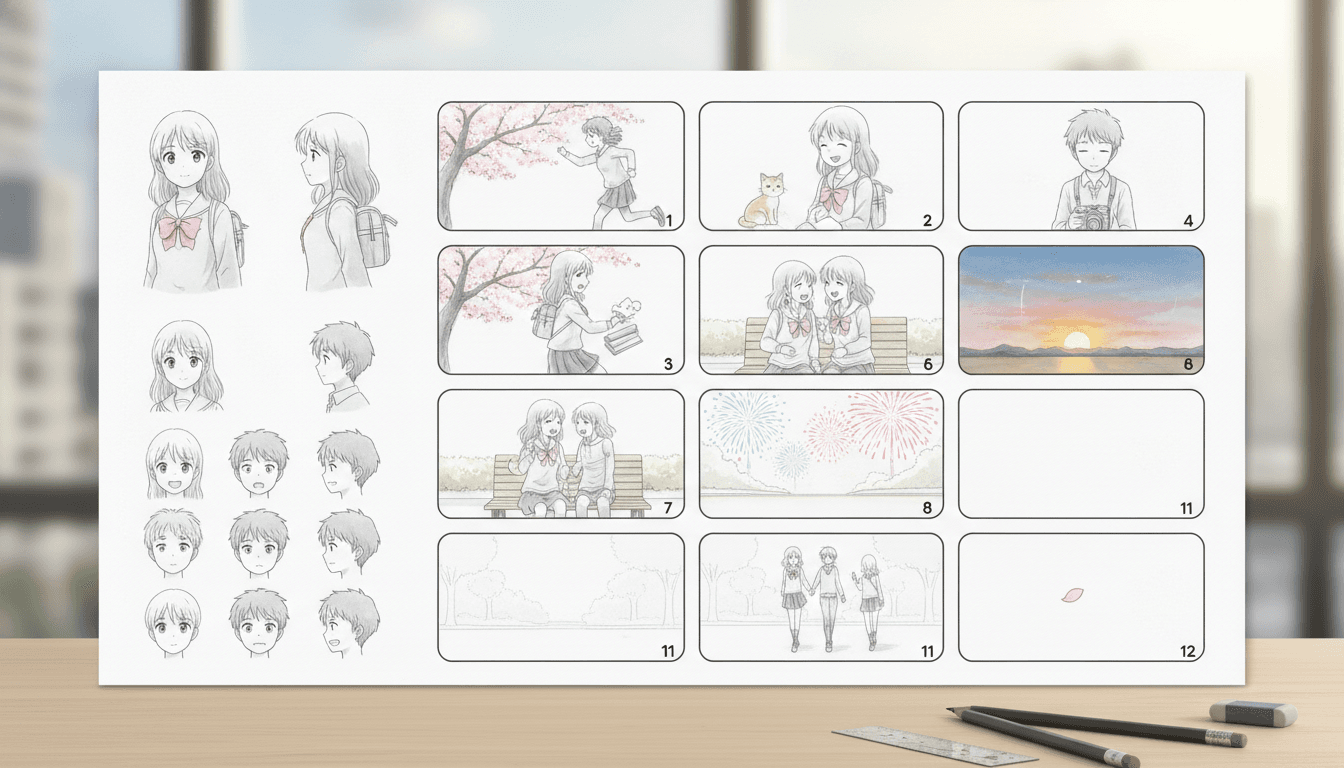
C2Anime designs every figure in your case once — the victim, the investigator, the person of interest — and treats each design as a fixed reference for the rest of the production. When the suspect appears again in scene nine, the tool is not reinventing them; it is reusing them.
Locations work the same way. The alley, the diner, the courtroom are built as reusable sets, so a place looks the same every time the timeline returns to it. Props carry across too, which matters when a single object — a note, a car, a key — is the thread the whole case hangs on.
That consistency is what turns a stack of clips into an episode, and what lets you run a true crime channel week after week with a recognisable visual signature instead of starting from scratch each time.
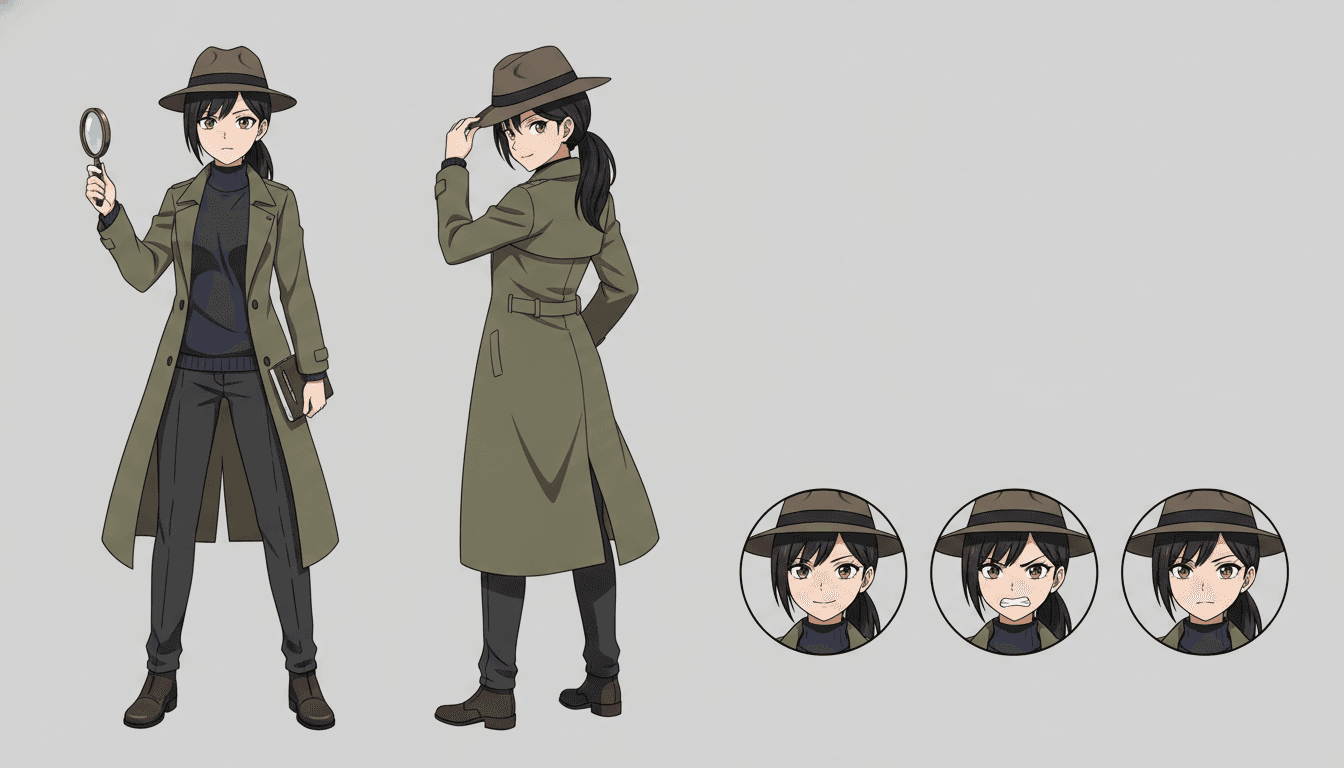
What a true crime video maker should do for you
One cast across the whole case
A victim, a detective, a suspect — each is designed once and reused in every scene they appear in, so your true crime anime video does not re-cast faces halfway through.
Locations that stay put
The alley, the apartment, the courtroom. C2Anime builds each setting as a reusable set so a place looks the same every time the story returns to it.
A screenplay, not a prompt
Scene headings, action and narration are planned up front, so the clips connect into one story instead of landing as disconnected shots.
Voiced from the first cut
Narration and dialogue are built into each scene, so you can cut your true crime video around what is being said rather than laying audio over stills later.
Who this is for
Faceless channel creators. You already write and narrate cases. What you have never had is a cheap way to put the story on screen without stock footage. Hand C2Anime the script and it stages the case as anime.
Short-form storytellers. TikTok and Shorts reward a strong cold open and a clean payoff. A consistent cast in a vertical frame reads far better than a slideshow of photos.
Writers dramatising fiction. If you build fictional cases to avoid depicting real victims, C2Anime gives you a full cast and set of locations to stage them in, episode after episode.
True crime anime video: common questions
- What is a true crime anime video?
- A true crime anime video retells a real or fictional case in animated form — the people, the locations and the sequence of events staged as scenes rather than read over a static image. C2Anime takes your written case and turns it into those scenes, clip by clip, so you can assemble a full episode in your editor.
- Do I have to show my face to run a true crime channel?
- No. This is built for faceless true-crime channels. You write and voice-direct the case; C2Anime renders the on-screen anime. The cast on screen is the story’s cast, not you.
- How do I keep the same detective and suspect in every scene?
- C2Anime designs each figure in the case once and reuses that design across every scene they appear in. That is the core difference from prompting shots one at a time, where faces drift from clip to clip.
- Can I use my existing script?
- Yes. Paste the case write-up you already have. The longer and more specific it is — names, places, the order events happened — the more faithfully the scenes follow it.
- Can I make vertical clips for TikTok and Shorts?
- Yes. The same case can be rendered for a long-form YouTube cut or framed for vertical short-form. You direct the plan; the clips come back ready to drop into either edit.
- Is this for real cases or fictional ones?
- Either. Many creators dramatise fictional cases to avoid depicting real victims; others build documentary-style recaps. C2Anime renders whatever your script describes — treat real cases with the care and sourcing your audience expects.
- How long can a true crime anime video be?
- Long enough to tell a complete case with a beginning, middle and resolution, rather than a single clip. Length depends on how many scenes your script needs.
Bring the case. Leave with the clips.
C2Anime stages the scenes. You stay the director and the storyteller.
Start your true crime anime videoMaking a true crime anime video that holds together
A true crime anime video lives or dies on continuity. A real case has a fixed cast — a victim, investigators, a suspect — and a fixed set of places those events happened. If your on-screen anime re-draws those faces and locations every few seconds, the audience stops trusting what they are watching. C2Anime solves this by designing the cast and the locations once and reusing them scene after scene, so the person on screen in the final act is unmistakably the same person from the cold open.
The workflow is built for how true-crime creators actually work. You arrive with a script — the timeline, the names, the turning points — and the AI Film Director turns it into a scene list and a screenplay you can approve before anything renders. Each beat comes back as a voiced anime clip you drop into your edit. Because the production is planned as a whole, an early scene can plant a detail that a later scene pays off, which is what separates a real episode from a loop of stock footage.
This makes C2Anime a practical true crime video maker for faceless channels on YouTube, TikTok and Shorts. You never have to appear on camera; the story is carried by its own cast. The same case can be cut long for a documentary-style recap or framed vertical for short-form, and the consistent look gives your true crime channel a signature that viewers recognise from one upload to the next.
Whether you dramatise fictional cases to avoid depicting real victims or build documentary-style recaps, treat your sources with the care your audience expects. C2Anime handles the staging, casting, locations and voices so you can spend your time on the writing and the research. Bring the case — C2Anime will turn it into the anime.